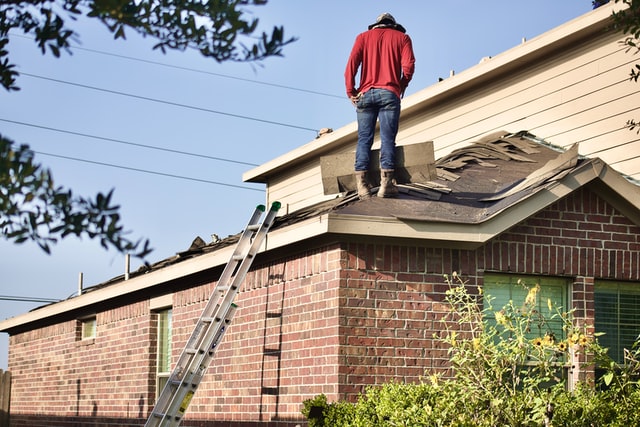
The most dangerous part of any roof inspection is getting onto the roof and moving across it, according to InterNACHI’s roof-access guidance for inspectors. That holds double for metal. The surface is smooth, the panels are slick when anything but bone dry, and the spots that look solid are not always the spots that carry your weight. Walking a metal roof is doable. It just rewards knowing where to step and punishes guessing.
First, decide whether you should be up there at all
Before you set a ladder, ask whether the job actually needs a body on the roof. A surprising amount of what sends people up there can be done from the ground:
- Inspecting for damage. A pair of binoculars or a zoomed-in phone photo from the top of a ladder will show you lifted seams, loose fasteners, and storm dents without a single step on the panels.
- Hunting a leak. This usually starts better from inside. Check the attic for daylight at penetrations and water staining on the decking.
- Cleaning. This often comes off cleaner from the ground with a soft-bristle brush on an extension pole than it does on your hands and knees up top.
If the task genuinely needs you on the roof, keep going. If it does not, the safest technique is the one where your feet never leave the dirt.
What to wear, and when to go up
Footwear is the cheapest safety upgrade you can make, and most people get it wrong by reaching for stiff work boots. You want a clean, soft, flexible sole instead. American Metal Roofs notes that softer soles flex to increase the contact area you get on a smooth metal surface, and more contact is more grip. Wipe the soles before you climb. A single pebble or smear of mud turns a good shoe into a hockey puck.
Timing matters as much as footwear, and in Texas it matters more than most guides admit. Damp, frosted, or moss-touched metal can be slick enough to slide you off even a low-slope roof, so a panel that is bone dry at noon can still be greasy with dew at eight in the morning. Wait for the surface to dry fully before you trust it. The flip side is the afternoon. By mid-day in a Texas summer the panels get hot enough to soften a soft sole and burn an ungloved hand, and the metal expands and moves under you as it heats. The sweet spot is a dry mid-morning, after the dew has burned off and before the roof turns into a skillet.
Where to step on each type of metal roof
This is the part the reader usually came for, and it changes completely depending on what is under your feet. The rule across all of them is the same in spirit: put your weight where the panel is supported, not where it is spanning open air. How you find that support line is what differs. The three families below cover most Texas homes, and if you are unsure which one you have, our breakdown of standing seam versus screw-down metal roofs sorts it out.
| Roof type | Step here | Stay off |
|---|---|---|
| Standing seam | The flat pan, close to a raised seam | The raised seam itself, and the center of a wide pan |
| Exposed-fastener (R-panel, corrugated) | The low ribs, along the screw lines | The tall ribs and the unsupported flats between fasteners |
| Stone-coated steel and metal tile | The lower third of each course, over the batten | The leading edge and the hollow under the tile’s front lip |
On standing seam
Standing seam hides its fasteners, so you cannot follow a screw line. Step into the flat pan instead, as close to a seam as you comfortably can, where the panel is stiffest. Keep off the raised seam itself. It crushes easily and it is exactly the part a manufacturer inspects for damage.
On exposed-fastener panels
These panels announce where they are supported. The screws run in straight lines into the purlins or decking below, so the metal directly along those fastener rows has something solid beneath it. Step there, on the low ribs near the screws. Avoid the tall ribs, which fold under a heel, and the open flats between rows, which oil-can and dent.
On stone-coated steel and metal tile
These sit on horizontal battens, and each tile or course is only supported across its back. Plant your foot on the lower third of each course, low and close to where it laps the one below, directly over a batten. Never step on the front lip. There is usually nothing but air under it, and it will crack or crush.
How steep is too steep
There is a point where technique stops mattering and the answer is simply no. Experienced inspectors treat roughly 5:12 as the practical walkable ceiling for metal, lower than the 6:12 to 8:12 they will take on asphalt, precisely because metal gives up traction so much faster. A 5:12 pitch rises five inches for every twelve it runs. If yours is steeper than that, walking it safely needs ropes and anchors, not better shoes. Our note on the minimum slope for a metal roof covers the low end of the same scale. When in doubt about your own pitch, measure before you commit, not from the ridge.
Spread your weight and protect the panels
Once you are up and dry on a walkable pitch, how you carry yourself decides whether the panels survive. The guiding rule is the one from the panel section above, to step on the structural support beneath the panel rather than on the seams, and the rest follows from keeping your load where the roof is strong. Move slowly, keep your weight low and centered over the balls of your feet, and never land hard. If you will be working one area for a while, lay down a piece of foam or a padded mat to spread the load and save the finish. The same logic behind using toe boards to keep from slipping applies to your tools: set them down where they cannot slide, because a wrench skating off a panel takes the finish with it and can take you off balance reaching for it.
Fall protection that actually matters
None of the above replaces a harness. The basics here cost a tiny fraction of what a fall costs:
- A roof anchor, a lanyard, and a proper harness. These are the difference between a slip and a fall. Anchor to something structural, never a vent or a gutter.
- A second person on the ground. Someone who can steady the ladder, hand up tools, and call for help if something goes wrong is worth more than any single piece of gear. Do not go up alone.
I know the harness feels like overkill on a quick ten-minute job. The ten-minute jobs are the ones that hurt people, because that is when the gear gets skipped.
Should You Walk Your Metal Roof, or Call a Pro?
Answer six quick questions. Every threshold below comes straight from the guide above.
This is a guide, not a guarantee. Your judgment on the day still rules.
When to call a pro instead
Walking your own roof is not consequence-free even when nobody falls. Foot traffic scuffs the finish, oil-cans the flat panels into a permanent ripple, and on some systems careless walking can affect manufacturer coverage. Weigh that against what you are actually trying to accomplish up there. A crew that walks metal every day reads the support lines without thinking, carries the right gear by default, and keeps up our own metal roof maintenance routine without leaving a mark.
If the honest answer is that the job is bigger than a dry mid-morning and a good pair of shoes, let us take the risk instead of you. We will put a set of trained eyes on your roof and hand you a clear read on its condition. Schedule a free roof inspection with our San Antonio team and keep your own feet on the ground.
Frequently Asked Questions
How do roofing contractors inspect metal roofs for damage without walking on the panels?
What standards do roofing professionals follow regarding footwear when walking on smooth metal roofs?
How do environmental conditions dictate when contractors will perform maintenance on metal roof systems?
How do technicians determine the safe weight-bearing zones on standing seam or exposed-fastener metal roofs?
What slope parameters do roofing experts use to determine if a metal roof is safe to walk?
What fall protection equipment should property owners expect contractors to use on steep metal roofs?
How do roofing specialists prevent permanent oil-canning and surface scuffing during active repairs?

About the author: Nick Van Slyke
Certifications & Affiliations