Few problems are more annoying for homeowners than when an insurance company denies a claim. You’ve diligently paid your premiums for years—only for your insurer to turn you down, just when you need their support the most.
There are lots of reasons why an insurance company might deny your claim, but one you might have overlooked relates to the type of shingles you have on your roof. Insurance companies view 3-tab shingles as a liability, because their outdated design makes them prone to leaks and storm damage.
In this article, we’ll explain what 3-tab shingles are, why they’re a problem for your insurer, and what action you can take. We’ll also explore some additional reasons why your claims might be getting denied.
First, a quick definition, just to make sure we’re on the same page.
What are 3-tab shingles?
During the roof installation process, shingles are placed on top to cover the roof decking and protect it from the elements. They’re typically made from materials such as asphalt, wood, slate, or metal. Shingles are laid in rows from the bottom edge of the roof upward, creating a watertight, visually uniform surface.
There are three types of asphalt shingles:
- Luxury shingles: Designed to mimic the appearance of natural materials like slate, and offer superior performance, longevity, and aesthetic appeal.
- Architectural shingles: Engineered with multiple layers and textures that provide greater durability and weather resistance.
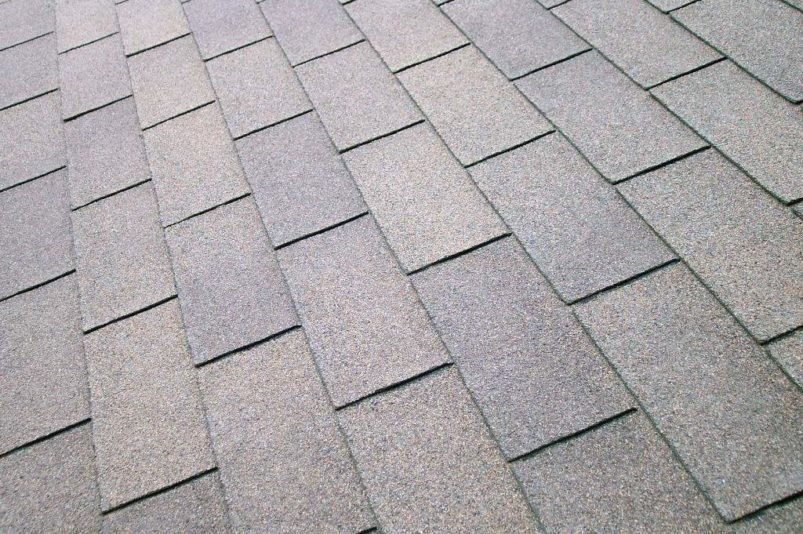
- 3-tab shingles: Flat, single-layer shingles with a uniform appearance, offering basic protection from the elements. We’ll focus our discussion on these shingles.
3-tab shingles derive their name from the three distinct cut-outs or “tabs” that come on each shingle strip. These are available in various colors and patterns.
They’re straightforward to install and repair, because the tabs are simply laid flat on the roof decking. When installed correctly, 3-tab shingles can last up to 20 years.
These shingles dominated the residential roofing market in the 90s, primarily because they’re so cost-effective. However, as modern roofing technology has made it possible to develop more robust shingles, several problems with 3-tab shingles have become apparent.
What’s wrong with 3-tab shingles?
Unfortunately, 3-tab shingles are so brittle that they’re easily damaged by storms. Heavy winds simply pick the shingles up and throw them off the roof, leading to all sorts of leaks and damage to the roof decking. No surprise, then, that 3-tab shingles typically have a low wind resistance rating compared to other more robust shingles.
3-tab shingles are also prone to water damage. Water has a harder time flowing off these shingles than it does on other roofs, so it often ends up pooling. After 15 years, 3-tab shingles start to lose their granules, making them even less water-resistant.
Both of these issues are especially problematic in Texas, which is known for its hailstorms and strong winds. Texas consistently ranks in the top states for hail-related insurance claims.
The bottom line is that 3-tab shingles are simply less durable than the more modern architectural shingles. They generally last 15-20 years, whereas architectural shingles typically go for 25-30 years—sometimes as many as 40!
As a result, manufacturers are increasingly phasing out 3-tab shingles from their product lines. Data from itel reveals a 68% decrease in the number of 3-tab shingle SKUs in 2024 compared to 2019. This means that fewer types of 3-tab shingles are being stocked and sold.
The roofing market is increasingly moving towards architectural shingles instead, which are known to be both more durable and more aesthetically appealing.
What effect do 3-tab shingles have on insurance?
Every year, 3.75 million households submit claims on their homeowners insurance, with roof damage resulting from wind and hail making up a large portion of those claims.
These numbers suggest that insurance companies are among the largest consumers of 3-tab shingles in the country.
So the insurance industry as a whole is well aware of the problems with 3-tab shingles, and knows that the market is moving away from them. They’re also aware that some of the shingle SKUs they bought 10 years ago on behalf of their customers are no longer available.
Canceled policies
As a result, the more cautious insurers are starting to cancel policies belonging to homeowners with 3-tab shingles. This is especially true for homes with shingles that are 15 years old or more.
Some insurance companies view 3-tab shingles as such a liability that it’s not worth it to them to insure such properties at all.
Difficulties finding the same materials
Insurance policies typically have “like kind” clauses, which means the insurer will pay to find materials that match those that have broken.
But in a market in which manufacturers are discontinuing lots of varieties of 3-tab shingles, this promise is increasingly hard for insurers to keep.
Research suggests that as many as 54% of insurance claims are made on construction materials that lack a matching product in the market. This makes maintenance, repair and replacement much more difficult.
Inadequate repairs
If they can’t replace the exact shingles that have broken, some insurers offer a limited payout to repair one section of a damaged roof.
Unfortunately, this is a poor solution. The payout rarely covers the cost of installing new shingles, and repairing one section of a roof might not be sufficient to prevent future damage. From a homeowner’s perspective, this means there will likely be additional leaks and costly repairs later down the line.
Why else could a claim be denied?
Unfortunately, 3-tab shingles aren’t the only reason that insurers turn down claims. Here are a few more common reasons:
- Homeowner neglect: Insurance policies are there to cover you in case of an emergency. They’re not a way to evade the responsibility of maintaining your roof. If a loss adjuster determines that the damage was caused by neglect, your claim will be denied.
- Defective materials: Most policies exclude damages arising from defective roofing materials, as the responsibility for that lies with the manufacturer. You might be able to claim on the product warranty instead.
- Incomplete documentation: You’ll need photo evidence to document your claim, together with a record of your communication with the insurer, your policy documentation, and receipts of any repairs you made. If you’re missing any one of these, your claim could be denied.
- Inadequate coverage: Insurance companies will only pay out if something breaks that explicitly covered in your policy. If it’s not mentioned, it’s not covered.
- Late claim: Most policies have strict deadlines for filing after damage occurs. If you miss the deadline, your claim will likely be denied.
Remember that insurance companies are in the business of making money, and that any claim you make is a cost to them. So it pays to be as diligent as you can about maintenance, materials, documentation, and following the insurer’s process.
What action can homeowners take?
No-one wants to see their insurance claim turned down, especially after a big storm.
If you’re worried that your insurance company might deny your claim, the best thing you can do is to make sure your roof is covered by architectural shingles, not 3-tab ones.
Switch to better shingles
Architectural shingles aren’t that much more expensive, but they’re much more durable and reliable. They’re the industry standard for a reason, and you won’t get insurance companies canceling your policy over using them.
You might spend a little more in the short-term, but long-term, you’ll save on fewer repairs and fewer denied claims. On the insurance side, you might even find that your provider is willing to offer you a discount for having architectural shingles!
Speak with your roofer
If it’s not possible to change the shingles on your roof, your roofing company might still be able to help you protect your wallet. Ask them to look at your existing insurance policy and check if any of the materials covered are obselete—especially if those materials are 3-tab shingles.
A good roofing company will also often come and inspect your roof shingles free of charge. That way, at least you’ll know what condition your 3-tab shingles are in. If the roof is on the older side, you can consider moving out or start stockpiling cash to self-pay if your insurer denies your claim.
Wrapping up
Having read this article, you now know:
- Why 3-tab shingles are inferior to other types of shingles
- Why insurance companies sometimes deny claims involving 3-tab shingles
Here’s the good news: you don’t have to take on your insurance company alone.
At Presidio Roofing, it’s our mission to defend your home. So we’ll work with you to inspect your roof, figure out what type of shingles you have, and work out a strategy that maximizes your odds of getting the coverage you need.
We offer roof inspections for free! So what are you waiting for? Call (210) 686-6185 to schedule yours today.

About the Author
Certifications & Affiliations