
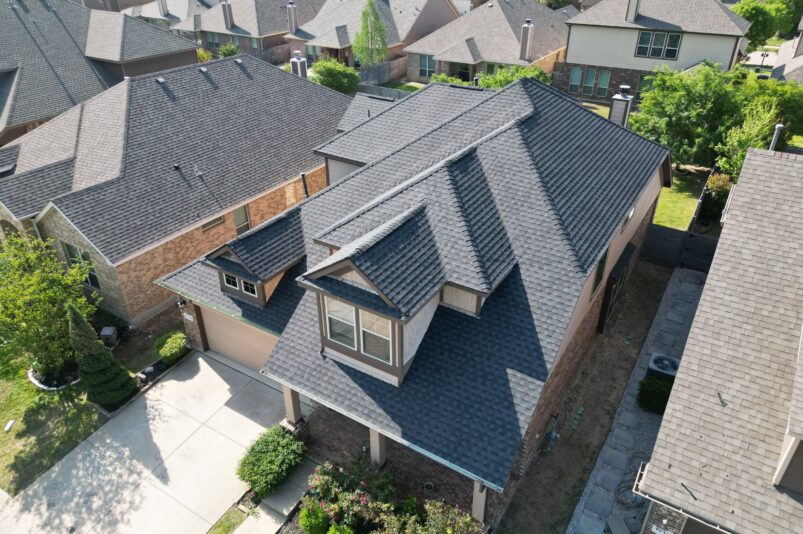
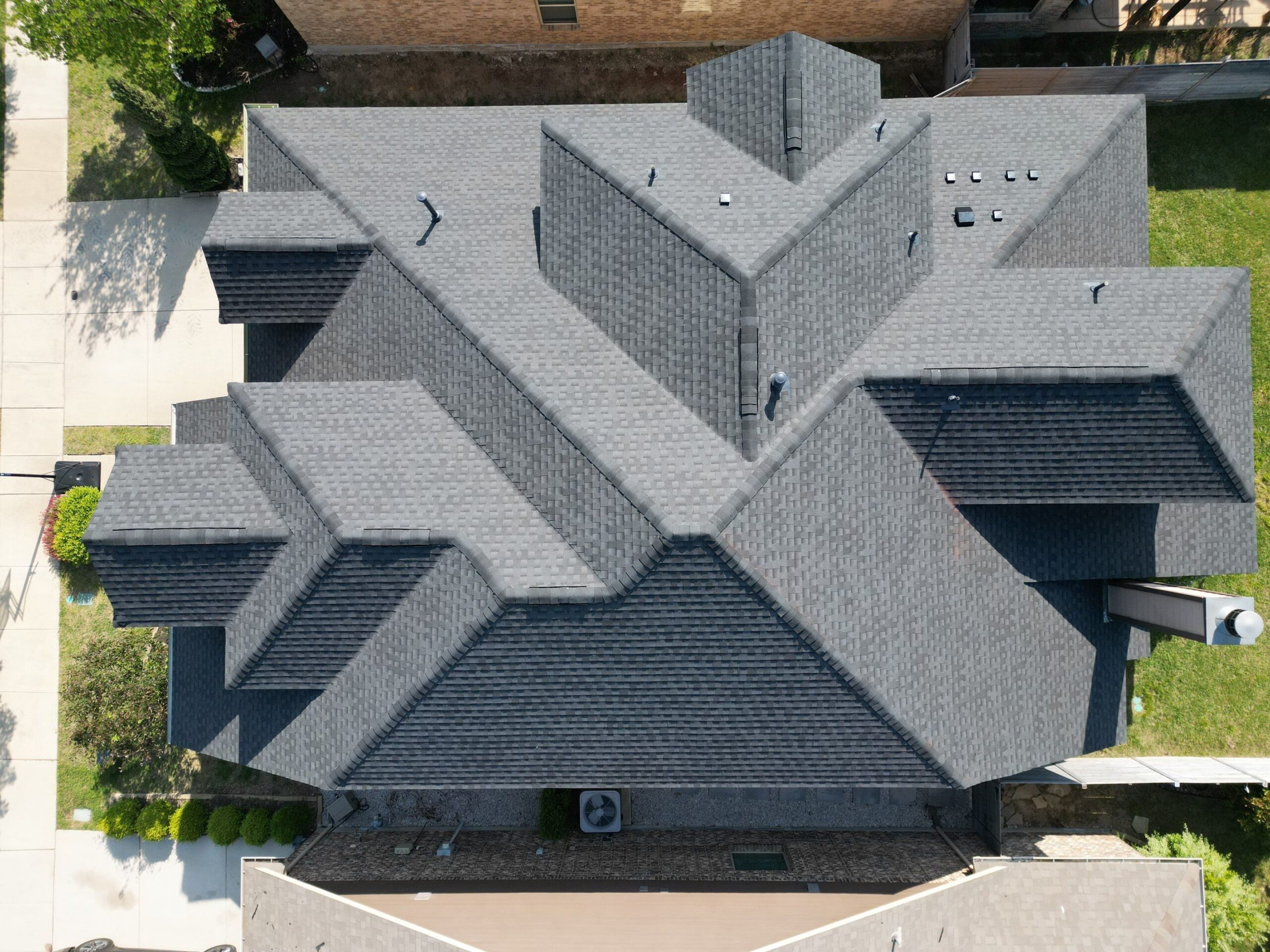
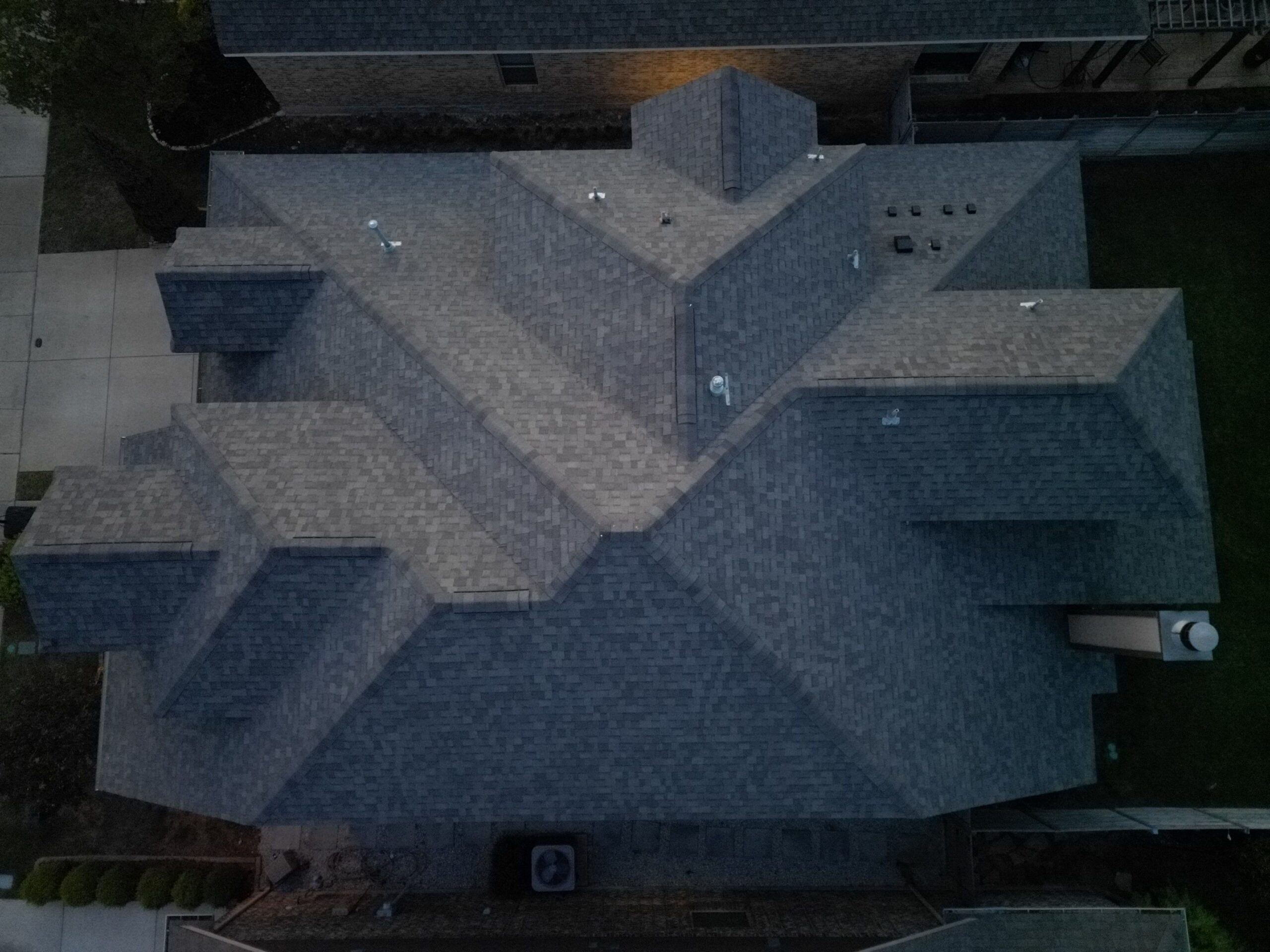
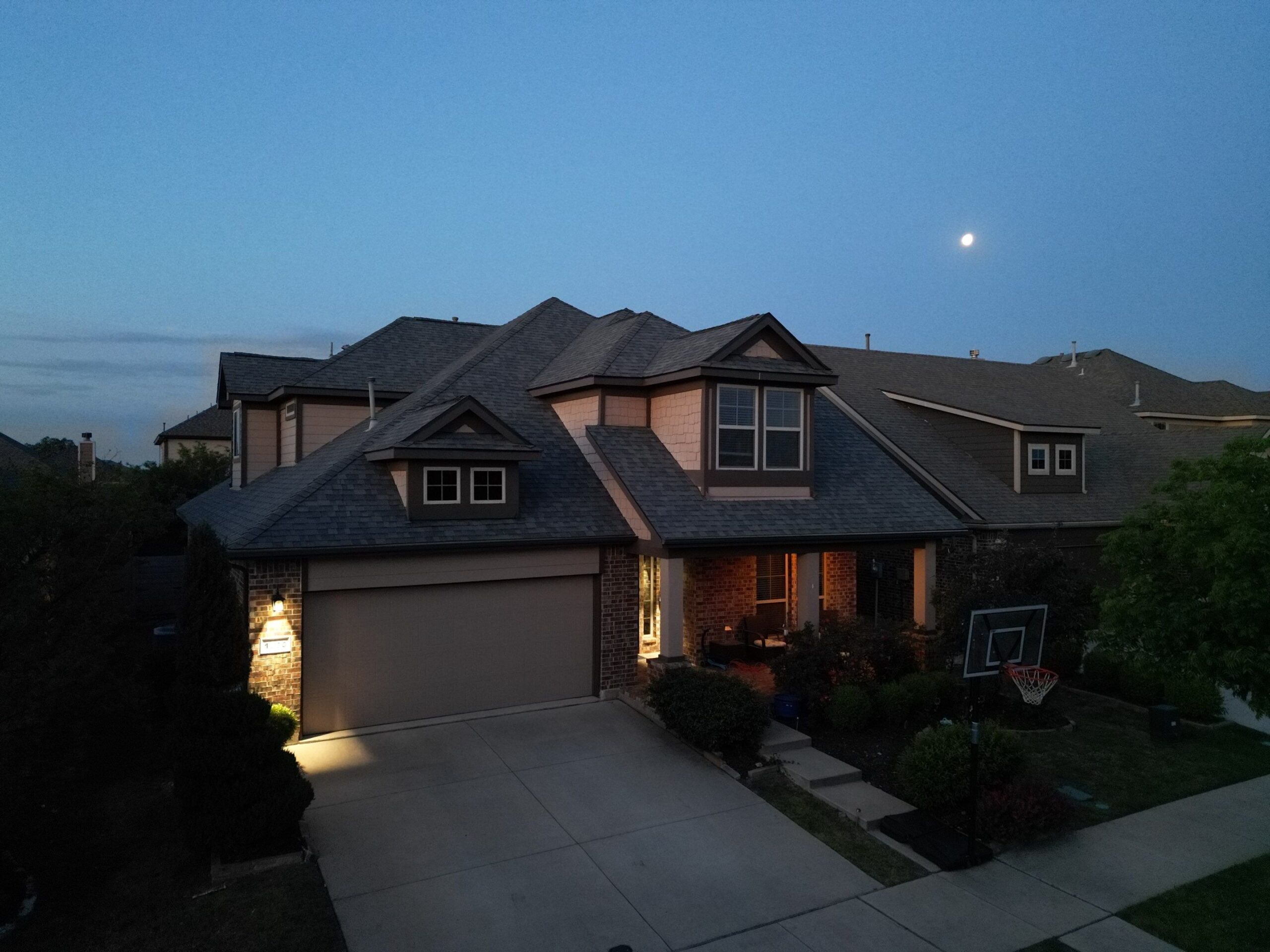
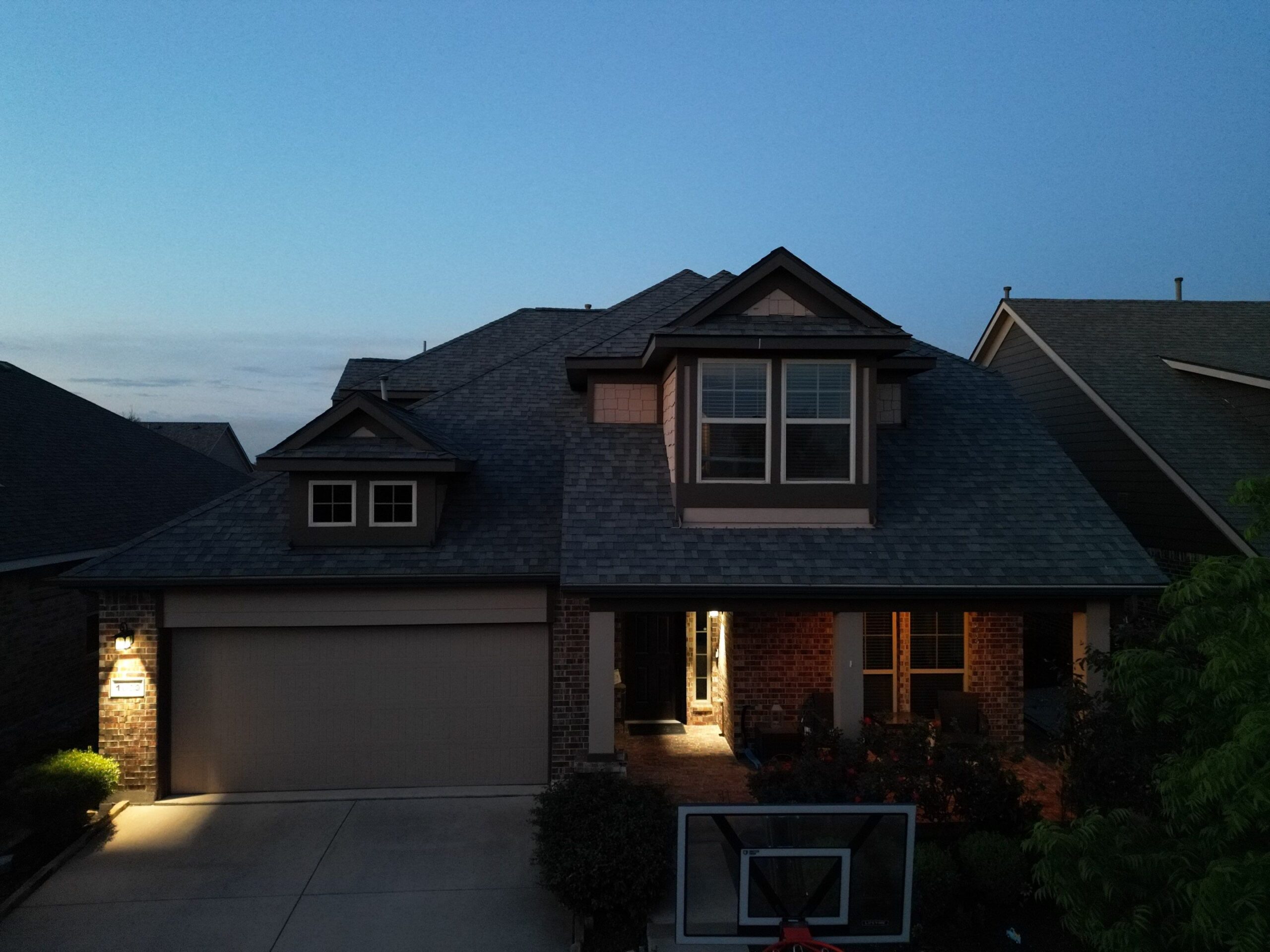
Presidio Roofing Company completed a full insurance-restoration roof replacement at a two-story residential property in Harvest Community, Argyle, TX, covering 3,500 sq ft (35 squares) at an 8/12 pitch. The scope included removing storm-damaged architectural shingles, preserving the existing gutters for reinstallation rather than replacement, and installing GAF Timberline HDZ Class 3 Architectural Shingles in Charcoal along with new drip edge. Coverage comes through a GAF Golden Pledge Warranty with 25-year workmanship protection. The project came in at $32,000-$37,000 and was completed in April 2025.
In This Case Study:
- Project Snapshot: Key Specifications & Costs
- Introduction
- Challenge 1: Leaking Roof Awaiting a Hail Storm to File a Claim
- The Solution: Patience, Experience & Our Expertise
- Challenge 2: Keeping a Busy Family Neighborhood Safe During Install
- The Solution: Proper Protocols, Clear Barriers and an Emphasis on Safety
- Challenge 3: Reusage of the Old Gutters Already on the Home
- The Solution: Careful Attention to Detail and Planning Ahead
- The Result
- How to Maintain Your New GAF Timberline HDZ Class 3 Shingle Roof
- Frequently Asked Questions About This Project
Video transcript and key highlights
Click to view video summary
Project Snapshot: Key Specifications & Costs
| Metric | Project Detail |
|---|---|
| Project Type | Full Roof Replacement (Insurance Claim Restoration) |
| Location | Harvest Community, Argyle, TX 76226 |
| Roof Size | 3,500 Sq Ft (35 Squares) |
| Material Used | GAF Timberline HDZ Class 3 Shingle (Charcoal) |
| Duration | 1 Day |
| Budget Range | $32,000 – $37,000 |
| Warranty | GAF Golden Pledge Warranty With 25-Year Workmanship |
Introduction
This case study covers the complete roof replacement Presidio Roofing Company performed for a residential property in Harvest Community, Argyle, Texas. The work involved removing storm-damaged architectural shingles and installing GAF Timberline HDZ Class 3 Architectural Shingles to improve energy efficiency and wind resistance. The project wrapped in April 2025, covering 3,500 sq ft total.
This one had several layers to it. The house is two stories with a steep 8/12 pitch – just under 34 degrees. The client didn’t want to replace the gutters, so the crew had to remove and salvage them carefully. The neighborhood also happens to be one of the busiest walk-to-school areas in Denton County, which put safety at the front of every decision. And on top of all that, getting the claim approved required real patience – the home had building-level issues that would have been costly to fix on their own, but could be addressed cleanly as part of a full roof replacement after a qualifying hail storm.
Challenge 1: Leaking Roof Awaiting a Hail Storm to File a Claim
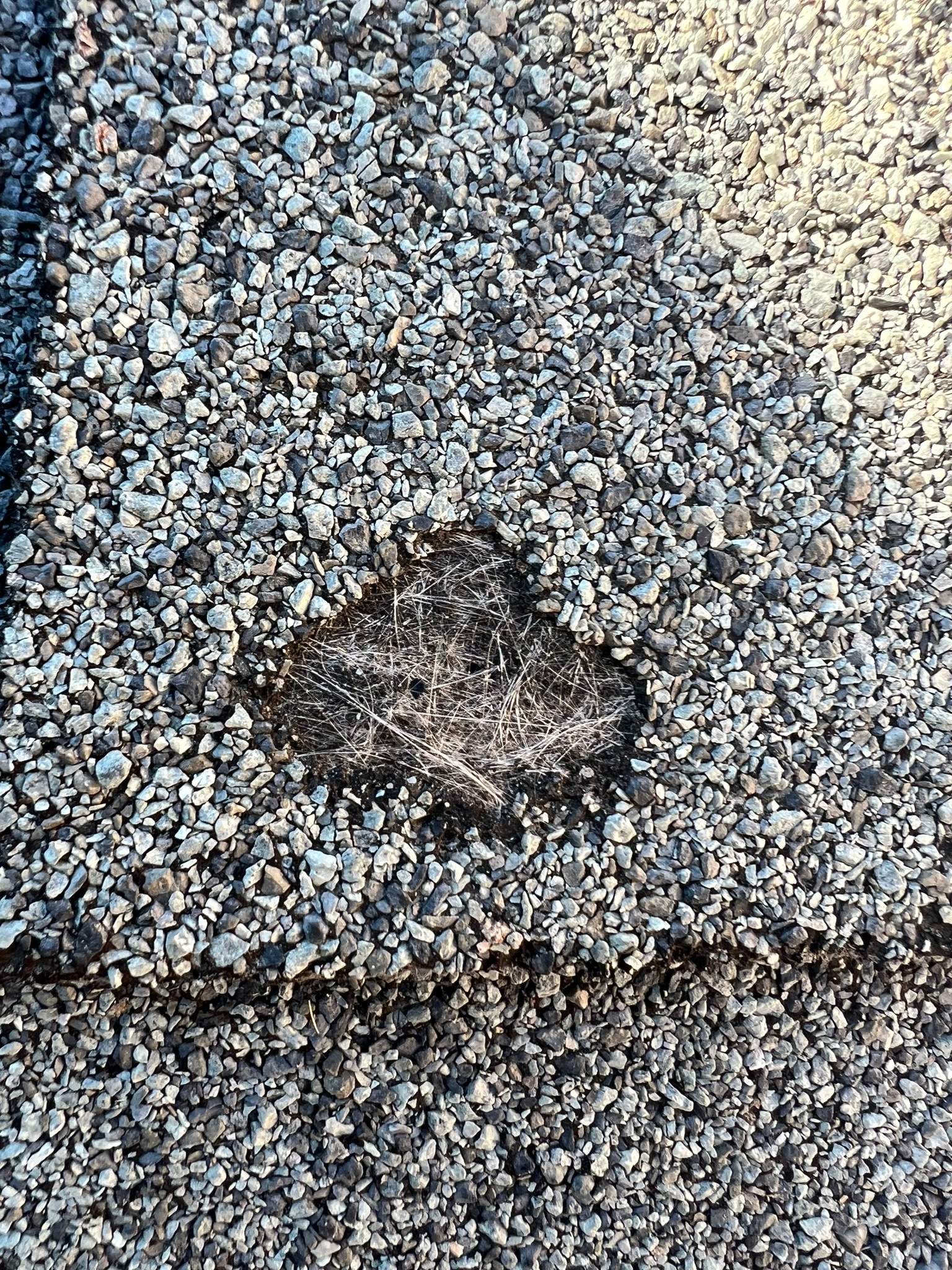
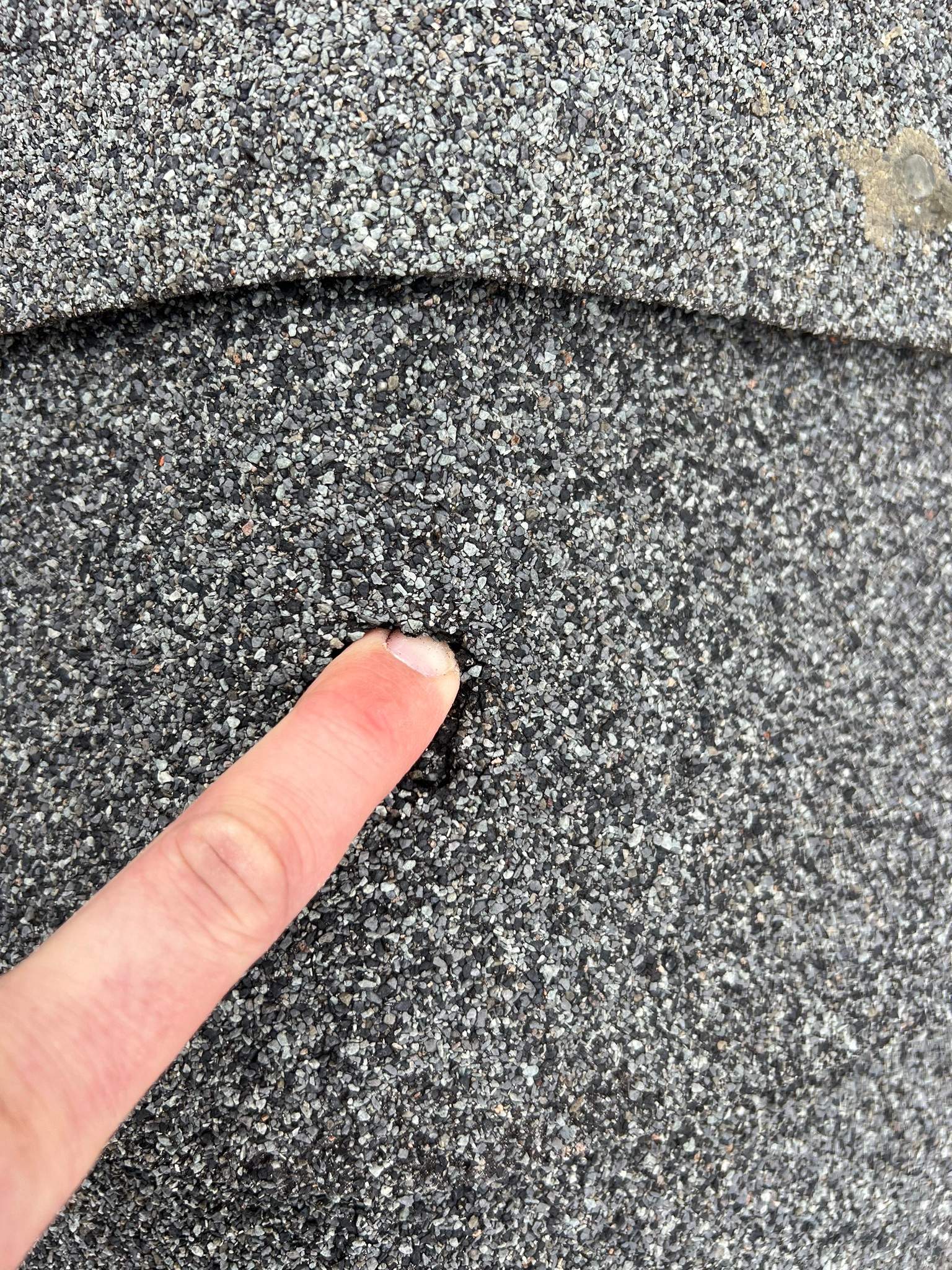
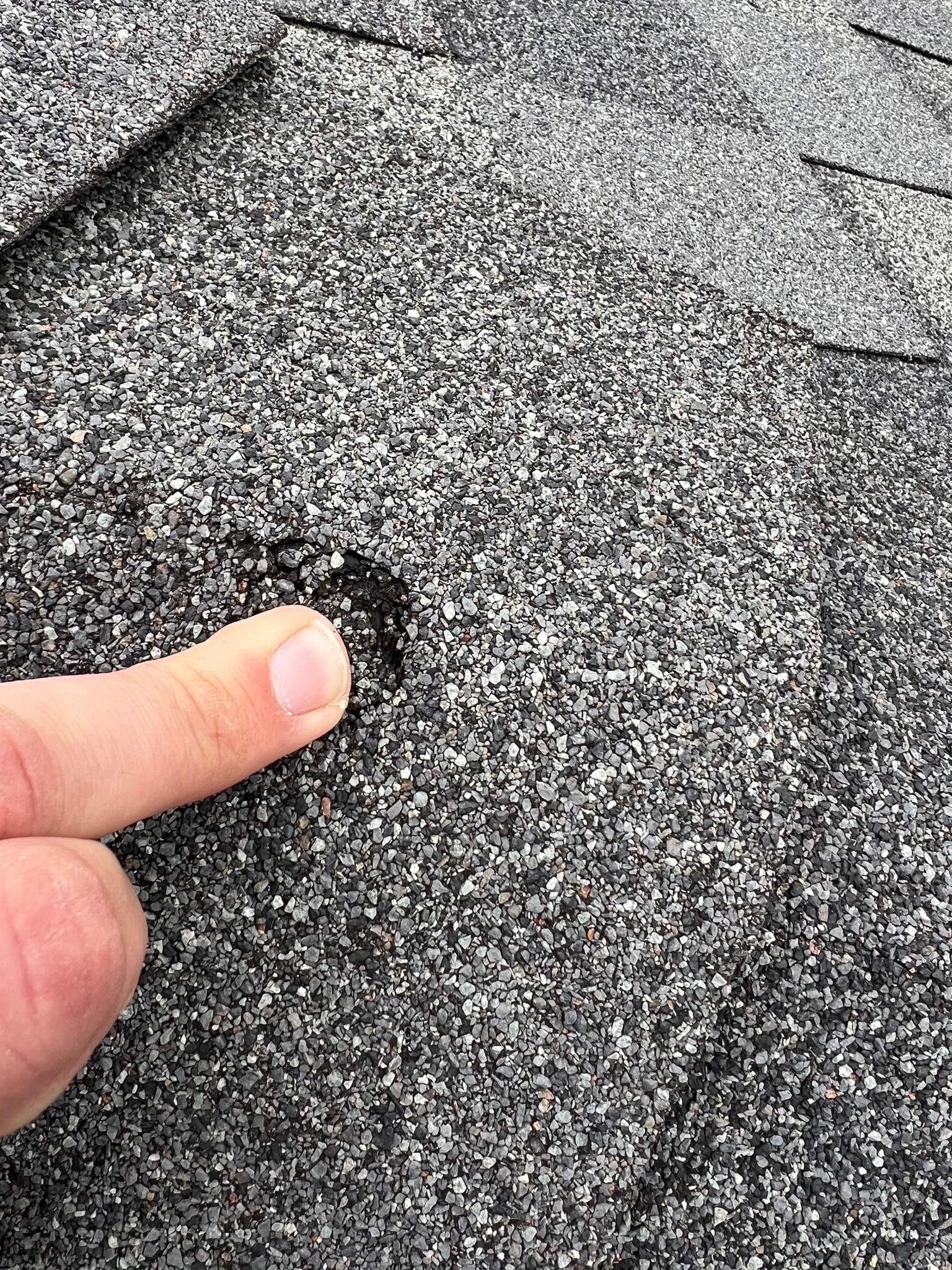
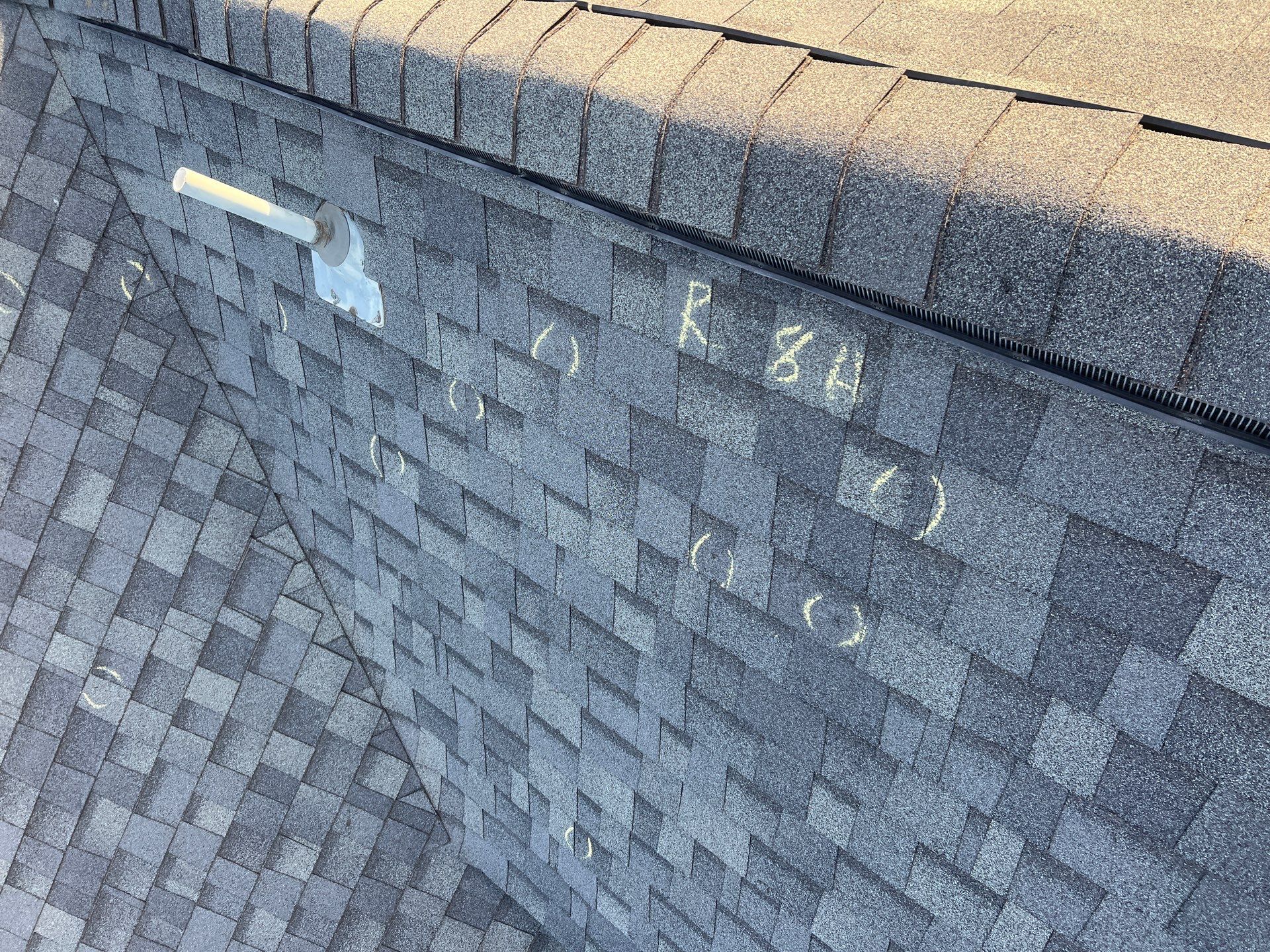
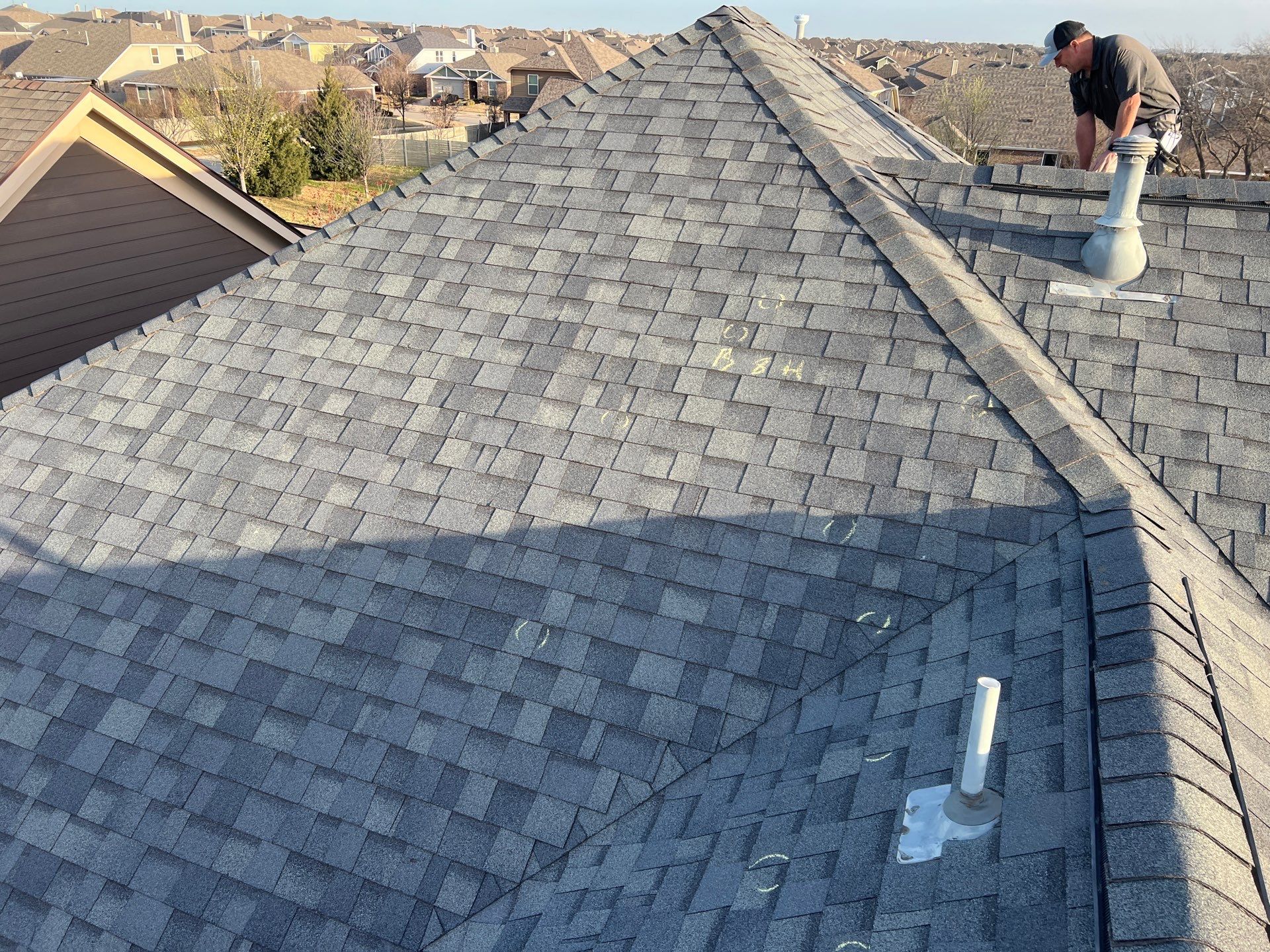
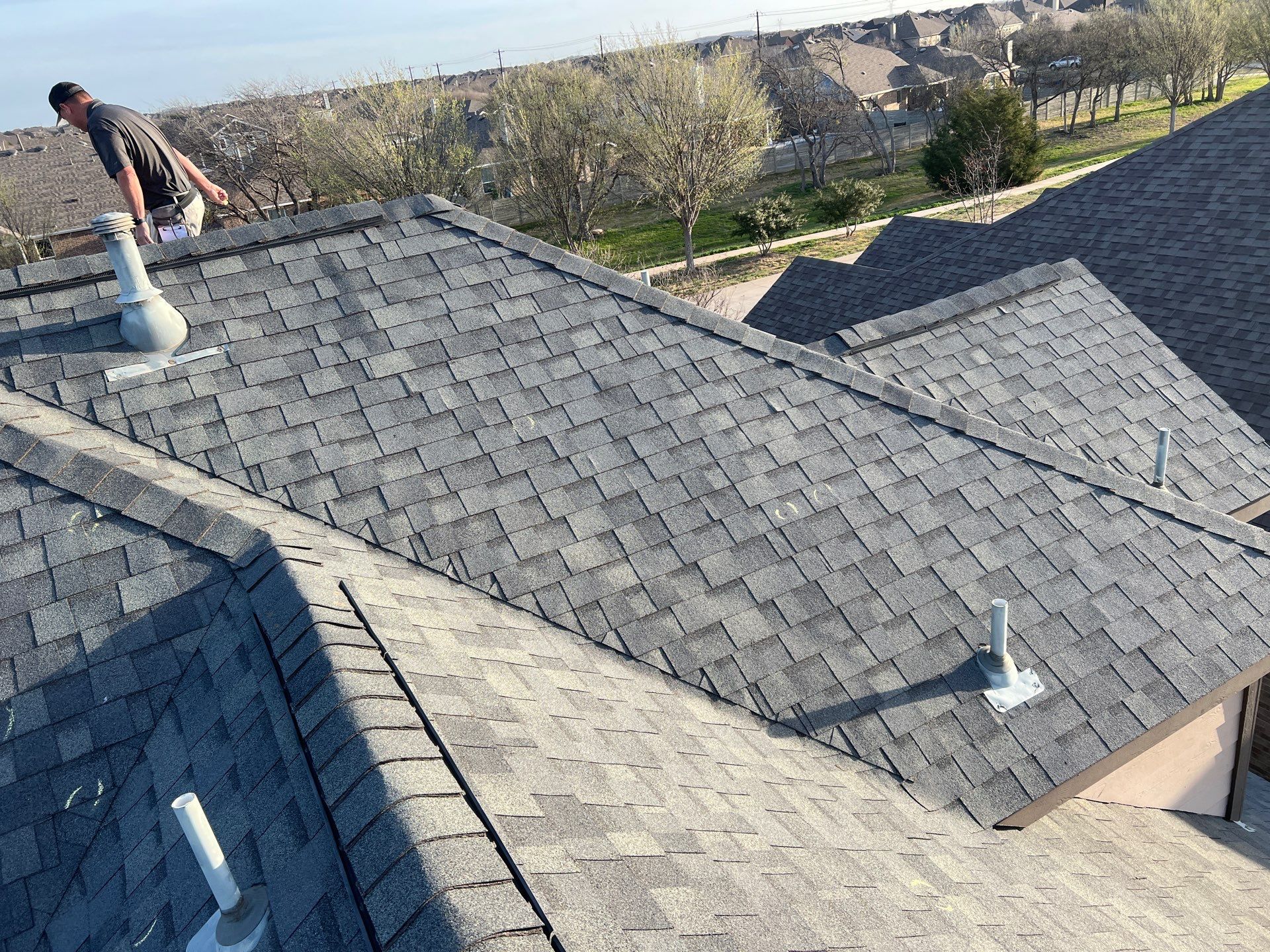
This roof had been developing leaks at various weak points for years before the replacement. For at least three years, we’d been doing minor repairs and inspections – buying the roof time until a qualifying storm hit. The leaks came from fundamental building-level issues. Fixable, but costly to address on their own – and far easier to handle as part of a full replacement. That required patience. Hail storms had passed close to the home before, and the temptation was there to push the client toward filing a claim and seeing what stuck. That’s not how we operate. We held out for the right storm.
The Solution: Patience, Experience & Our Expertise
In Spring 2024, a storm finally hit that was severe enough to total the roof. We were able to guide the homeowners toward a full replacement. That still took work – helping them file the claim, preparing documentation, and meeting the adjuster on-site. The damage cleared the bar for a full replacement, but it wasn’t catastrophic, so we came to that adjustment meeting ready to advocate. The insurance adjuster didn’t give any advance notice. He called the homeowner twenty minutes before arriving. Because we’re a local company, we had a representative on-site within minutes to meet him and make the case for the client.
Challenge 2: Keeping a Busy Family Neighborhood Safe During Install
This neighborhood runs on foot traffic. It’s one of the busiest walk-to-school areas in all of Denton County. During a roof replacement, that means falling debris, loose nails near sidewalks, and general job-site activity all become genuine safety concerns – not just for the crew, but for kids passing by.
The Solution: Proper Protocols, Clear Barriers and an Emphasis on Safety
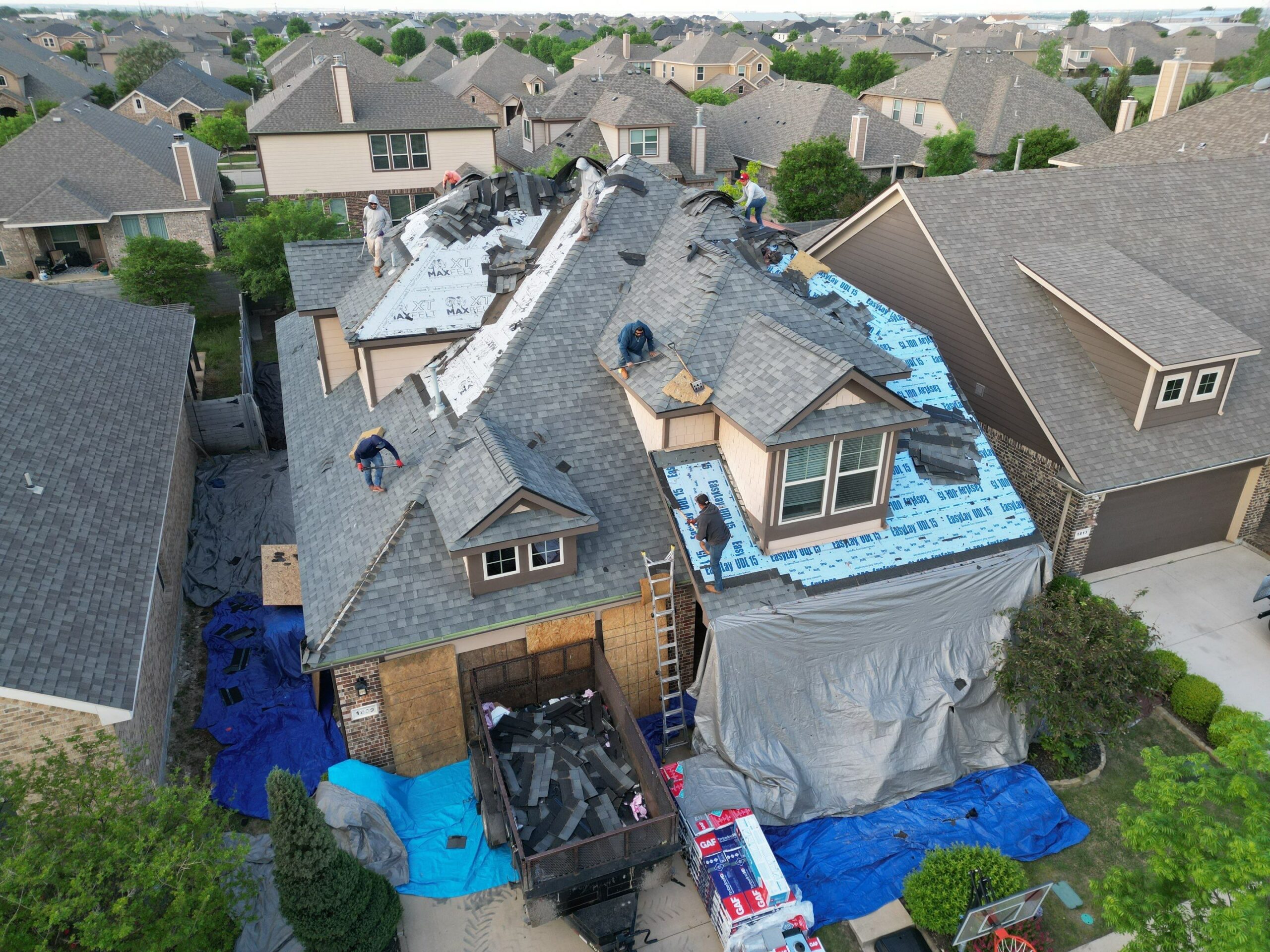
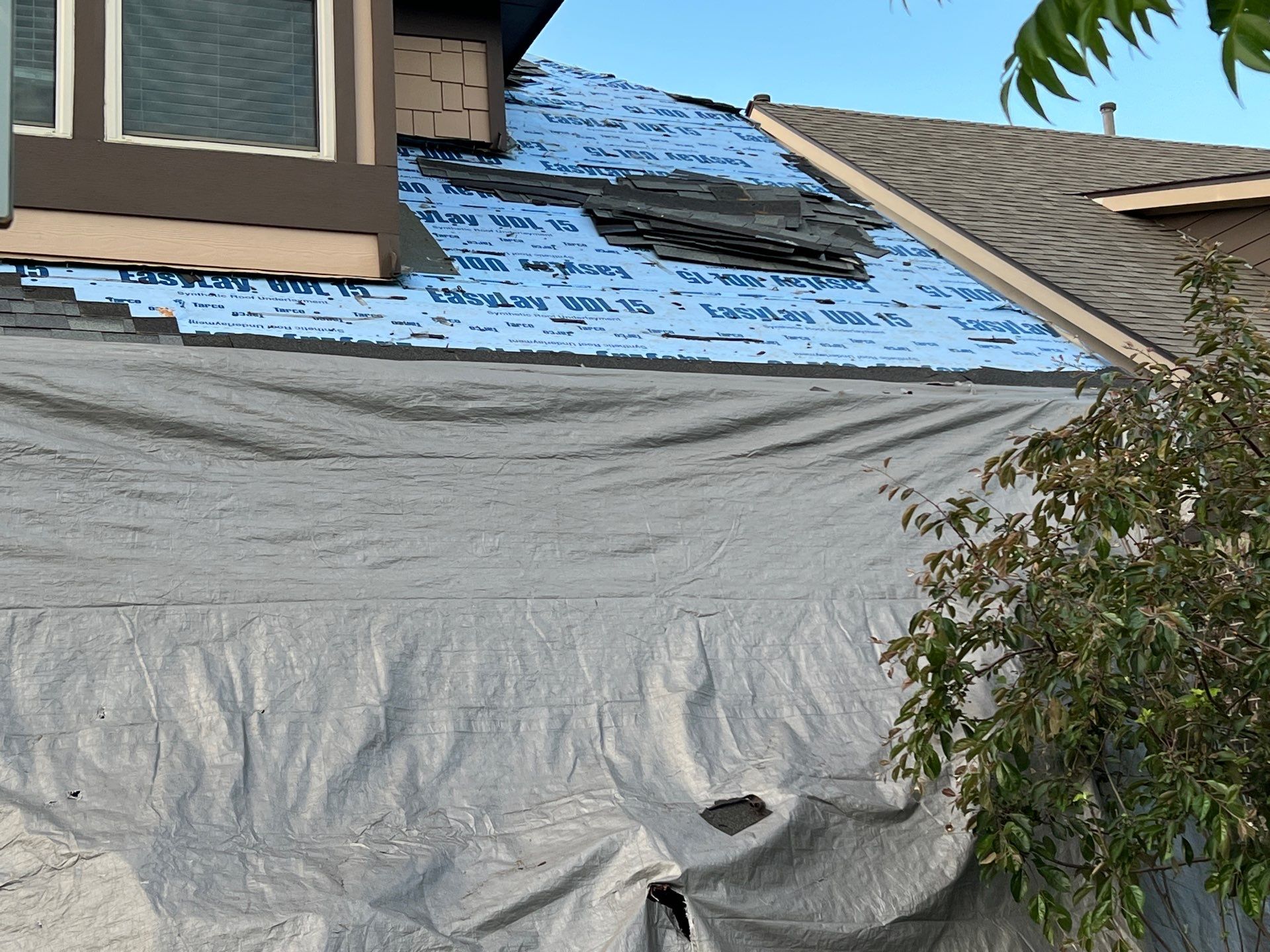
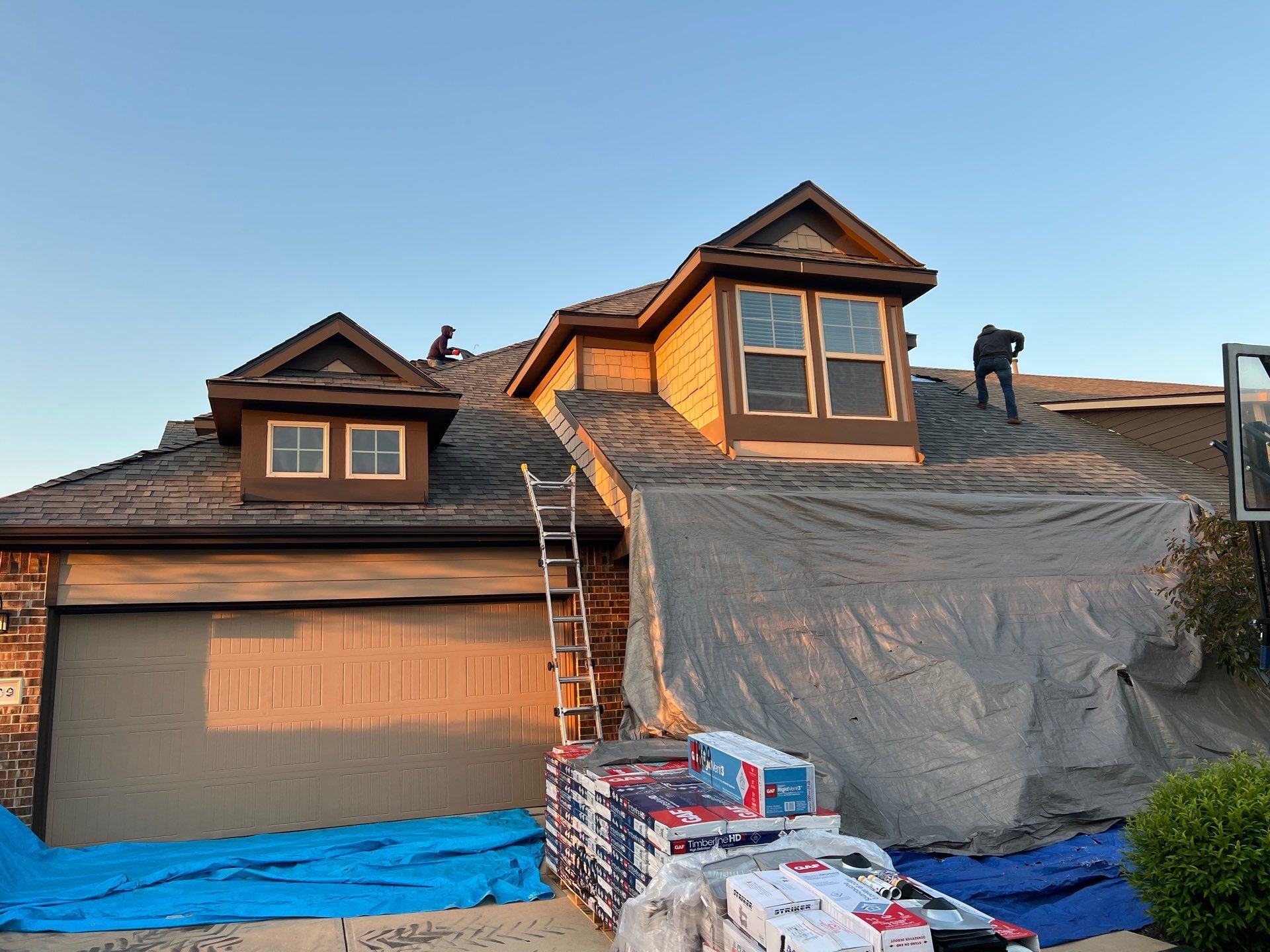
We set up the standard safety perimeter with cones and tape. We also parked our vehicles in front of the job to create an additional buffer between the work zone and the sidewalk – something that tends to keep curious kids from getting too close. Two project managers were on-site for the entire build, covering both safety and quality control. During morning drop-off and afternoon pickup, when foot traffic was heaviest, we were fully locked in on site protection.
Challenge 3: Reusage of the Old Gutters Already on the Home
The homeowner didn’t want to replace the gutters. This is common in Texas – hail damages both the roof and the gutters, but gutter damage is often cosmetic while roof damage is structural. Homeowners frequently opt out of gutter replacement, and that’s their right as long as the contractor doesn’t invoice or represent to the insurance company that the gutter work was completed. The catch is that the roofing crew has to be disciplined about not damaging the gutters during tear-off and installation.
The Solution: Careful Attention to Detail and Planning Ahead
It isn’t always possible to replace a roof without disturbing the gutters. Replacing drip edge on the eaves, for example, often requires the gutters to come off entirely – because gutter screws pass through the drip edge into the fascia board. In this case, the drip edge wasn’t screwed in behind the gutters, which meant we could complete a code-compliant replacement – including the drip edge – without pulling them off. We still had to protect them throughout tear-off. Tarps, wood boards, and careful sequencing kept the gutters clear of debris. We also managed the removal so the old roof was only being pulled from sections where no gutters were at risk.
The Result
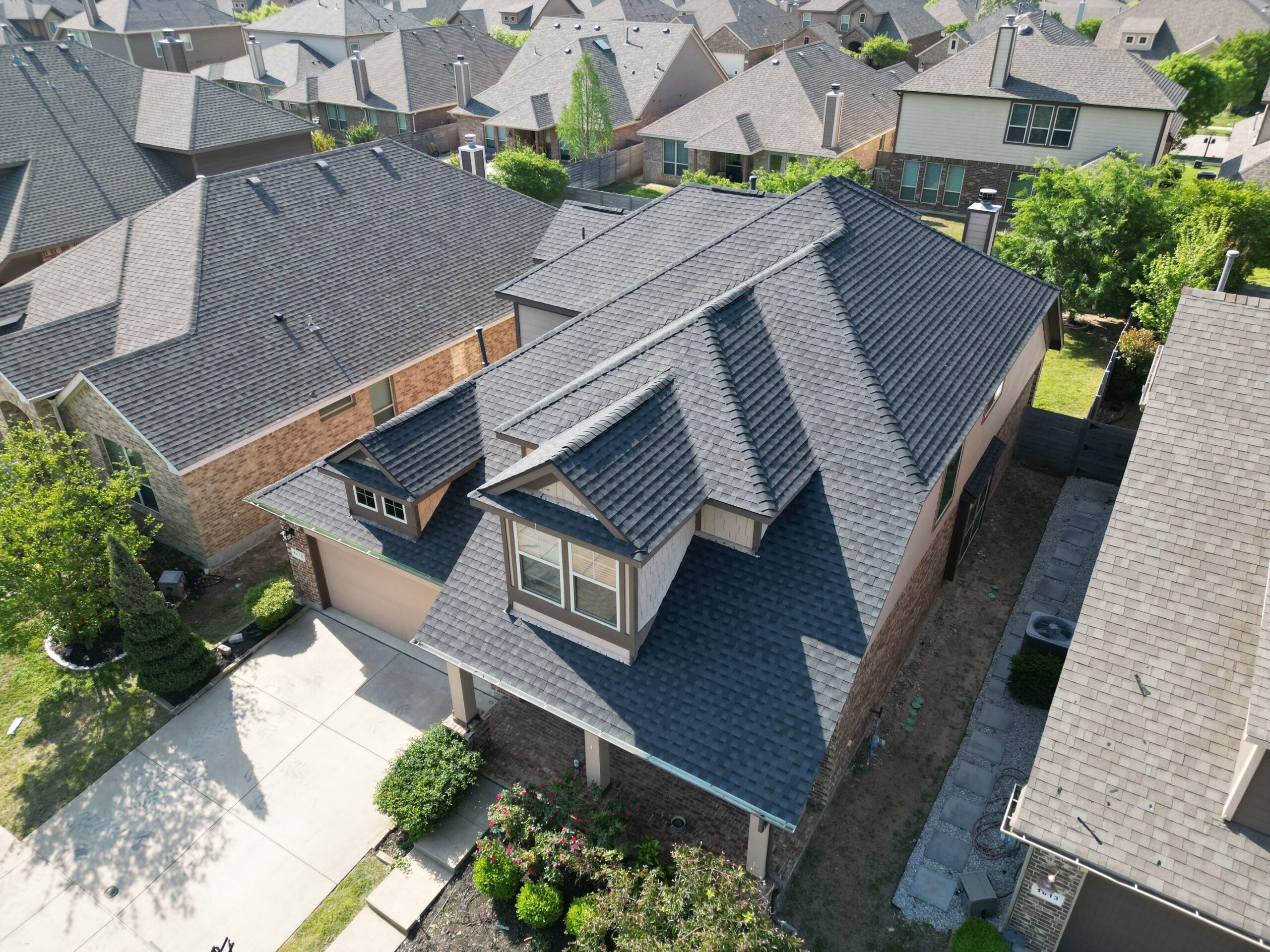
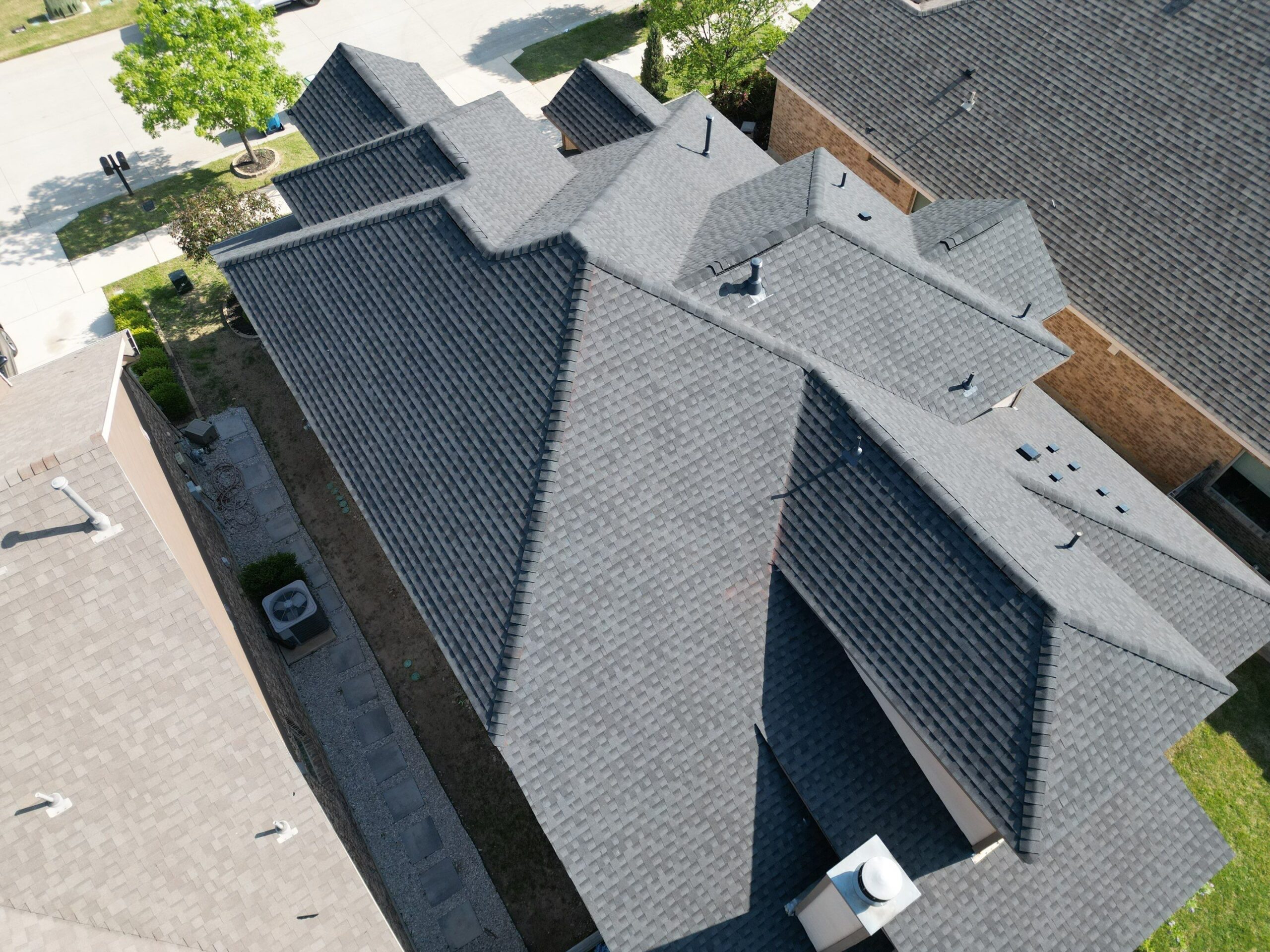
The insurance claim was approved for a full roof replacement – a result that required several months of careful documentation, adjuster coordination, and on-site advocacy. The 3,500 sq ft roof was done in a single day. The existing gutters were removed, protected, and reinstalled without damage. The finished installation carries a GAF Golden Pledge Warranty with 25 years of workmanship coverage. The project came in at $32,000-$37,000, with the insurance claim covering the replacement. The homeowner told us the outcome was worth the wait, given how long the roof had been managed around the hope of getting a qualifying storm. No injuries or incidents occurred during the build. Read more from clients who’ve been through the same process.


How to Maintain Your New GAF Timberline HDZ Class 3 Shingle Roof
While your new roof is built to last, regular maintenance ensures it remains eligible for warranty claims and performs optimally.
After any severe weather event, perform a ground-level inspection. Look for signs like dings in your gutters, tears in window screens, or shingles lying in the yard. Do not climb the roof yourself; call a professional if you suspect damage.
Ensure that leaves and branches are cleared from roof valleys and gutters. Accumulated debris can trap moisture and lead to algae growth or water backing up under the shingles.
Check your downspout splash blocks. If you see excessive accumulation of granules (the “sand” from the shingles), it may indicate that the roof is aging or has sustained new hail damage.
Frequently Asked Questions
How do roofing contractors help homeowners navigate the insurance claims process for storm damage?
What challenges does a steep roof pitch present during a residential roof replacement?
Can gutters be preserved during a roof replacement, or do they always need to be replaced?
What safety protocols should roofing contractors follow when working in occupied residential neighborhoods?
How do roofing contractors manage a failing roof when a full replacement is not yet financially viable?
What does a contractor-backed roofing warranty cover, and how does it differ from a manufacturer warranty?
What maintenance steps should homeowners take after a new roof is installed to protect their investment?

About the author: Nick Van Slyke
Certifications & Affiliations