
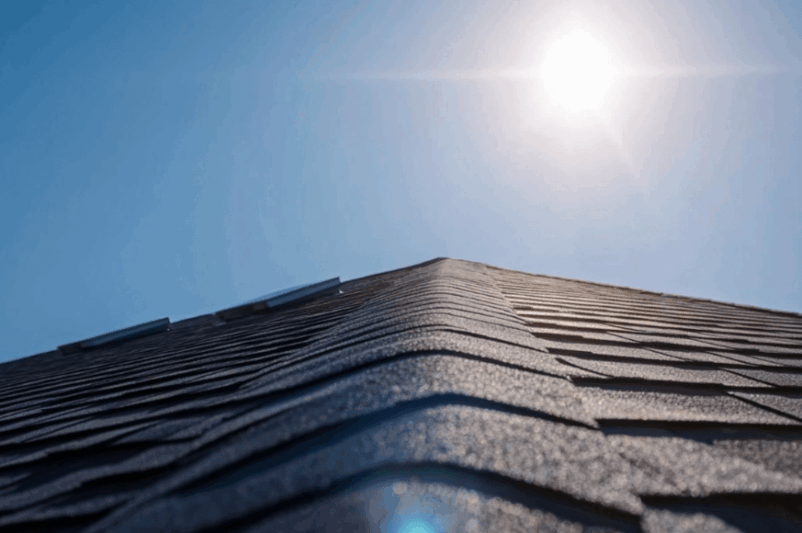
Roof Cooling Techniques: A Texas Homeowner’s Guide
Texas summers don’t relent. Between mid-May and late September, attic temperatures across San Antonio, Austin, Stone Oak, Round Rock, and Flower Mound regularly push past 130°F when roof surface temperatures hit 150°F or more. Cooling the roof, not just the house, is what changes that picture. Here are the seven techniques worth considering, what each one actually does, and how to figure out which one to start with.
What Makes a Roof Cool: Why It Matters in Texas
A “cool roof” is a roof that bounces sunlight back and lets accumulated heat escape rather than trapping it. The Cool Roof Rating Council (CRRC) defines a cool roof by two measurable properties: solar reflectance (how much sunlight the surface bounces back) and thermal emittance (how readily the surface releases the heat it does absorb). Both get tested independently, and the CRRC’s rated products directory lists thousands of independently rated products you can verify before buying.
For Texas homeowners, the payoff is twofold. The U.S. Department of Energy (DOE) reports that cool roofs can reduce cooling-energy use by 10% to 30% in warm climates. And lower roof temperatures slow the thermal cycling that ages shingles, sealants, and underlayment, which matters when summer heat already shortens roof life across Texas.
The Seven Roof Cooling Techniques Worth Considering
Reflective Roof Coatings
A reflective coating is a paint-like layer rolled or sprayed onto an existing roof surface to lift its solar reflectance. Coatings are most useful on flat or low-slope roofs (TPO, modified bitumen, single-ply membranes) and on metal roofs that have lost their original finish. Acrylic coatings are common; silicone holds up better in standing-water situations.
Best for: an existing flat or low-slope roof you plan to keep for several more years.
Worst for: asphalt shingle roofs. Painting an asphalt shingle roof voids the manufacturer’s warranty almost universally.
Reflective or “Cool” Shingles and Tiles
Cool shingles and tiles use reflective granules or specialized glazes to hit higher solar-reflectance numbers than standard products. Because manufacturer marketing claims vary widely in what “cool” actually means, comparing CRRC-rated reflectance and emittance values across brands is the cleanest way to see which products are backed by independent testing rather than just labeling.
Best for: a roof you’re replacing soon anyway.
Worst for: spending the upgrade premium on a roof that has 8 years of life left. The math rarely works.
Metal Roofing as a Cool Roof
Metal roofs in light or specialty-coated finishes deliver some of the highest reflectance and emittance numbers in the residential category. They also pair with Class 4 (the highest UL 2218 hail-impact rating), which qualifies many Texas homeowners for an insurance premium discount through their carrier.
Best for: a full replacement decision in a hail-active part of Texas.
Worst for: budget-constrained replacements where the upfront cost premium outweighs the long-run savings.
Radiant Barriers and Attic Insulation
A radiant barrier is a foil-faced sheet stapled to the underside of the roof deck or laid on top of attic-floor insulation. It reflects the heat the roof surface still emits inward. Pair it with adequate attic insulation (R-38 or higher in most of Texas) and the cooling load on your AC drops before the heat reaches the living space.
Best for: under-insulated attics with accessible joists.
Worst for: finished attics or low-clearance spaces where access is impractical without remodeling.
Attic Ventilation Upgrades
Without airflow through the attic, even a reflective roof traps heat against the deck. The DOE’s recommended attic-ventilation ratio of roughly 1 square foot of net free vent area per 300 square feet of attic floor (with a vapor barrier in place) is the baseline that lets reflective surface treatments actually save energy. A balanced soffit-and-ridge configuration outperforms gable-only or powered-fan setups in most Texas attics.
Best for: any home before adding reflective surface treatments.
Worst for: nothing. This is the foundation that has to be in place first.
Solar Panels (Doubles as Roof Shade)
Solar panels reduce roof-surface heat gain by literally shading the deck underneath. The cost-justification is mostly the electricity offset, but the cooling effect is real and it’s an underrated side benefit on south- and west-facing pitches.
Best for: homeowners who would consider solar anyway and have unshaded south-facing roof area.
Worst for: homes where the cooling effect alone has to justify the install. That math doesn’t math.
Roof Misting Systems: When They Make Sense (and When They Don’t)
A roof misting system sprays a fine water mist over the roof surface; evaporation pulls heat off the deck. Misters work, but they sit in a narrower fit zone in Texas because of drought restrictions and water-cost variability across municipalities. What saves on the electric bill can show up on the water bill.
Best for: commercial or low-slope roofs in markets with stable water access and no current drought restrictions.
Worst for: most residential applications during summer water restrictions.
Comparing Cost, Lifespan, and Energy Savings
Here are the seven techniques side-by-side. Cost is shown as a tier rather than a per-square-foot figure because installed pricing varies by Texas market and by the size and pitch of your roof.
| Technique | Cost tier | Expected lifespan | Energy-savings range | DIY or pro | Roof status fit |
|---|---|---|---|---|---|
| Reflective coatings | Lower | Shorter (re-coat cyclical) | Lower-to-mid | Pro | Keeping current roof |
| Cool shingles / tiles | Higher | 30 years | Mid | Pro | Replacing soon |
| Metal cool roof | Highest | 40 to 70 years | Highest | Pro | Replacing soon |
| Radiant barriers + insulation | Lower-to-mid | 20 years | Mid | DIY-able | Either |
| Attic ventilation upgrades | Lower | 20 years | Multiplier on others | DIY-able | Either |
| Solar panels (shade benefit) | Higher | 25 years | Indirect | Pro | Either |
| Misting systems | Mid | Shorter | Mid (offset by water cost) | Pro | Keeping current roof |
If you want an actual roof-by-roof read on which of these makes sense for your situation, our team can run a free comprehensive photo report so you have real numbers to work from. Schedule a free roof inspection.
Which Technique Should You Start With?
There’s a sequencing answer most listicles skip. We’d recommend starting from the inside out, not the outside in.
- Attic ventilation and insulation first. If your attic insulation is below R-38 or your soffit-and-ridge venting is undersized, every dollar spent on reflective surface treatments is fighting an avoidable headwind. This is where we tell most Texas homeowners to put their first dollars.
- Surface treatment second, on a roof you’re keeping. Reflective coatings make sense for flat and low-slope roofs with 5 years or more of life. For asphalt shingle roofs, the play is to wait for the next replacement.
- Material change at next replacement. If your roof is within 3 to 5 years of replacement anyway, that’s when cool shingles, metal, or a Class 4 impact-rated product earns its premium. You’re paying for the upgrade once, on a job you were doing anyway.
Two cohorts of homeowners read this differently. If you’re replacing your roof soon, material choice (cool shingles, metal, F-Wave synthetic slate, or Decra stone-coated steel) is your lever. If you’re keeping your current roof, attic upgrades and surface coatings are.
What Texas-Specific Conditions Change the Calculus
A few Texas realities push this decision around in ways national listicles miss:
- Hail. A reflective metal roof with a Class 4 impact rating handles a Stone Oak or Round Rock hailstorm very differently from a coated low-slope roof. In a hail-active corridor, durability and cooling can’t be optimized separately.
- Drought restrictions. Water-based cooling (misting, green roofs needing irrigation) competes with stage 2 and stage 3 outdoor watering rules in much of Texas during summer. Worth checking your municipality’s restriction calendar before committing.
- HOA color rules. Some covenant-controlled communities restrict roof color, which can rule out the lightest reflective options. We’ve seen homeowners get most of the way through a coating decision before discovering a covenant constraint.
- Pollen and dust load. Reflective surfaces that perform well in lab conditions lose some reflectance to dust and pollen, especially in spring. An annual rinse-down restores most of it.
When you’re ready for someone to look at your specific roof, our team at Presidio Roofing Company can run a free roof inspection and give you a tailored read on which of these techniques actually pencil out for your situation.
Frequently Asked Questions
How do roofing contractors adjust roof cooling techniques for low-slope structures during hot summers?
What should property owners expect when contractors install radiant barriers as a roof cooling technique?
How do roofing professionals determine whether elastomeric cool coatings or reflective shingles provide better relief during hot summers?
How do contractors view solar panels as shade structures when implementing roof cooling techniques?
Why do contractors warn against assuming white roofing products automatically perform best during hot summers?
What specific techniques do roofing companies use to ensure metal roofs do not become heat traps in hot summers?
When is it appropriate for a roofing contractor to recommend retrofit cooling techniques instead of a full replacement?

About the author: Nick Van Slyke
Certifications & Affiliations