If you’re living in an older home, it’s natural to wonder if your insurance company will still pay to repair your roof if it gets damaged. After all, the older the roof, the more prone it is to leaks, so insurance providers tend to see older roofs as liabilities.
In many cases, standard homeowners insurance won’t cover a 25-year-old roof, particularly if your roof has asphalt shingles. However, with more durable roofing materials, a diligent approach to paperwork, and an understanding insurer, obtaining coverage for an older roof is certainly still possible.
In this article, we’ll explain:
- Why the age of your roof matters
- How different roof materials age at different rates
- What type of payout you can expect to receive if you’re covered
- Other factors that might prevent a claim, even if your roof is in good health
How the age of your roof affects your insurance
Not every insurance company handles old roofs in the same way. Some are less tolerant, others more so. Some even specialize in older roofs—although this normally comes at a high cost to you as the homeowner.
But, as a general rule, insurers use local property records and your prior claim history to determine the age of a roof. They’ll usually send an inspector over as well to assess the wear and tear in person.
If your roof is found to be 25 years older or more, and if it’s covered by asphalt shingles (like most of the roofs in the US), your insurance provider is unlikely to offer coverage. This is simply because the shingles are likely to have sustained damage and lost their granules by this age, making your roof prone to leaking and structural issues.
From your insurer’s perspective, an older roof signals that you’re likely to make a claim in the near future, which is a drain on their cashflow. To reduce the odds of this happening, they will likely do one or more of the following:
- Tell you that you need to get a new roof before they can renew your policy or issue a new one
- Offer a roof exclusion—meaning that your insurance covers your whole property, except for the roof
- Offer you the cash value of the roof, which is likely to be close to zero due to depreciation
- Deny you any new policy or policy renewal altogether
As your roof ages, your insurer is also likely to increase your premiums to mitigate the risk of a potential claim. Premiums typically increase every 5 years, rather than every year. There are often big jumps at years 10, 15 and 20.
They might also impose a high deductible for any claims relating to your roof. This means that you’d pay more out of pocket for your roof in the event of any claim.
Different roofing materials age at different rates
While the chances of finding insurance for a 25-year-old roof with standard asphalt shingles are low, not all roofing materials are made equally. What qualifies as “old” varies depending on what your roof is made of.
For some roof types, such as metal or slate, a 25-year-old roof is still quite new. Other materials, like wood, have an even worse risk profile than asphalt!
Let’s look at each roofing material in more detail.
Wooden roofing
Homeowners sometimes want a wooden roof for its aesthetic value. Cedar is especially popular.
From an insurer’s perspective, such roofs are a liability. They’re prone to damage from both fire and mold, and rarely last longer than 20 years.
Finding coverage for a 25-year-old wooden roof would be almost impossible, even if it’s in good condition.
Metal roofing
Metal roofs are known for being resistant to the elements and easy to maintain. They’re also recommended in regions that are prone to wildfires, since they’re more fire-resistant than the default asphalt option.
You can expect a metal roof to last somewhere between 40 and 60 years. So a 25-year-old metal roof is unlikely to worry your insurer too much. Your premiums might be a bit higher than if the roof were new, but you’ll still find coverage.
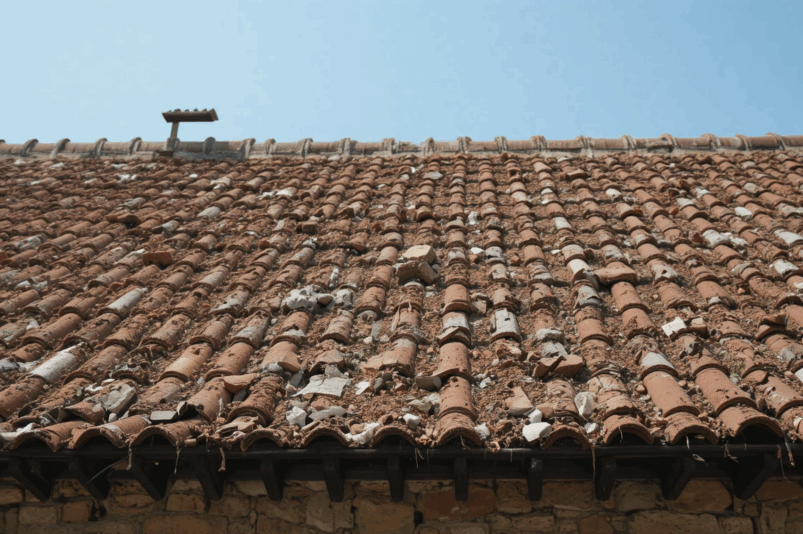
Tile roofing
Everything that can be said about metal roofing can be said for tile roofing. Tile is exceptionally resistant to water, fire and wind, which makes a tile roof both durable and an appealing option for your insurance provider.
Tile roofs typically last around 50 years, so a 25-year-old roof is in the middle of its lifespan, rather than old.
The only caveat here: expect to pay slightly higher premiums in regions prone to heavy storms. It’s expensive to replace a tile roof. Your insurer knows this, so they’ll cover themselves by charging you more each month.
Slate roofing
Slate roofs can last for centuries, so a 25-year old slate roof is nothing! You might be hit with higher premiums once your roof reaches 75 or 100 years old, but before that, expect to receive favorable treatment from most insurance companies. Slate is also highly durable, so you shouldn’t expect too much in the way of maintenance.
The only downside here is that slate is the most expensive roofing material. So, if you’re building a house that has a slate roof, you’re paying a higher upfront cost for lower insurance premiums later down the line.
What will your insurance pay for?
Let’s assume that your roof is made of durable material and that you are able to find insurance coverage, despite the roof being 25 years old.
Even then, there are certain types of damage that your provider will pay for, and other types that they’ll expect you to cover out of pocket. This varies from policy to policy, but in general:
| Insurer WILL pay for | Insurer WON’T pay for |
|---|---|
| Damage from sudden, unforeseen events, like a tree falling on your roof during a hurricane | Normal wear and tear, especially on an older roof |
| Hail dents on shingles | Replacement of curled or leaking shingles |
| Missing shingles that come off the roof during an extreme weather event | Cleaning your roof as part of regular maintenance |
Ask for a reinspection or bring in a roofer to document hidden issues.
Check your specific policy to see what’s covered and what’s not, and bear in mind that your insurer will probably send a loss adjuster to check the details of any claim you want to make.
How much will your insurer pay you?
Assuming you can get coverage for your 25-year-old roof, there are two main methods that insurance companies use to calculate the amount of money they would pay you in the event of a successful claim.
Method 1: Replacement Cost Value (RCV)
This is the best-case scenario, from your point of view. In an RCV policy, your insurer will pay for the cost of replacing your entire roof, using the same materials that were used for the original roof.
In practice, the payout will rarely cover the full cost of a new roof, since you’ll still have to fork out some cash for your deductible. You also won’t be able to get the insurance company to cover any upgrades you want to make, such as switching to a standing seam metal roof for increased durability.
But if you put in the work to carefully document your claim and follow your insurance company’s process, you can get most of the cost covered.
And if your roof is made of metal, tile or slate, having an RCV policy is a very real possibility.
Method 2: Actual Cash Value (ACV)
Unfortunately, the more likely outcome, especially if you’re like most Americans and have an asphalt roof, is that your policy is based on ACV.
This means that your insurance company is only liable for the actual cash value of your roof at the time that the damage takes place.
Here’s the catch: the cash value of your roof depreciates as it ages. Different roofing materials depreciate at different rates, with slate losing roughly 1% of its value per year and asphalt losing about 6%.
So after 25 years, many asphalt roofs will be worth nothing, or close to nothing. And even if you do get some sort of payout, remember that you’re still responsible for paying your deductible!
To reduce their risk, most insurance companies switch from an RCV to an ACV policy as a roof gets older.
Other reasons your claim might get denied
Even if you can get insurance coverage for your 25-year-old roof, there’s no guarantee that your insurance will pay up when you make a claim.
Here are some common reasons why your claim could be denied:
- Missing Paperwork: When making a claim, insurers expect you to provide solid evidence of the issue. This usually means photos of the damage, copies of your insurance policy, records of communication with the insurer, and receipts for any repairs or materials used. If any of these are missing, your claim might not be accepted.
- Filing Too Late: Most home insurance policies have strict timeframes for reporting damage. Waiting too long after discovering the issue can lead to automatic rejection, regardless of whether the claim would otherwise have been valid.
- Faulty Roofing Products: If your roof problems are traced back to defective materials, your insurance likely won’t cover the costs. These cases are usually the manufacturer’s responsibility, so you may need to turn to the product warranty instead of your home insurer.
- Gaps in Your Policy: Insurance coverage only applies to events and damages clearly stated in your policy. If a particular issue isn’t listed, the insurer isn’t required to pay for it.
- Poor Roof Maintenance: Home insurance is meant to protect against unexpected events, not neglect. If an assessor finds that your roof damage resulted from a lack of regular upkeep, your claim is likely to be turned down.
What homeowners can do
If your roof is 25 years old or more, there’s no need to panic. You can still get insurance coverage, especially if you don’t have an asphalt roof.
To boost your chances of getting insured, consider the following:
- Bring in a professional inspector to prove that your roof is still in good condition. Photos and maintenance records can also be useful here.
- Review your policy documents to see what sort of coverage is available. If it’s not clear to you, call your insurance agent.
- Be aware that many insurers will view your home more favorably if you’re willing to make a switch to more durable roofing materials.
Here at Presidio, we’re happy to inspect your roof for free. We’ll let you know honestly what condition your roof is in, as well as what the best path to affordable insurance coverage looks like for your family.
Schedule your inspection today by calling us on (210) 670-6890.

About the Author
Certifications & Affiliations