
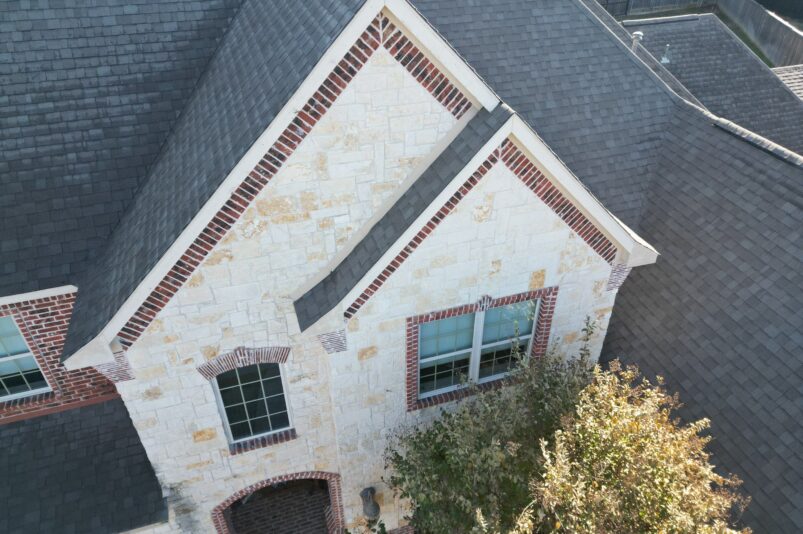
Presidio Roofing Company of Denton completed a full insurance-claim roof replacement at a residential property in Swisher Estates, Denton, Texas after wind and hail damaged a shingle roof that had been on the home since at least 2014. The 6,965 sq ft roof – 62 facets at a predominant 12/12 pitch – was rebuilt with a complete GAF Armorshield II Class 4 impact-resistant shingle system in Charcoal, along with new gutters, plumbing boots, vents, and flashings. The approved claim covered the roof, gutters, garage doors, and fence; total job value was $60,000. The project carries a GAF Golden Pledge Warranty and an unlimited wind speed warranty tied to the Class 4 designation. Full replacement finished in 1.5 days.
In This Case Study:
- Project Snapshot: Key Specifications & Costs
- Introduction
- Work Scope
- Challenge 1: A Homeowner Hesitant to File a Claim
- Solution: Thorough Documentation That Got the Claim Approved
- Challenge 2: A Large, Complex, and Extremely Steep Roof
- Solution: Experienced Steep Slope Crew, Completed in 1.5 Days
- The Result
- How to Maintain Your New GAF Timberline® ArmorShield II Class 4 Roof
- Frequently Asked Questions About This Project
Large & Steep GAF Armorshield II Roof Replacement in Denton, Texas
Video transcript and key highlights
Click to view video summary
Project Snapshot: Key Specifications & Costs
| Metric | Project Detail |
|---|---|
| Project Type | Full roof replacement due to hail damage |
| Location | Swisher Estates, Denton, Texas |
| Roof Size | 6,965 sq ft roof area, 62 facets, predominant pitch 12/12 |
| Insurance | Insurance claim replacement including gutters, garage doors, and fence |
| Job value | $60,000 |
| Completed | in 1.5 days |
Introduction
Presidio Roofing Company of Denton replaced the shingle roof at a residential property in Swisher Estates, Denton, TX – tearing off the storm-damaged original and installing a GAF Armorshield II Class 4 impact-resistant shingle system in Charcoal to protect the home from future wind and hail damage. The roof covers 6,965 sq ft across 62 facets at a predominant 12/12 pitch. The job was done in 1.5 days.
Work Scope
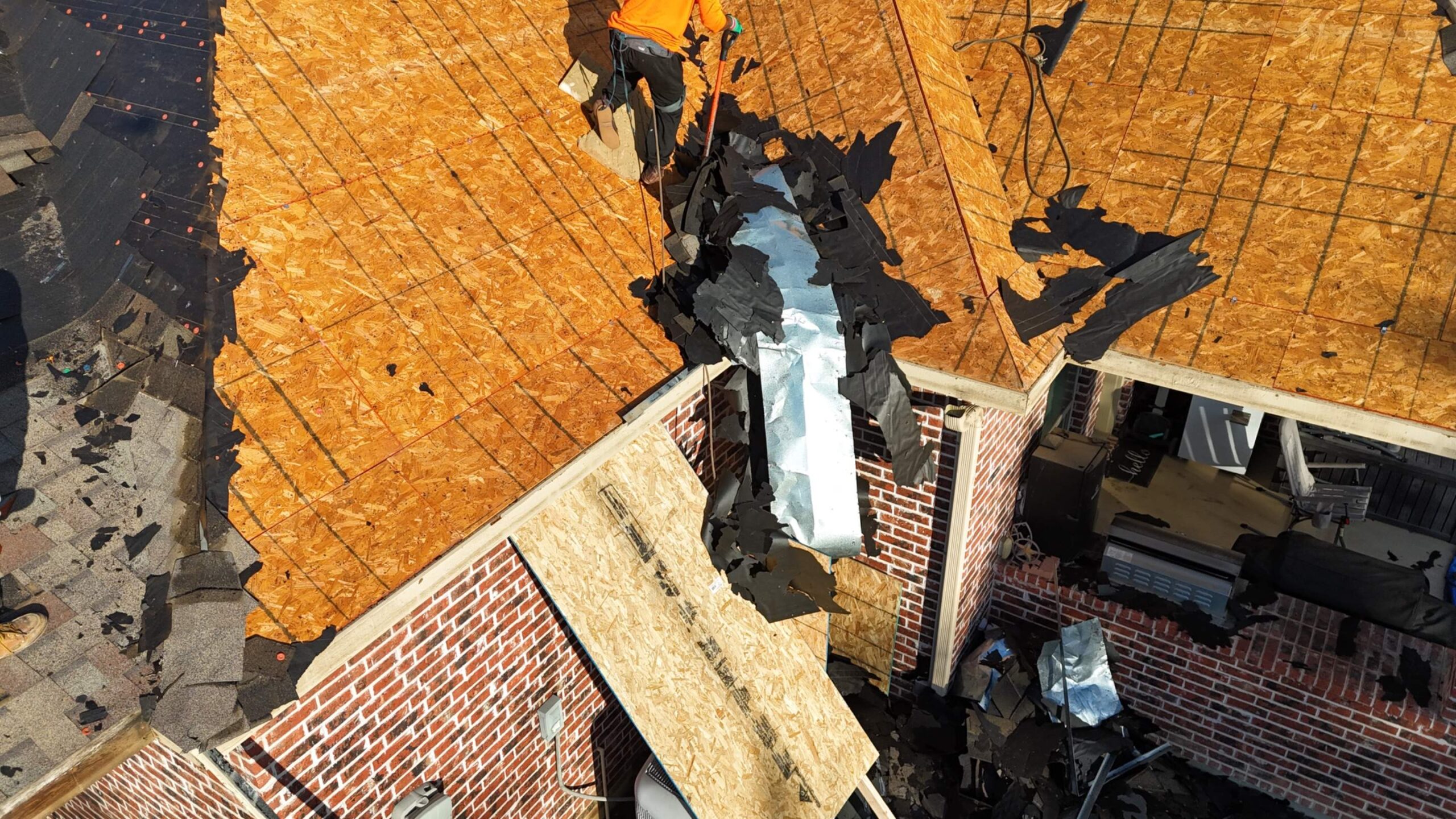
Tear off original roof to the decking. Inspect and document decking condition. Replace all roof components. Full GAF Armorshield II Class 4 impact-resistant shingle system in Charcoal. GAF Feltbuster synthetic underlayment on all clean decking. GAF Stormguard Leak Barrier on all 277 linear feet of valleys, around all flashings, roof components, and penetrations, totaling 1,696 linear feet of leak barrier coverage. GAF Prostart on all 578 linear feet of rakes and eaves. GAF Timbercrest bull-nosed high profile ridge cap on all 506 linear feet of ridges and hips. All new plumbing boots, roof vents, and pipe flashings. New gutters. GAF Golden Pledge Warranty. GAF unlimited wind speed warranty enabled by Class 4 shingle upgrade.
Challenge 1: A Homeowner Hesitant to File a Claim
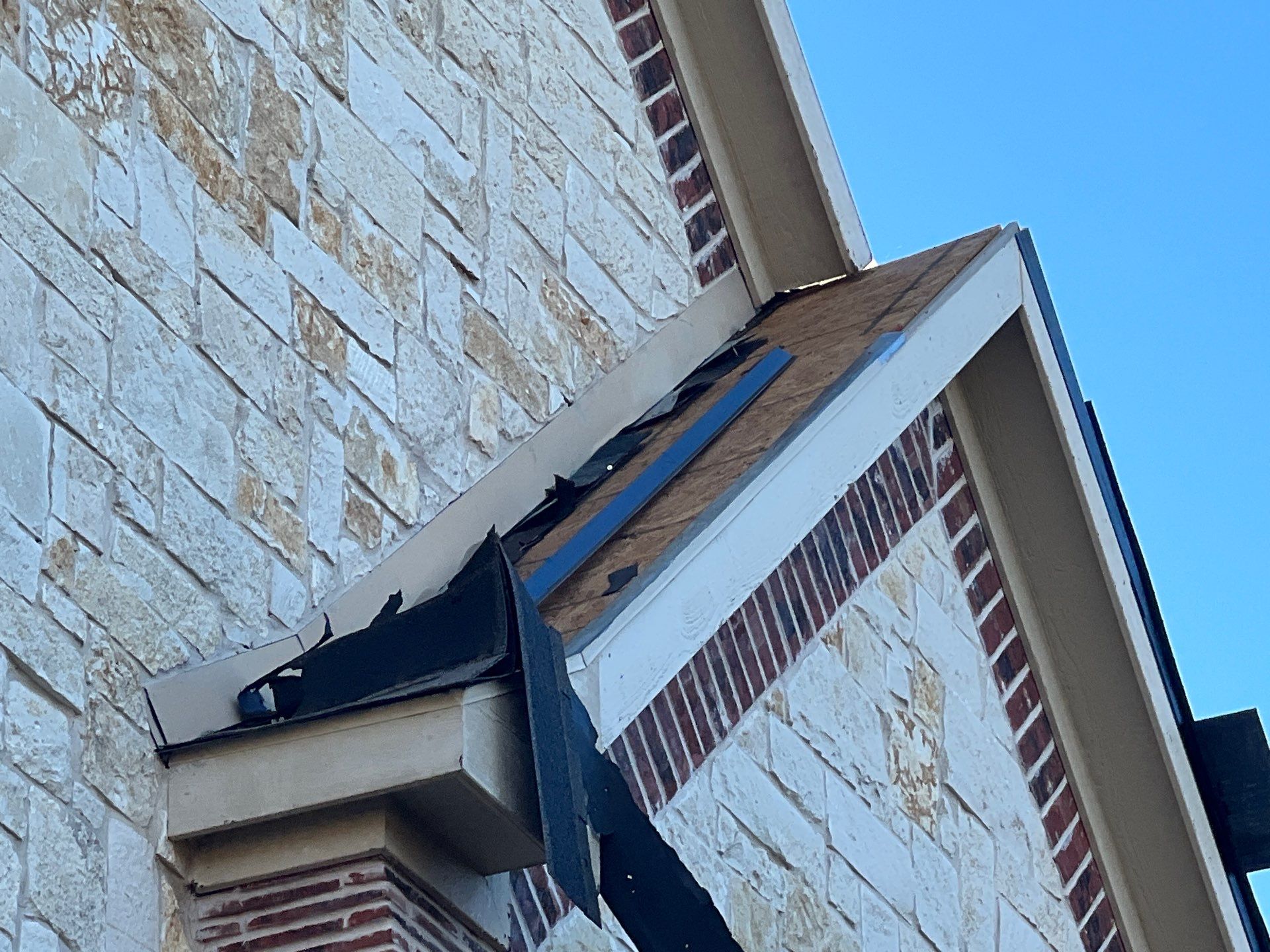
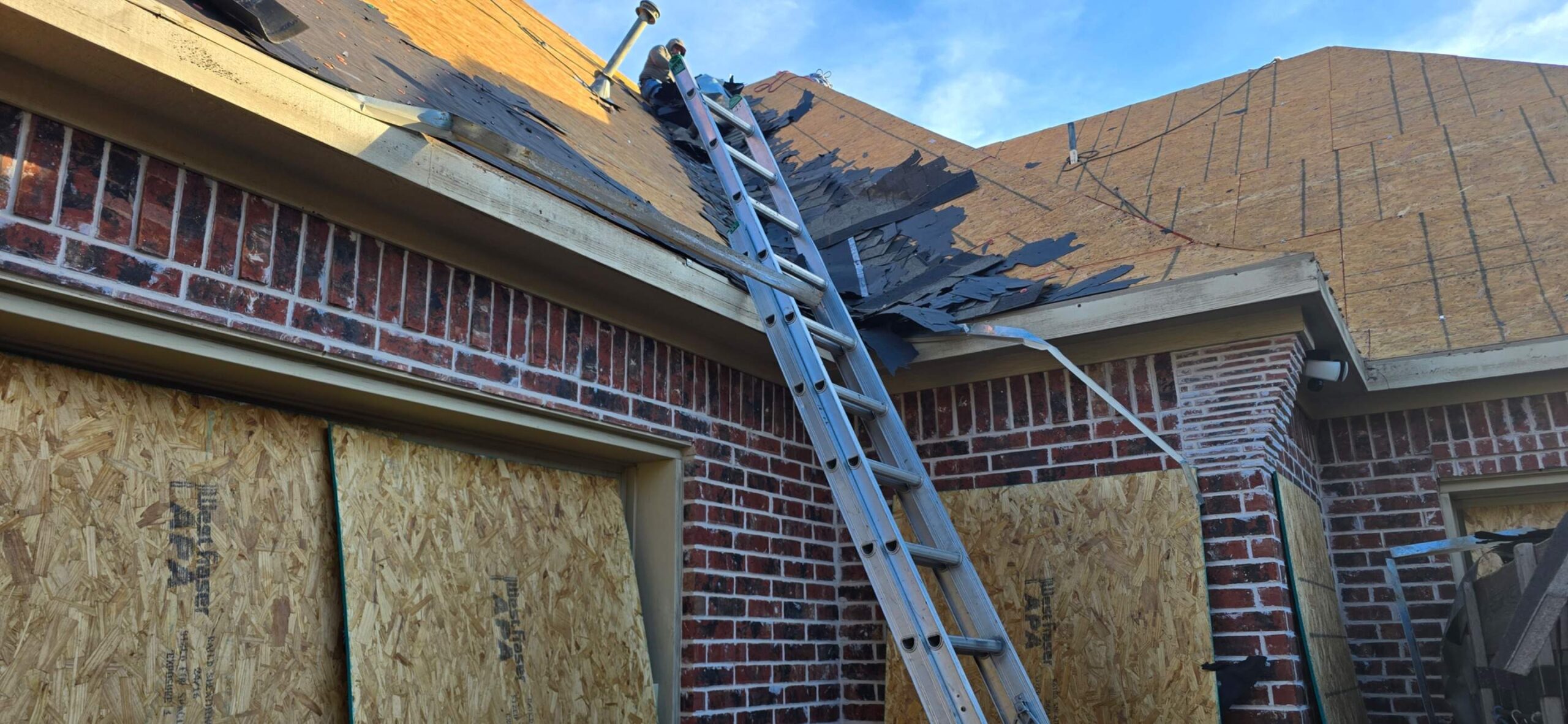
This homeowner called after a wind event peeled shingles back at the ridge and exposed the underlayment. We came out, tarped the area to stop further water intrusion, and ran a full inspection.
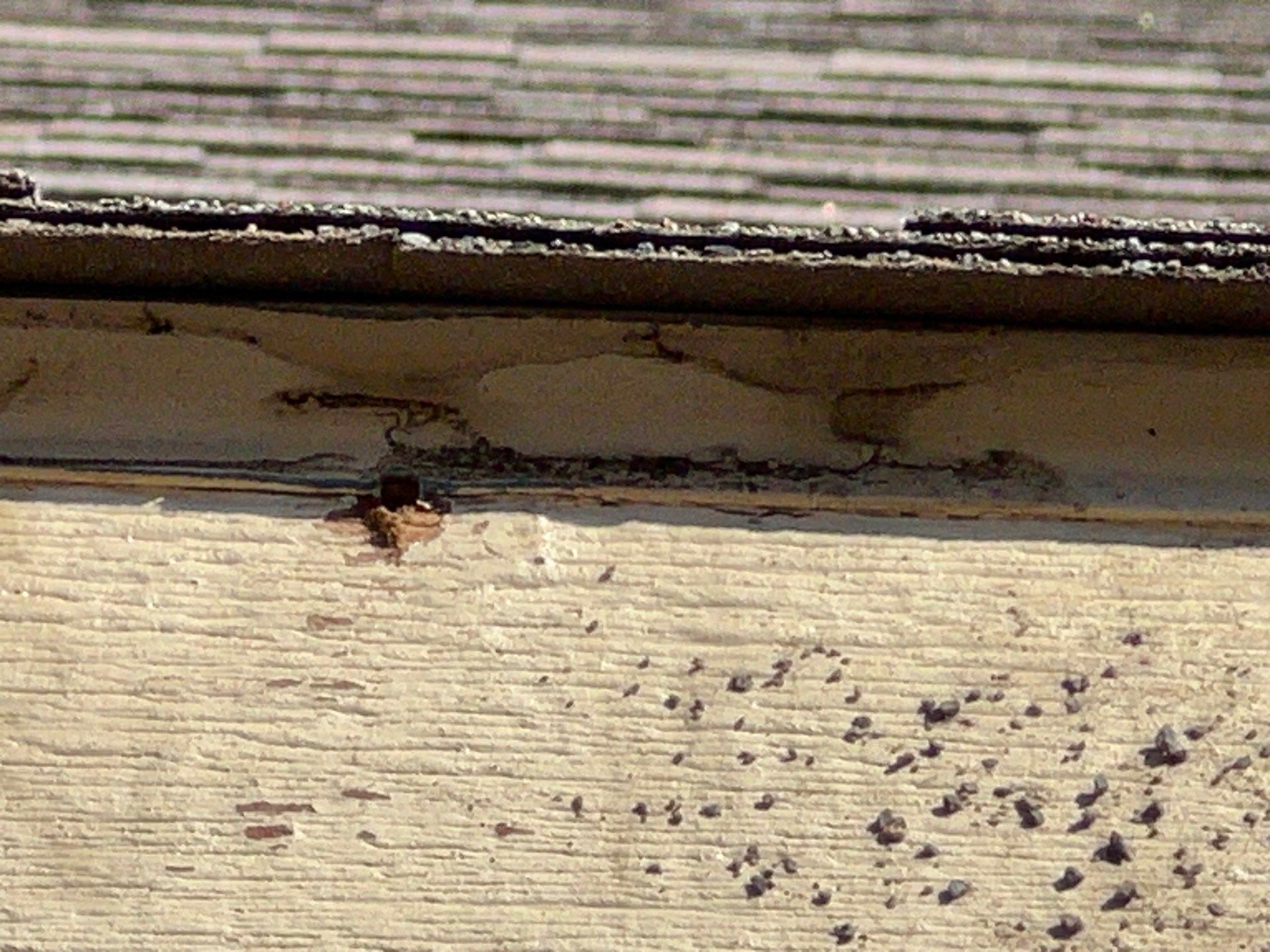
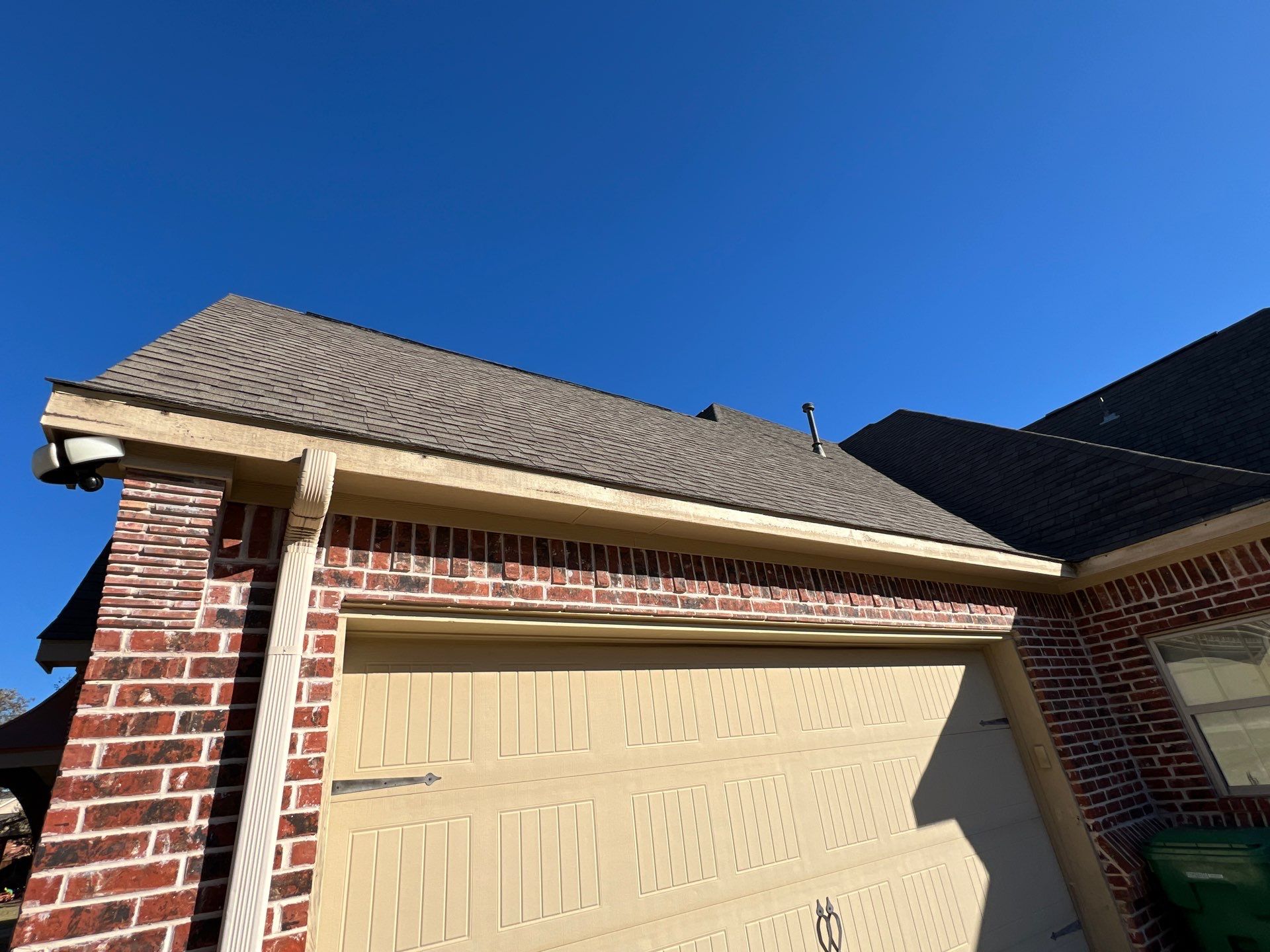
What we found went well beyond the wind damage. The old shingles had widespread granule loss across the entire field and multiple distinct hail impact craters – the kind you can only see clearly once you’re on the roof. The limestone facade showed impact marks from the same storms. All seven downspouts had measurable hail dents, documented on site. Shingles had already blown off completely and were sitting in the landscaping next to a damaged vent cap. The roof had been on the home since at least 2014 – over a decade of North Texas weather cycles – and it had run its course.
A repair wasn’t the right answer.
The challenge was helping the homeowner understand the full scope and decide whether to file a claim. They were hesitant. That’s a reasonable instinct, and we respect it. We’re conservative about insurance claims by nature; we won’t push a homeowner toward a process we don’t believe is warranted.
Solution: Thorough Documentation That Got the Claim Approved
Before any conversation about filing, we documented everything. All seven downspouts photographed individually, circled, and numbered. Close-up photos of multiple hail impact craters showing the granule displacement pattern adjusters need to see. Fence panel damage with the wood grain exposed where the stain had been stripped by hail. Stone facade impact marks. Wind damage at the ridge. We also shot the attic decking from inside – you could see daylight through the gaps in the boards. That made it immediately clear to the homeowner what was sitting beneath their feet.
That documentation is what gets a claim approved. Insurance adjusters don’t take your word for it; they need specific, itemized, photographic evidence across multiple surfaces. We had it.
The claim was submitted, the adjuster confirmed the damage, and the approved scope covered the roof, gutters, garage doors, and fence. Being thorough and honest about what we found put this homeowner in a position to protect their home properly – rather than just patching the wind
Challenge 2: A Large, Complex, and Extremely Steep Roof
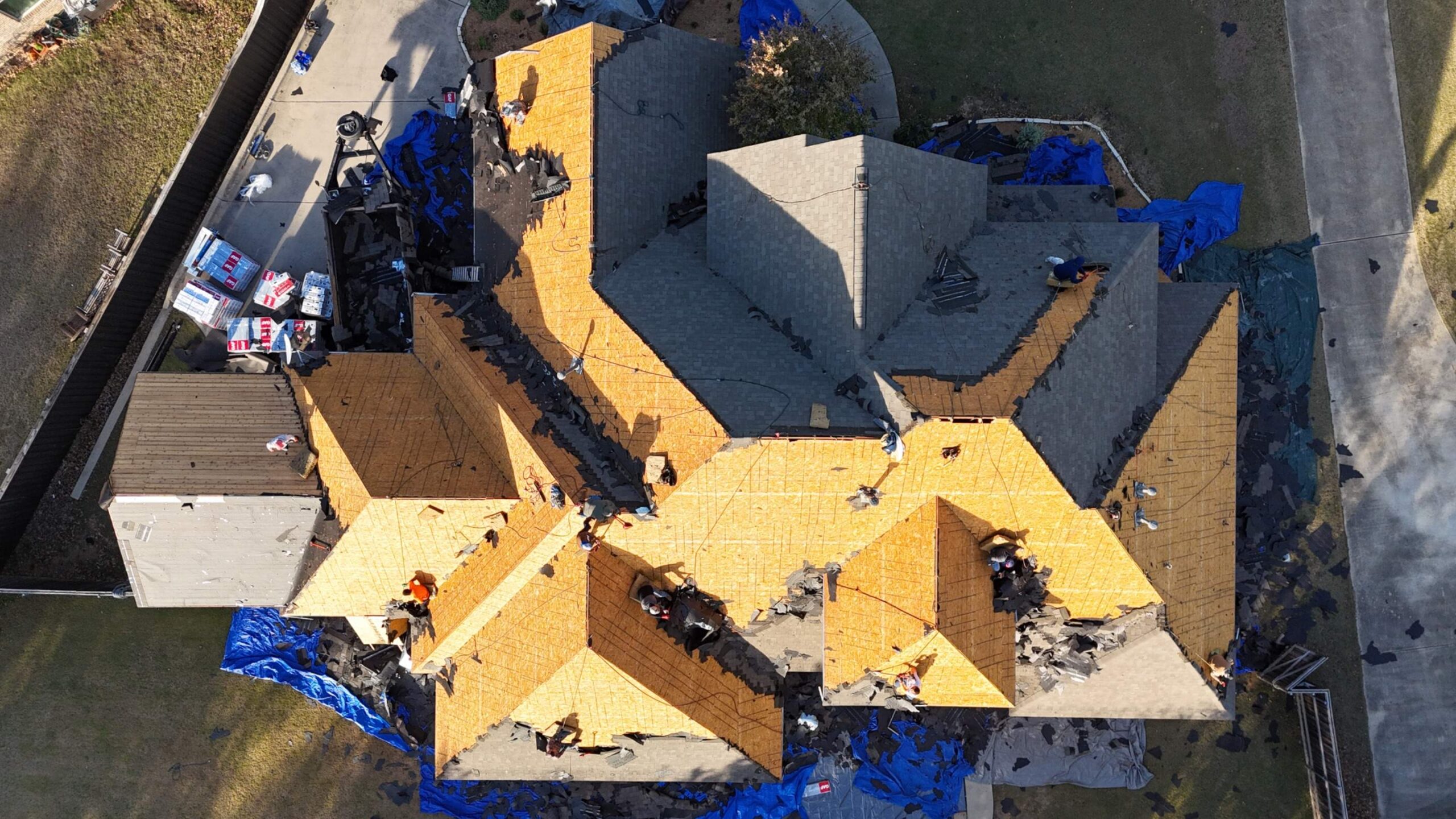
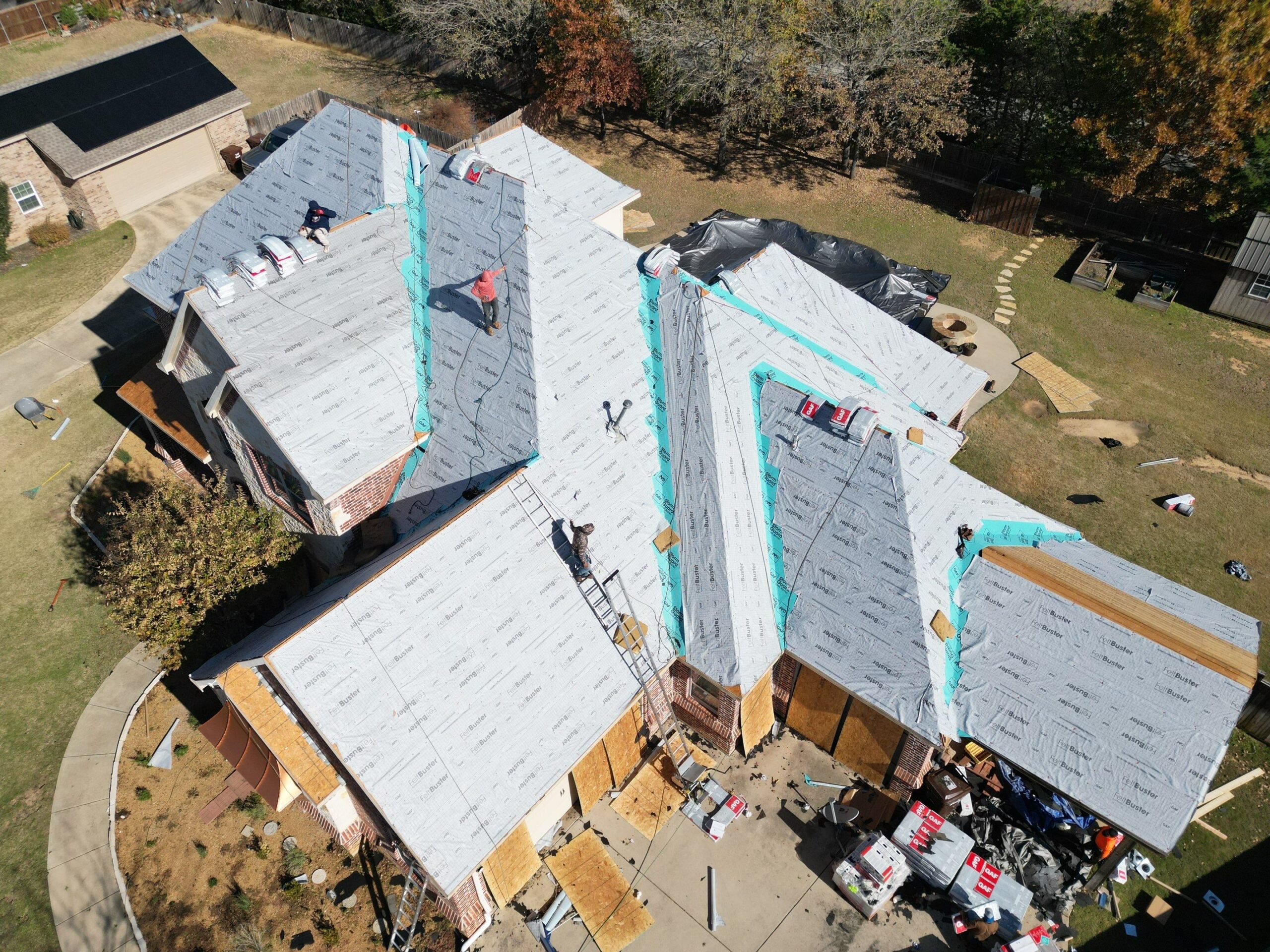
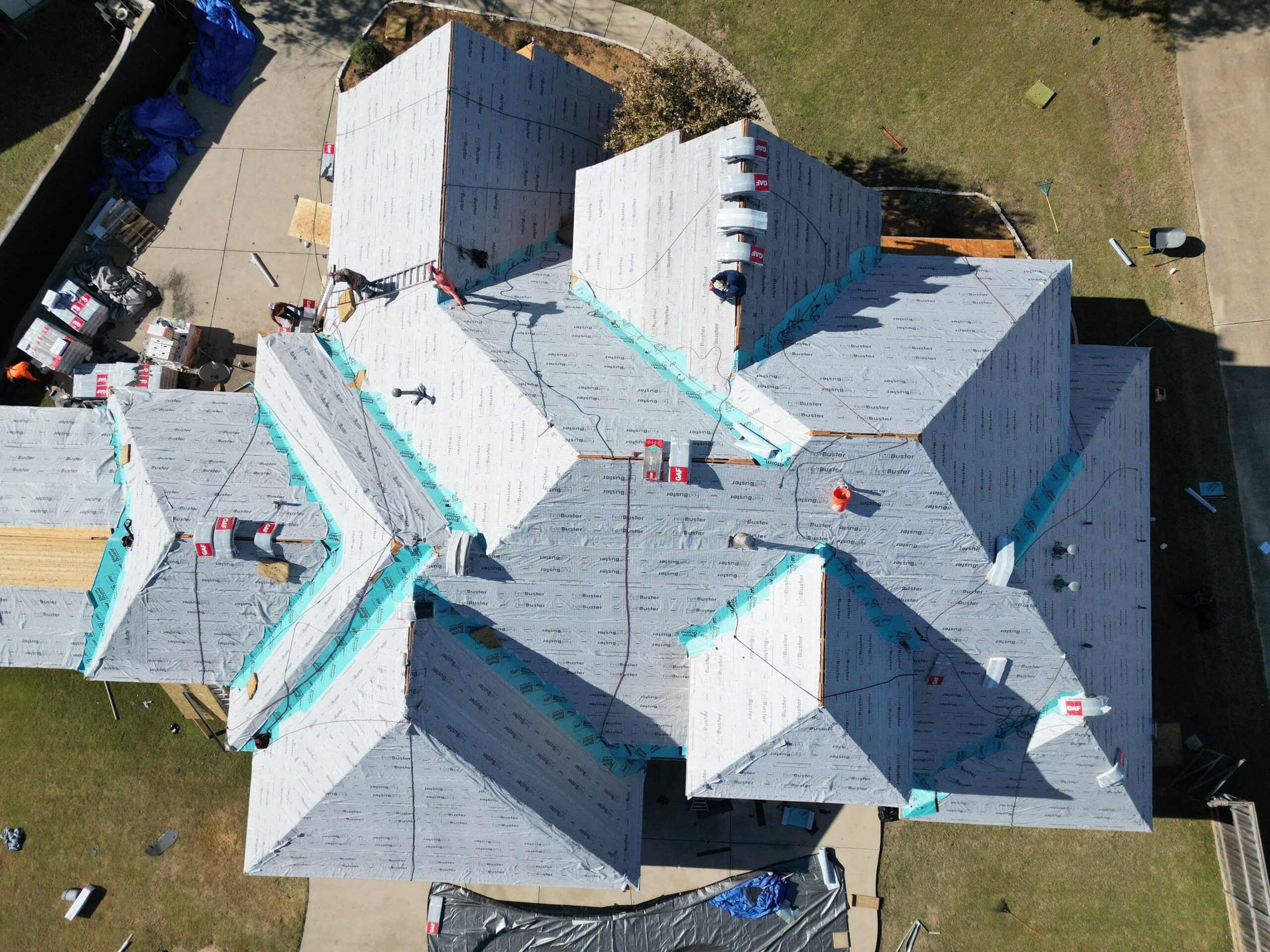
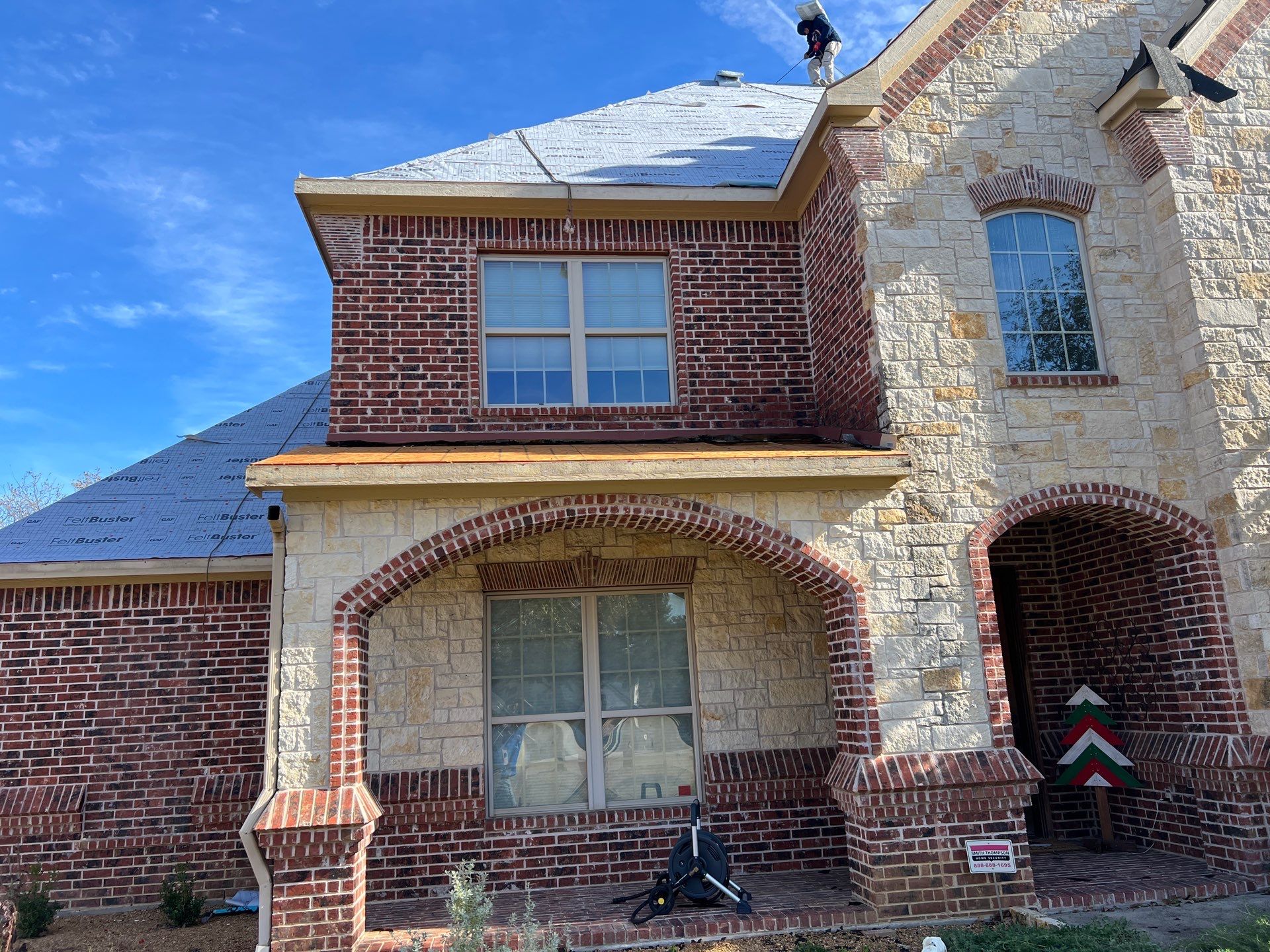
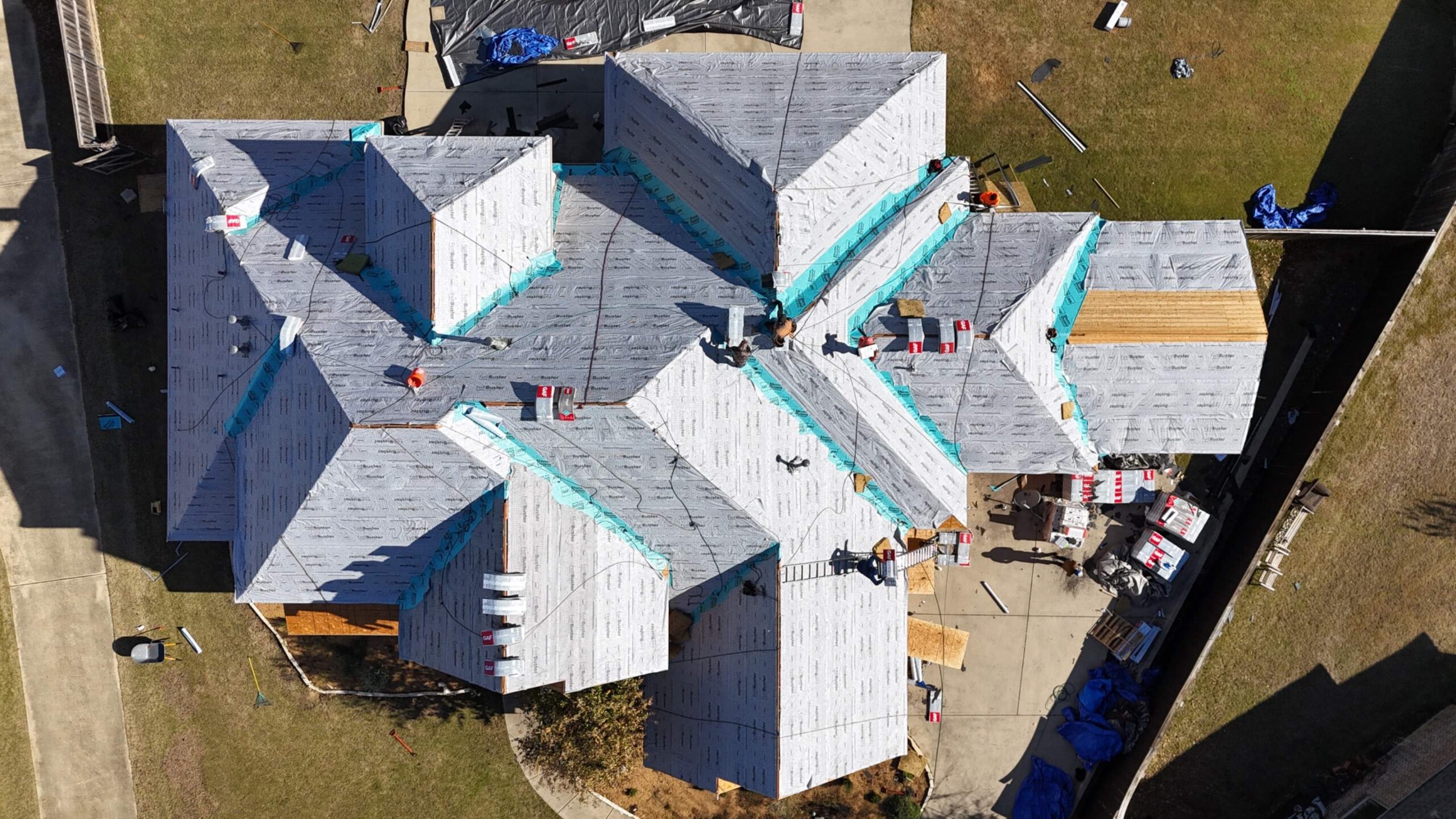
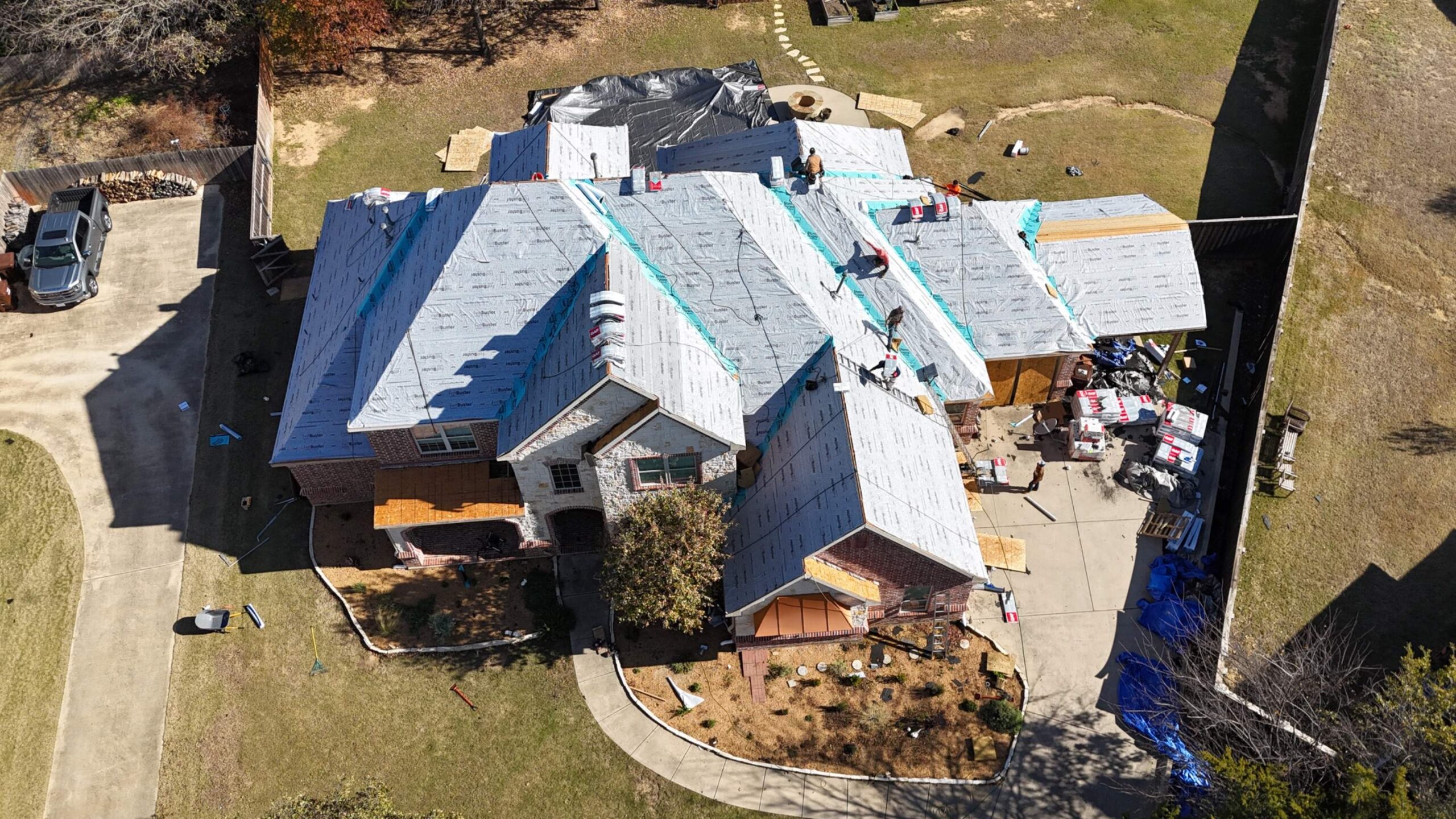
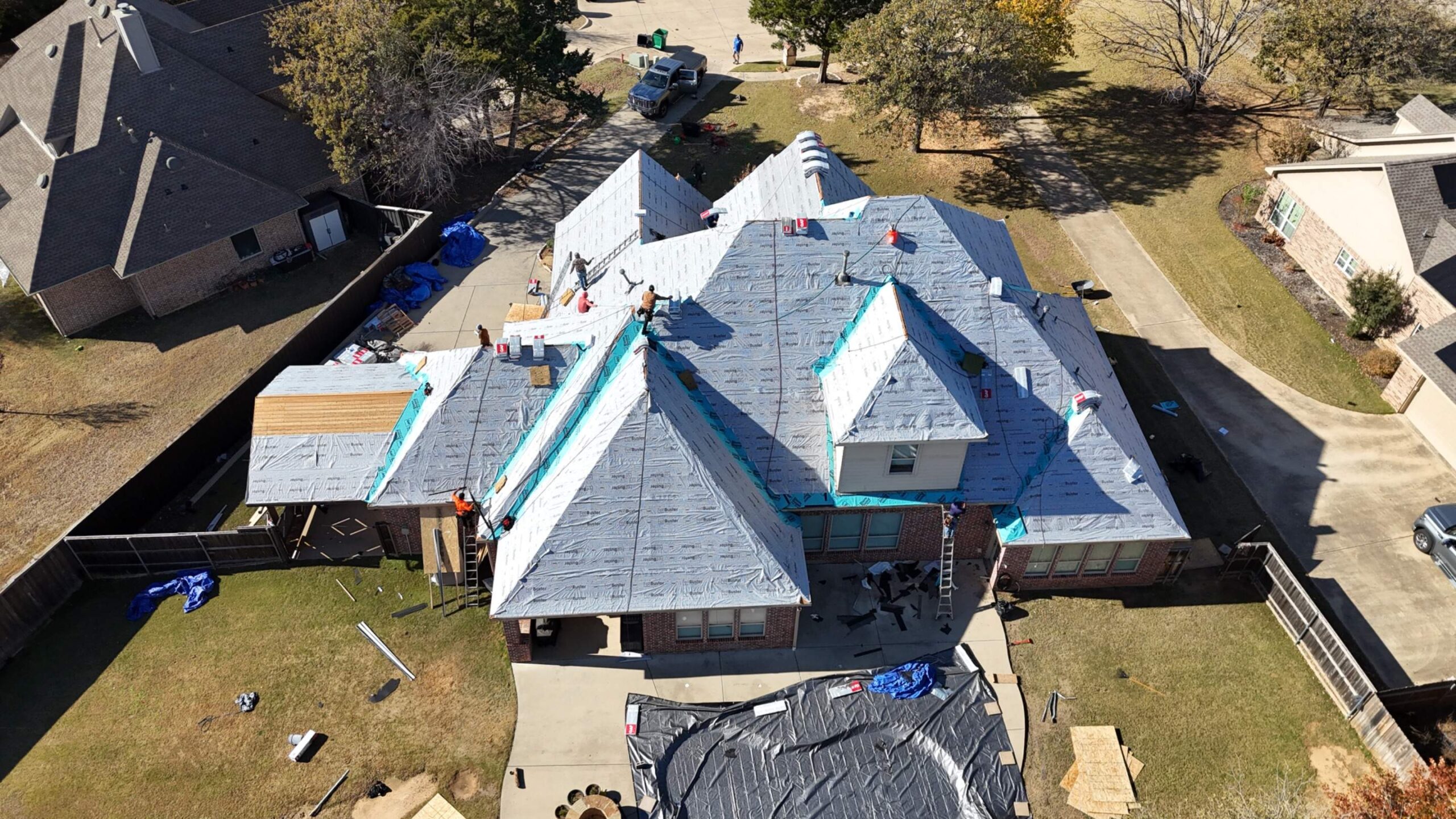
The numbers tell the story. At 6,965 square feet across 62 individual facets with a predominant 12/12 pitch, this is one of the more demanding residential roofs we install in the Denton area. Each of those 62 facets is a separate plane meeting others at a ridge, hip, or valley. Add up 369 linear feet of hips, 277 of valleys, and 506 of total ridge and hip cap, and you have dozens of intersection points where water will find a way in if the installation isn’t right.
A 12/12 pitch sits at the top end of what most crews can safely work on. Every component – from laying straight chalk lines on a near-vertical surface to properly seating 506 linear feet of ridge and hip cap – demands a higher level of precision and physical capability than a standard slope roof. The steeper the pitch, the more visible the finished product from the street. On a roof this large and complex, there’s no margin for error.
Solution: Experienced Steep Slope Crew, Completed in 1.5 Days
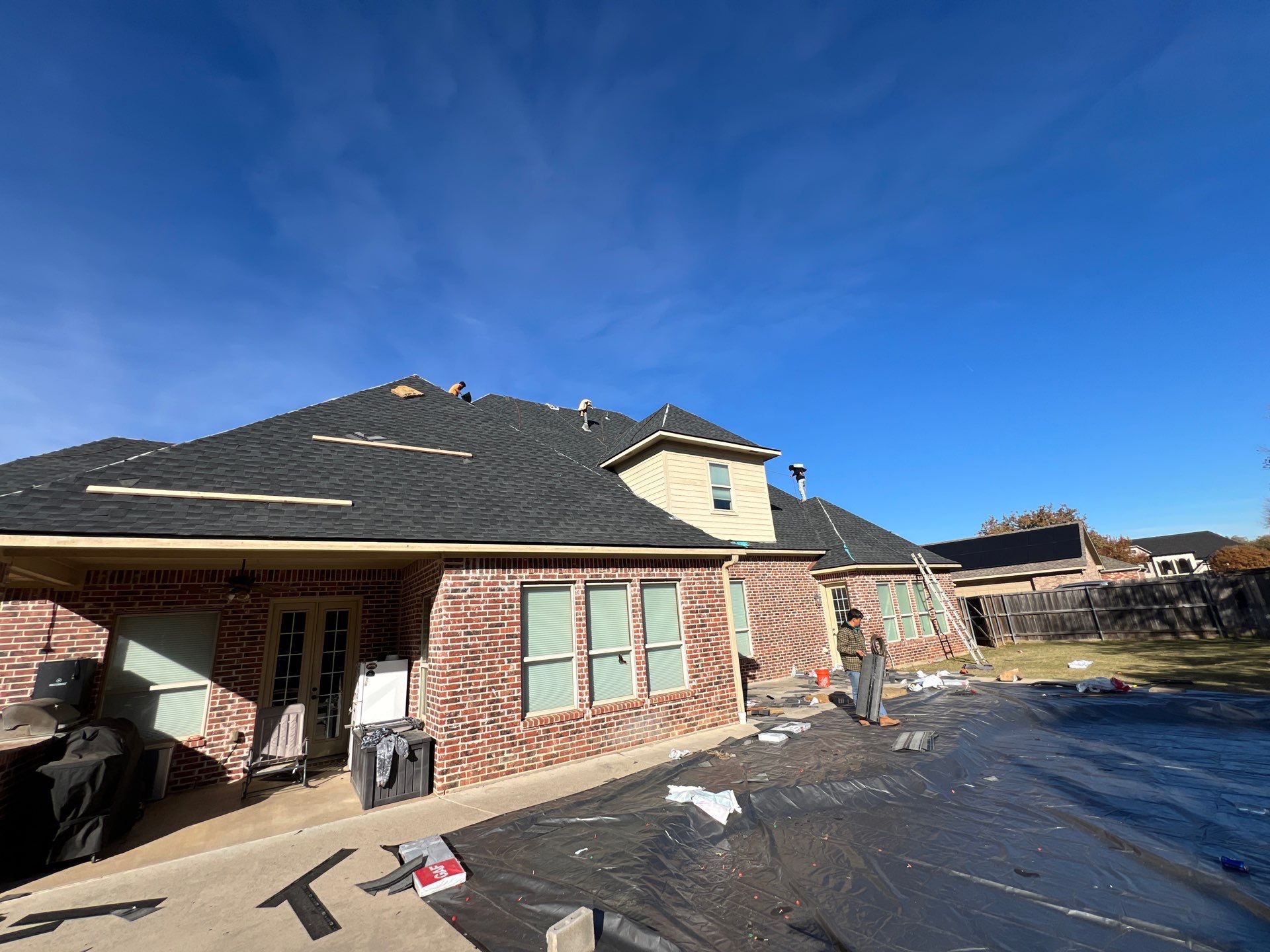
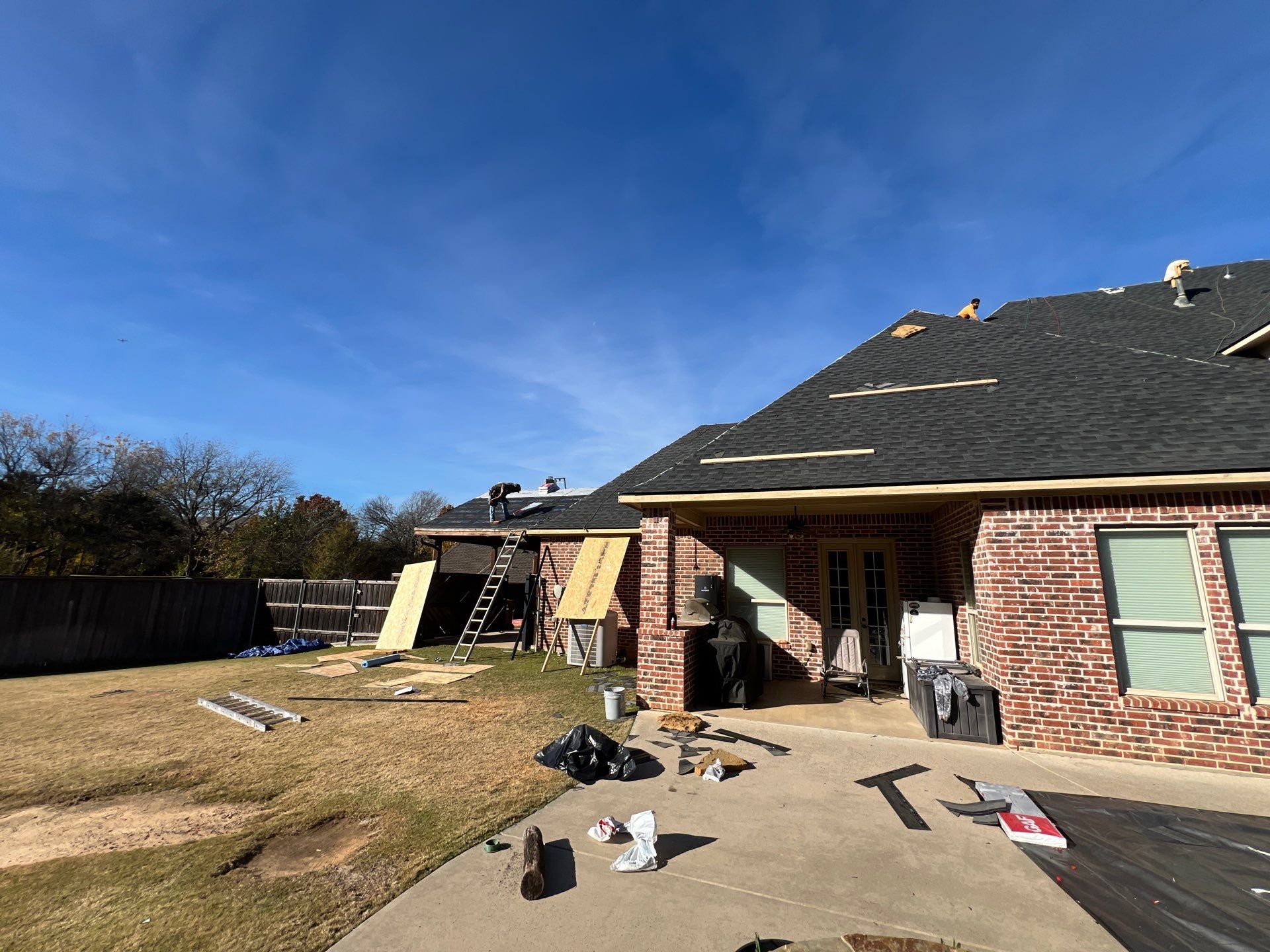
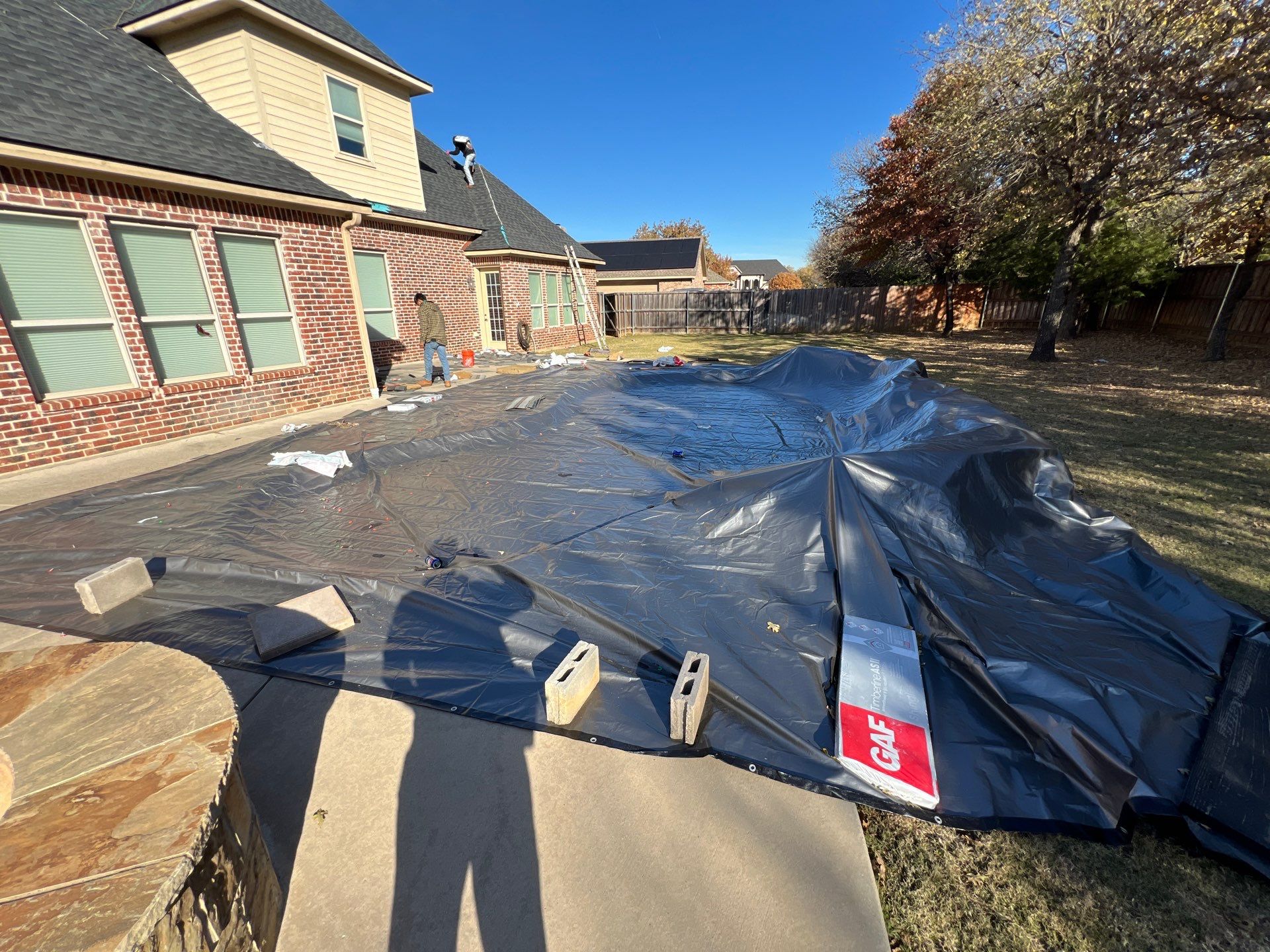
We work 12/12 and above regularly across DFW. On this job we followed all GAF Master Elite installation specs for steep slope applications, applied Stormguard Leak Barrier across the full 1,696 linear feet of vulnerable perimeter and valley coverage, properly flashed every penetration including the plumbing boot stack, and completed the job to Golden Pledge standards. Despite the size and complexity, we finished the full 70-square replacement in 1.5 days. That required the right crew size, the right sequencing, and zero wasted time on site.
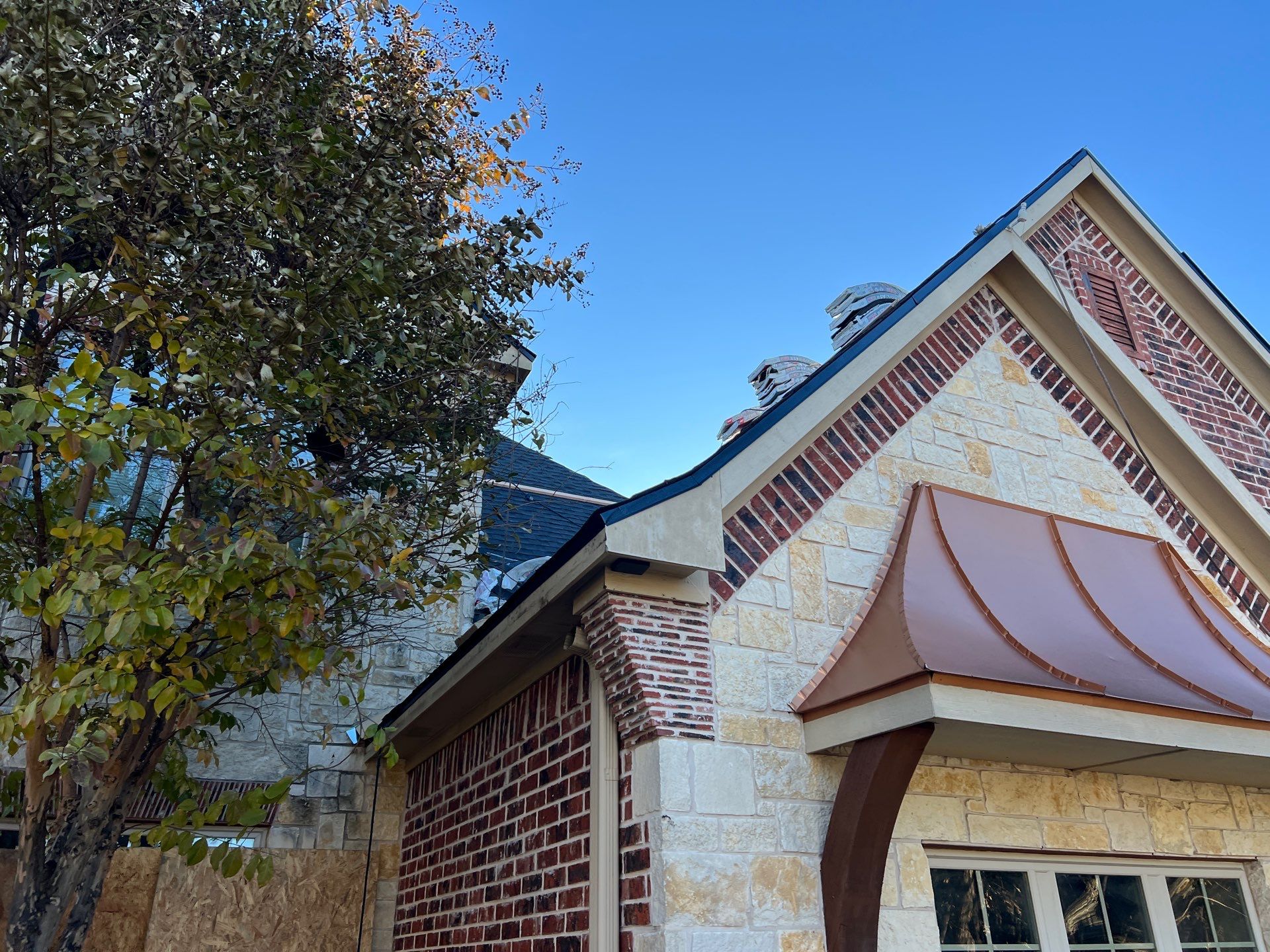
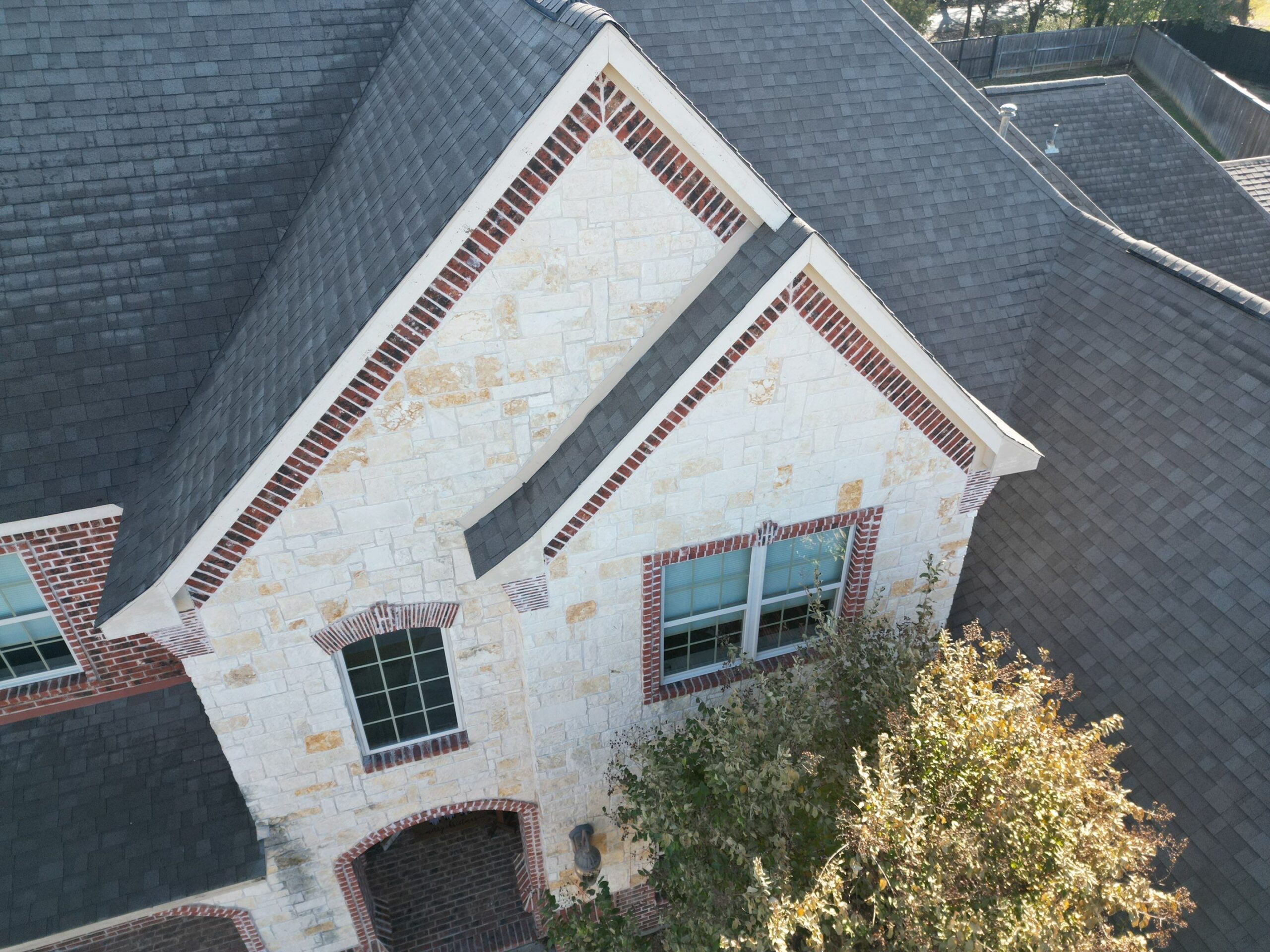
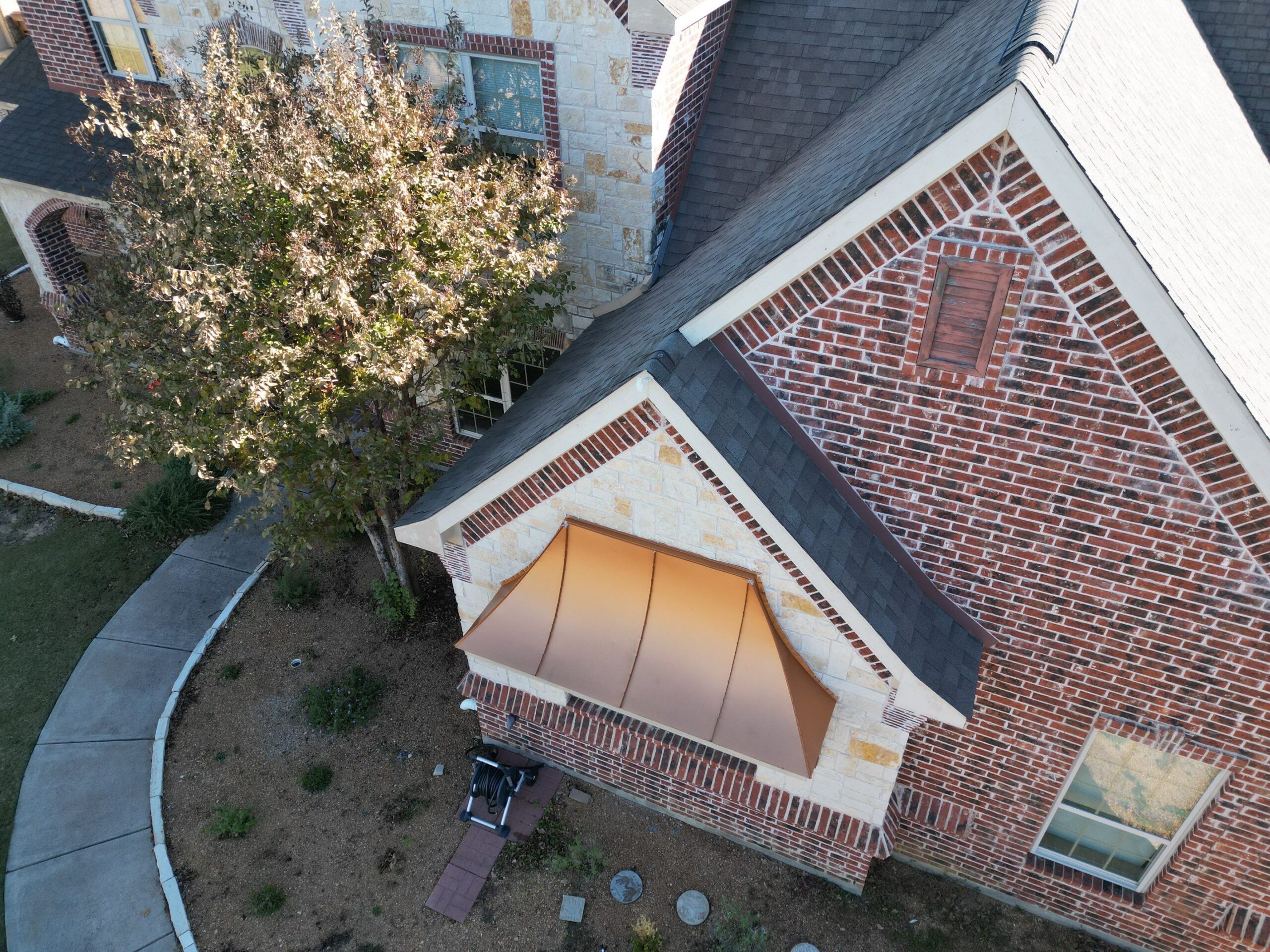
If you want to see the finished product, the drone footage in the video above shows the completed roof from all sides. The Charcoal Armorshield II lays flat and tight across every plane, the new gutters run clean below the drip edge, and the bull-nosed Timbercrest ridge cap runs the full length of every hip and ridge line: 506 linear feet of it.
On a roof this steep and this visible from the street, the ridge cap isn’t just a functional component. It’s the finishing detail that tells you whether the crew knew what they were doing.
The Result
The approved claim covered the full scope – roof, gutters, garage doors, and fence – at a total project value of $60,000, completed in 1.5 days. The finished roof carries a GAF Golden Pledge Warranty and an unlimited wind speed warranty, both of which required the full-system installation approach used on this project. The Class 4 shingle designation also qualified the homeowner for a reduction in their homeowners insurance premium – a financial benefit most homeowners don’t know about until the paperwork is in front of them.
The homeowner told us that the outcome was more than they had expected when they first called about the wind damage at the ridge. What started as an emergency tarp call ended as a fully upgraded home with lower ongoing insurance costs. Read more from clients who’ve been through the same process.


How to Maintain Your New GAF Timberline® ArmorShield II Class 4 Roof
A new roof still needs attention. Staying on top of a few basic checks protects your warranty eligibility and catches small problems before they grow.
After any major storm, walk the property and do a quick ground-level scan. Dings in gutters, torn window screens, or shingles in the yard are all signs worth noting. Don’t get on the roof yourself – if something looks off, call a professional.
Keep leaves and branches cleared from roof valleys and gutters. Debris sitting in a valley holds moisture, and trapped moisture eventually works its way under the shingles or encourages algae growth.
Check your downspout splash blocks after storms. Heavy granule buildup – the gritty material shed from the shingle surface – can point to normal aging or fresh hail damage. Either way, it warrants a closer look.
Frequently Asked Questions
What does a roofing contractor look for during an inspection after a wind or hail event?
How do roofing contractors document damage to support a homeowner's insurance claim?
When is a full roof replacement warranted rather than a targeted repair?
What should homeowners expect from a contractor when they are hesitant to file an insurance claim?
What makes a steep-pitch roof more difficult to install correctly than a standard slope?
How does a Class 4 impact-resistant shingle designation affect a homeowner's insurance costs?
What is included in a manufacturer's enhanced roofing warranty, and how is it earned?

About the author: Nick Van Slyke
Certifications & Affiliations