
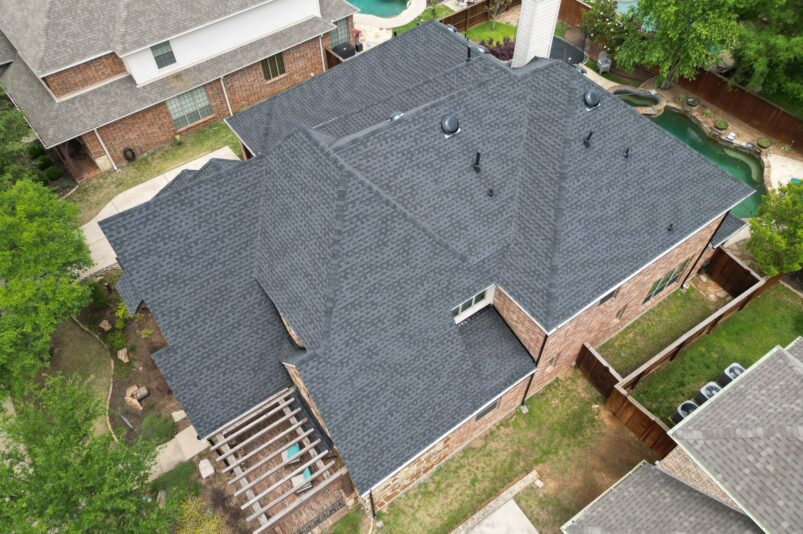
Presidio Roofing Company completed a full insurance claim roof replacement at a 2-story residential property in Lantana, Argyle, TX, covering 6,500 sq ft (65 squares) across pitches ranging from 10/12 to 16/12. Storm-damaged architectural shingles came off and GAF Timberline® ArmorShield II Class 4 shingles in Charcoal went on, with roof-mounted power attic vent replacement coordinated through a licensed electrician. The project was valued at $60,000-$65,000, backed by a GAF Golden Pledge Warranty with 25-year workmanship coverage. Completed in May 2025.
In This Case Study:
- Project Snapshot: Key Specifications & Costs
- Introduction
- Challenge 1: Original Insurance Claim Was Denied
- The Solution: Patience, Experience & Our Expertise
- Challenge 2: Steep Roof Pitch Created Dangerous Work Conditions
- The Solution: Proper Training, Experience & Our Skillset
- Challenge 3: Roof Mounted Power Attic Vents Needed Replacing
- The Solution: Working With the Right People
- The Result
- How to Maintain Your New GAF Timberline® ArmorShield II Class 4 Roof
- Frequently Asked Questions About This Project
Video transcript and key highlights
Click to view video summary
Project Snapshot: Key Specifications & Costs
| Metric | Project Detail |
|---|---|
| Project Type | Full Roof Replacement (Insurance Claim Restoration) |
| Location | Lantana, Argyle, TX 76226 |
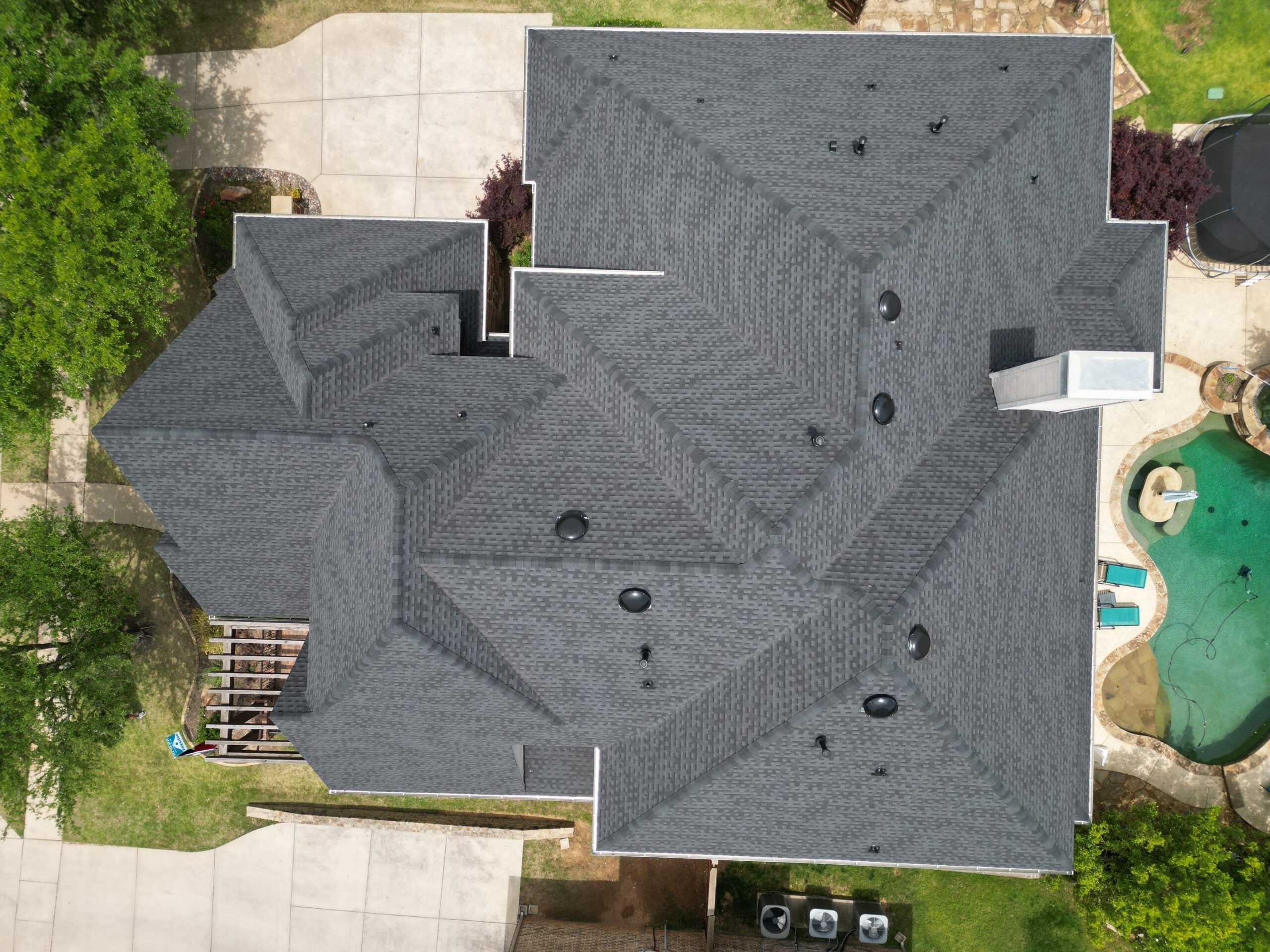
| Roof Size | 6,500 Sq Ft (65 Squares) |
| Material Used | GAF Timberline® ArmorShield II Class 4 (Charcoal) |
| Duration | 2 Days |
| Budget Range | $60,000 – $65,000 |
| Warranty | GAF Golden Pledge Warranty With 25-Year Workmanship |
Introduction
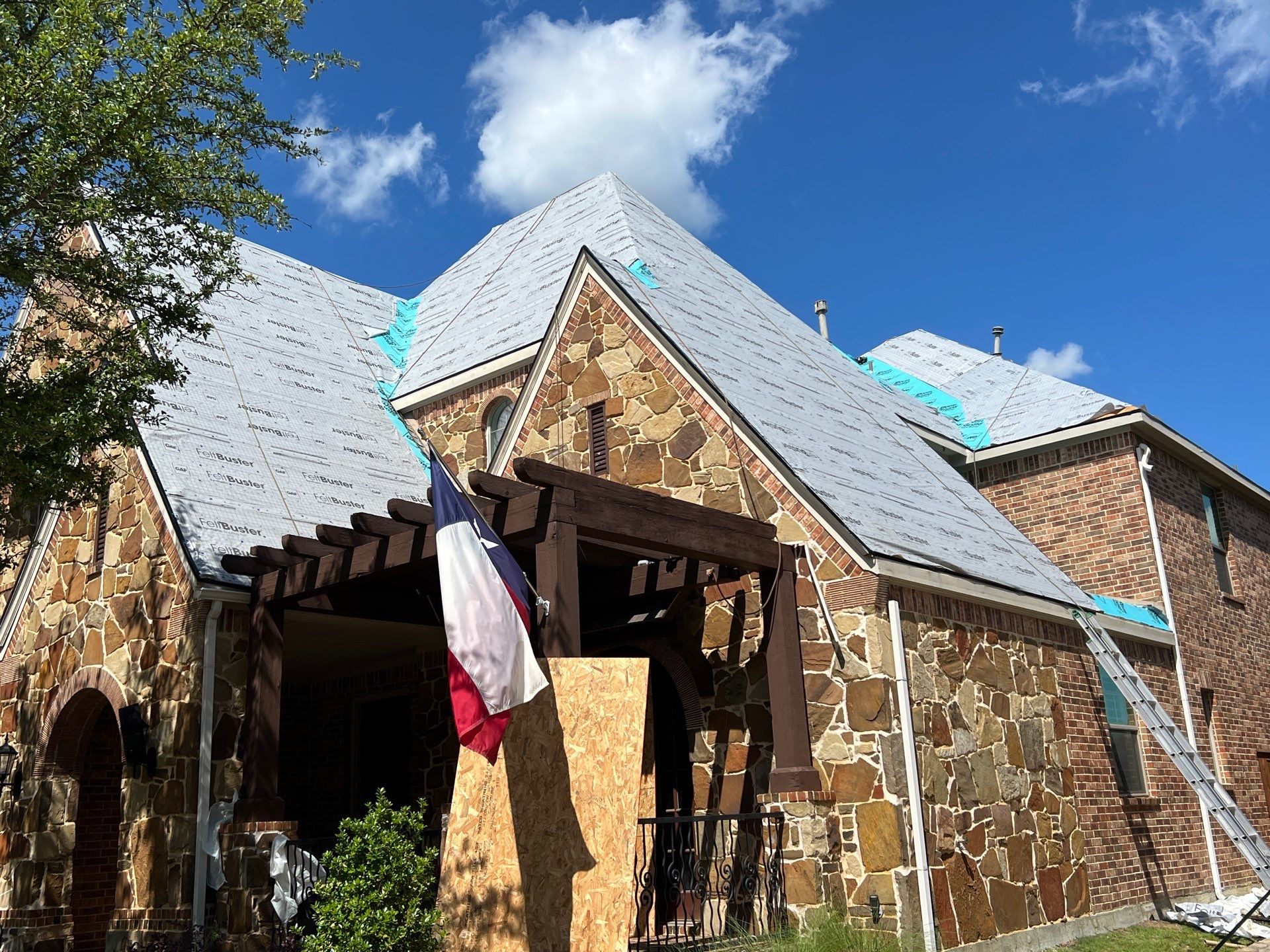
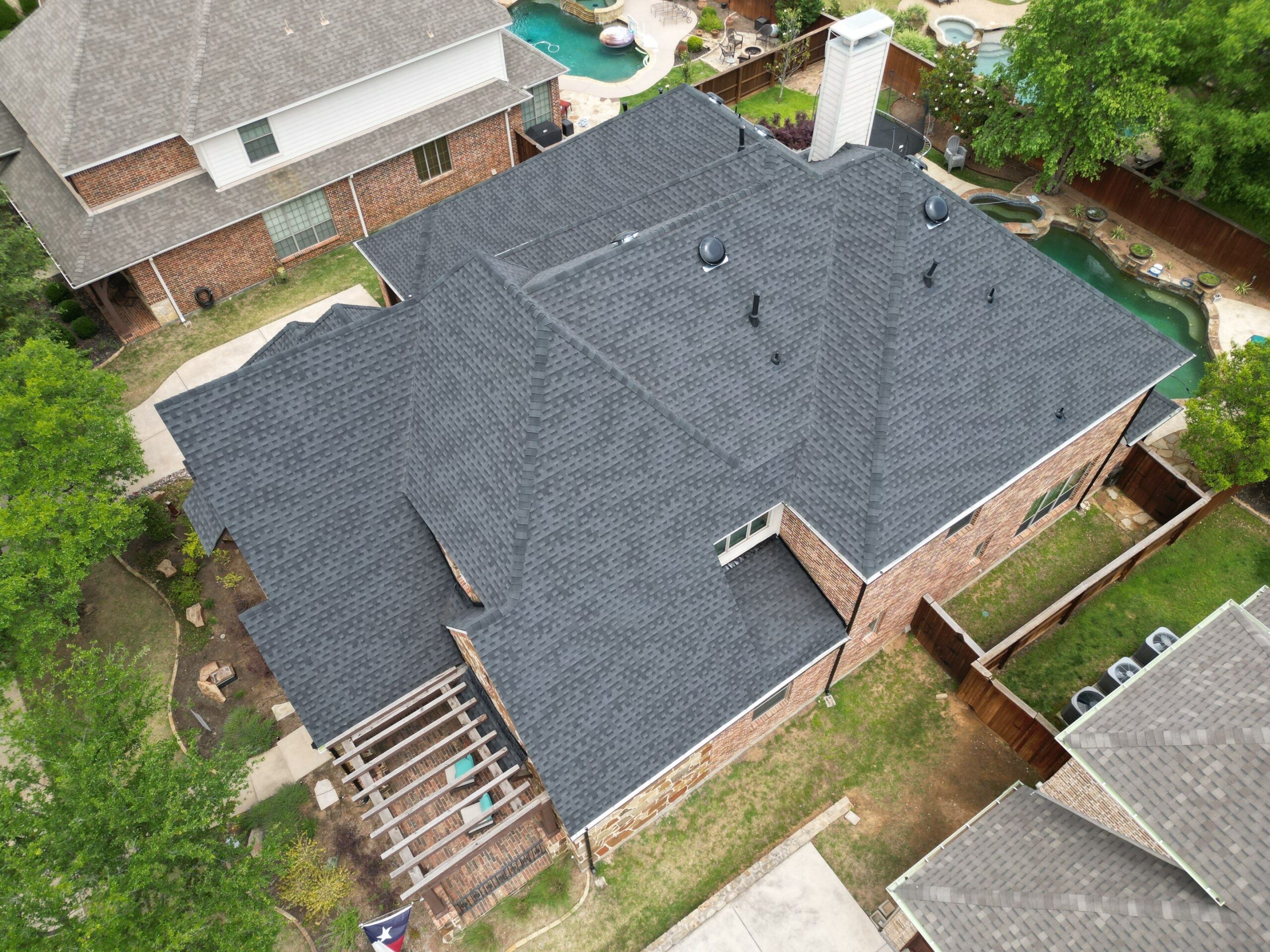
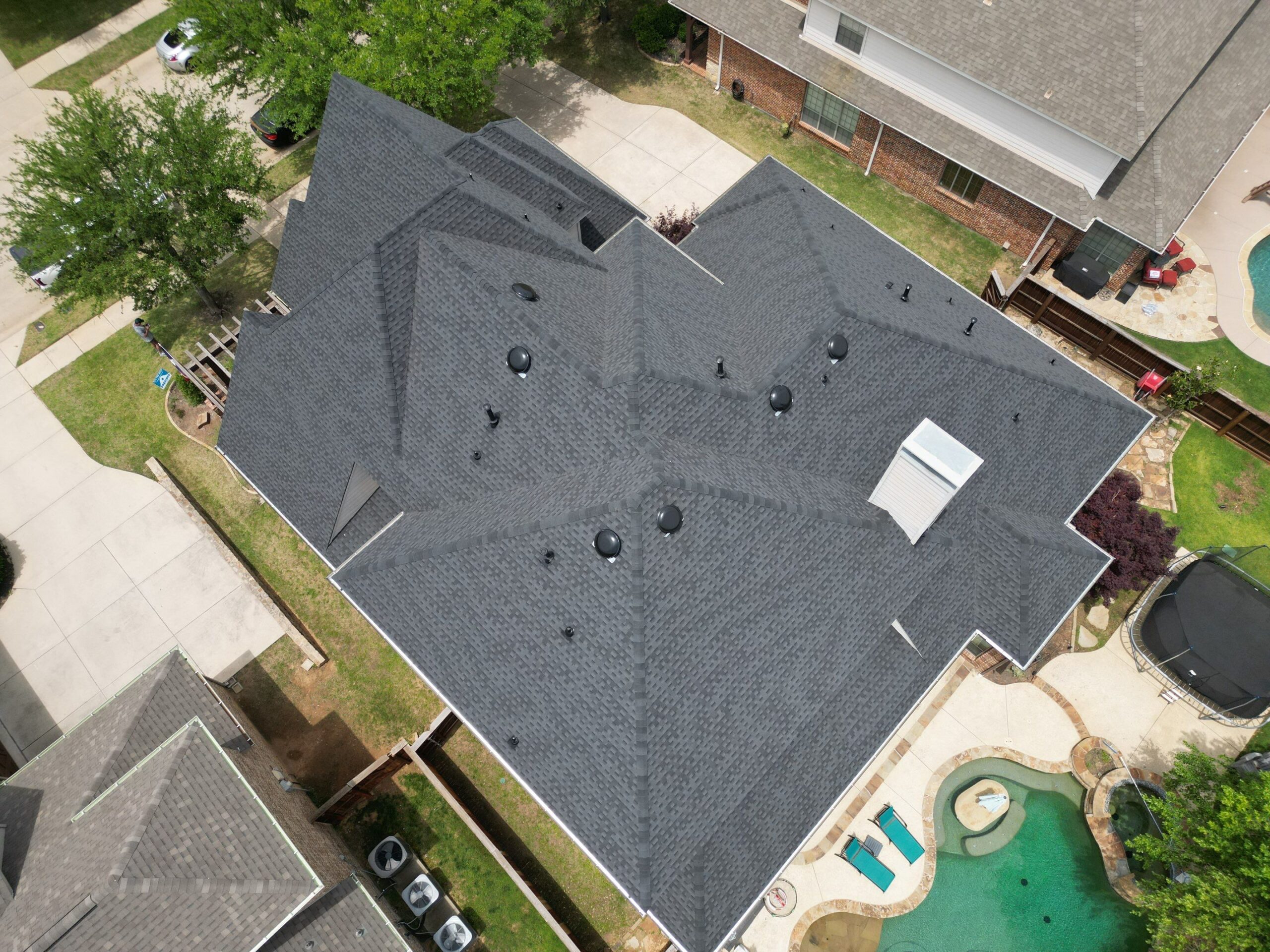
This case study covers the complete roof replacement Presidio Roofing performed for a residential property in the Lantana neighborhood in Argyle, Texas. The work involved tearing off storm-damaged architectural shingles and installing new GAF Timberline Armorshield II Architectural Shingles – chosen for improved energy efficiency and wind resistance. Total coverage was 6,500 sq ft. The project was completed in May 2025.
This replacement was especially dangerous. The 2-story house ran from steep (10/12, or roughly 40 degrees) to extremely steep (16/12, or roughly 53 degrees) across different sections of the roof. Three large hail storms had already hit it – and despite that damage being well-documented, the insurance claim process became a fight. On top of that, the roof-mounted electrical attic vents were knocked out and needed replacing.
Challenge 1: Original Insurance Claim Was Denied
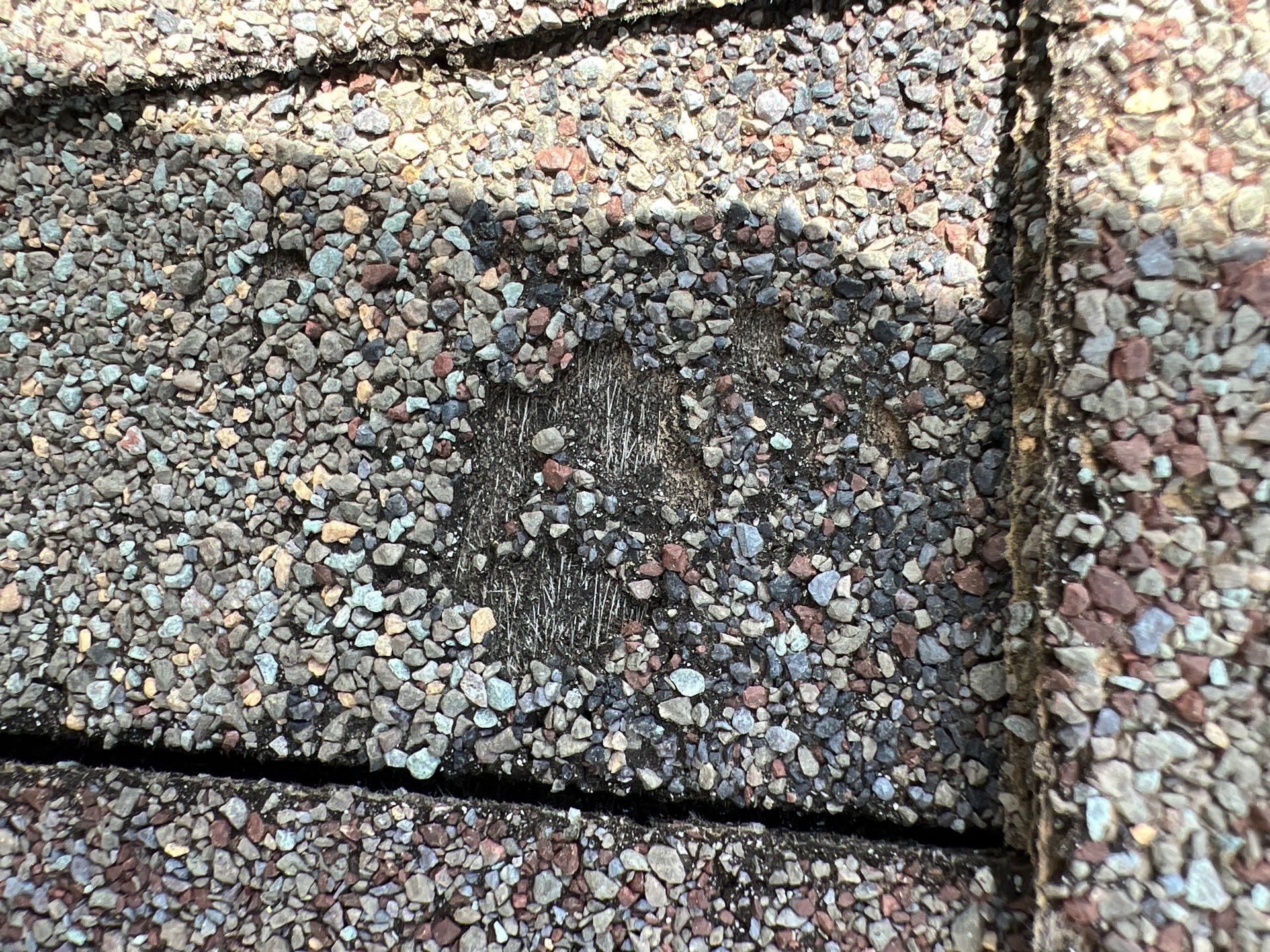
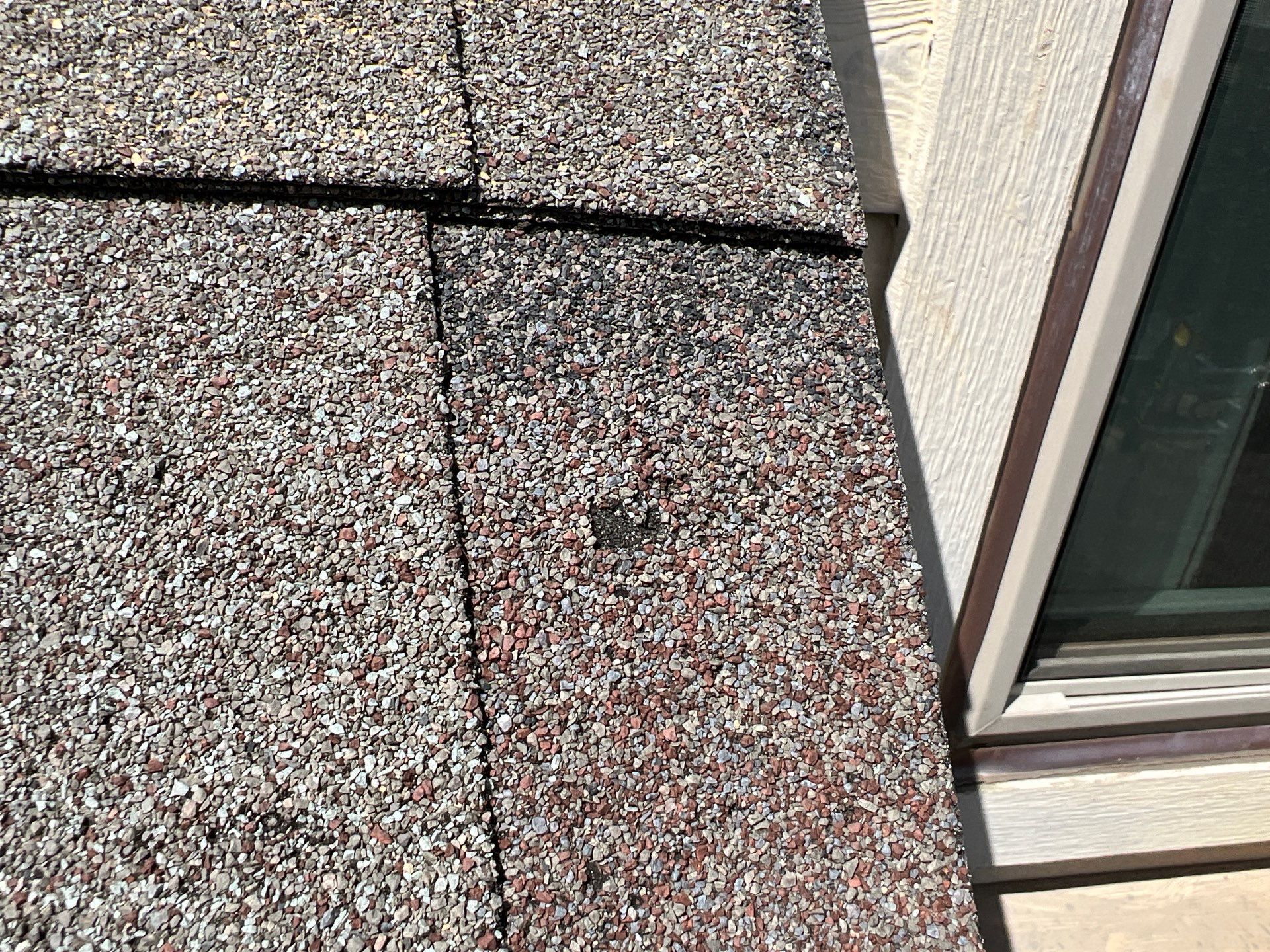
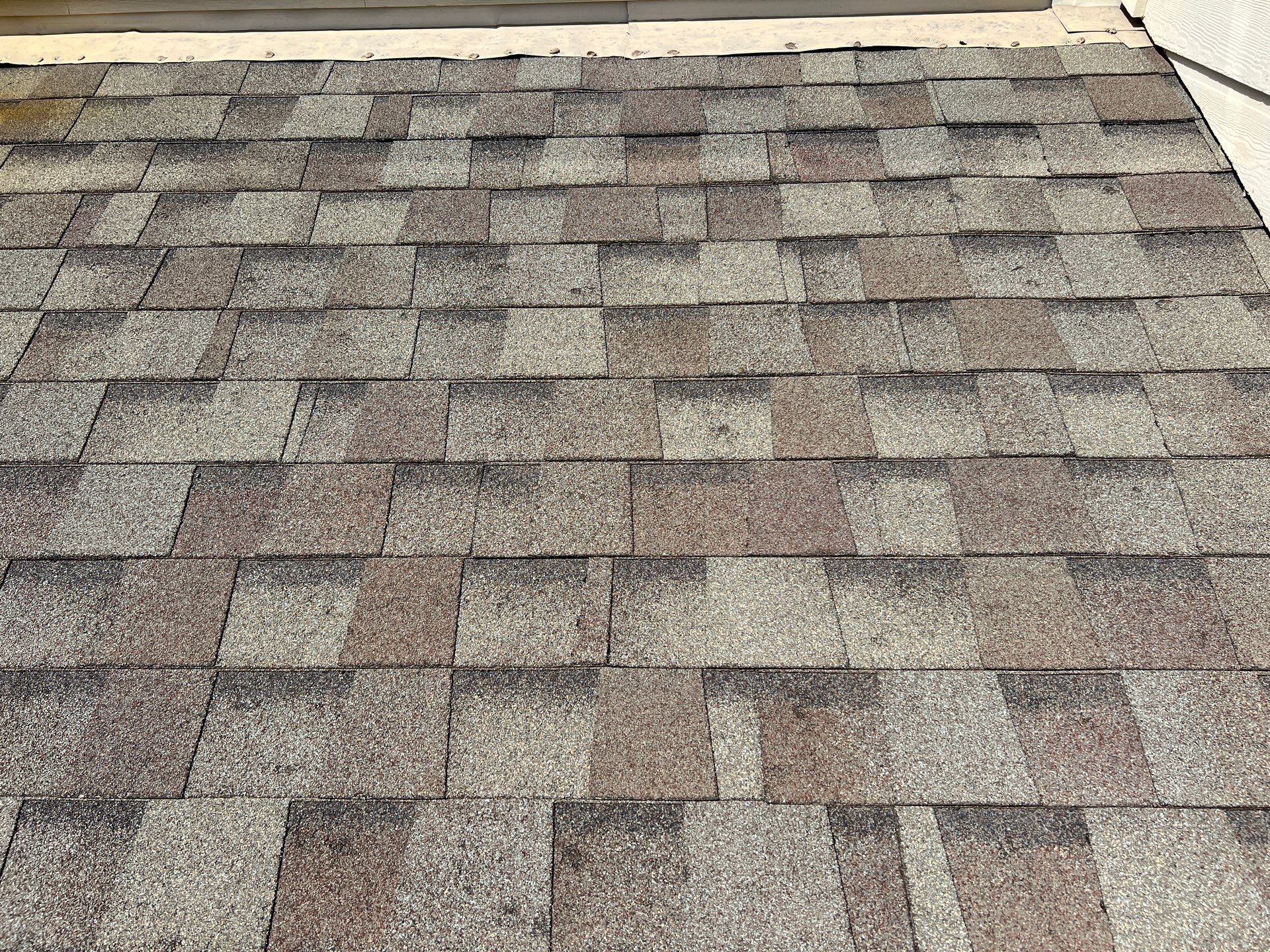
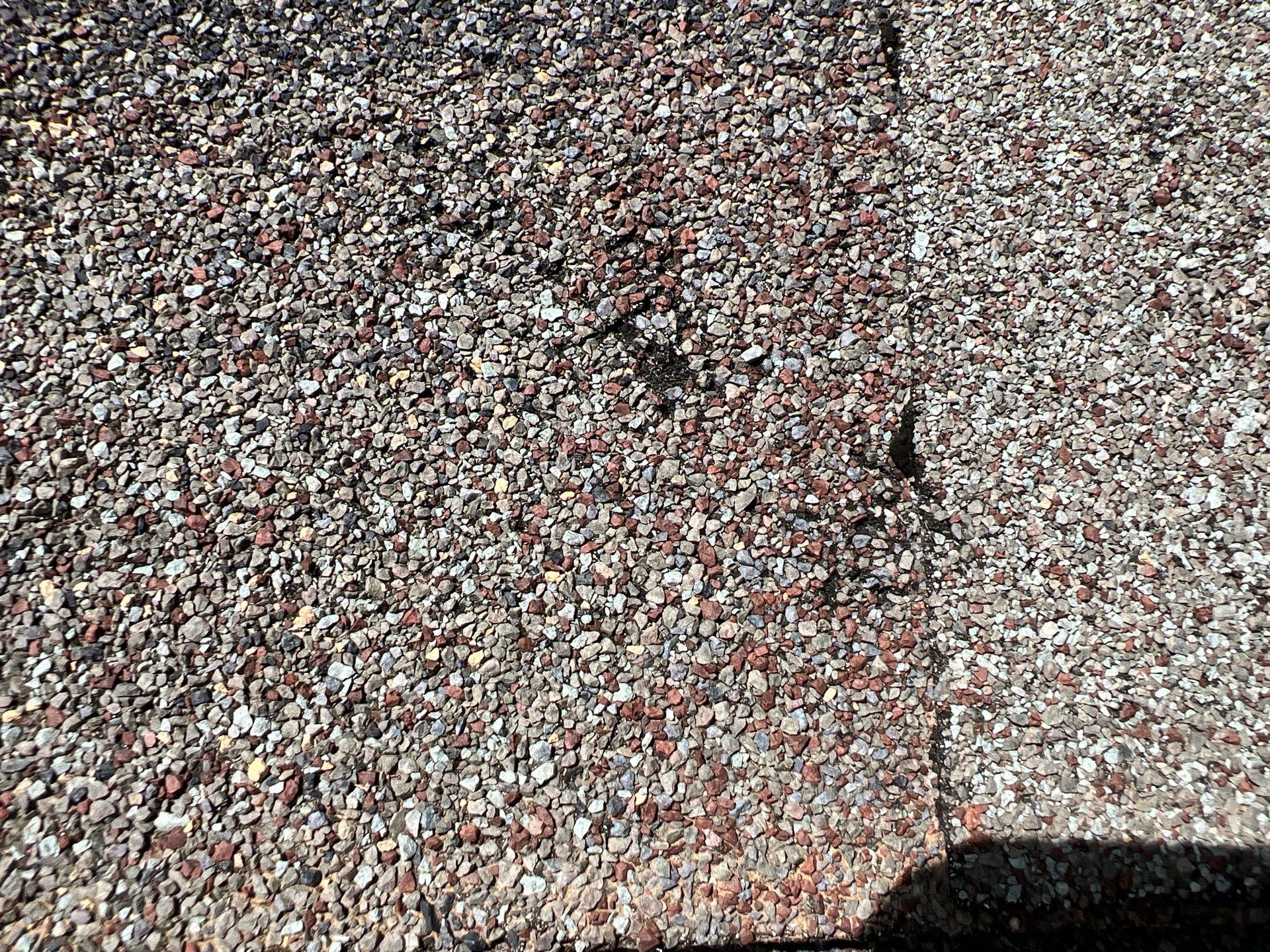
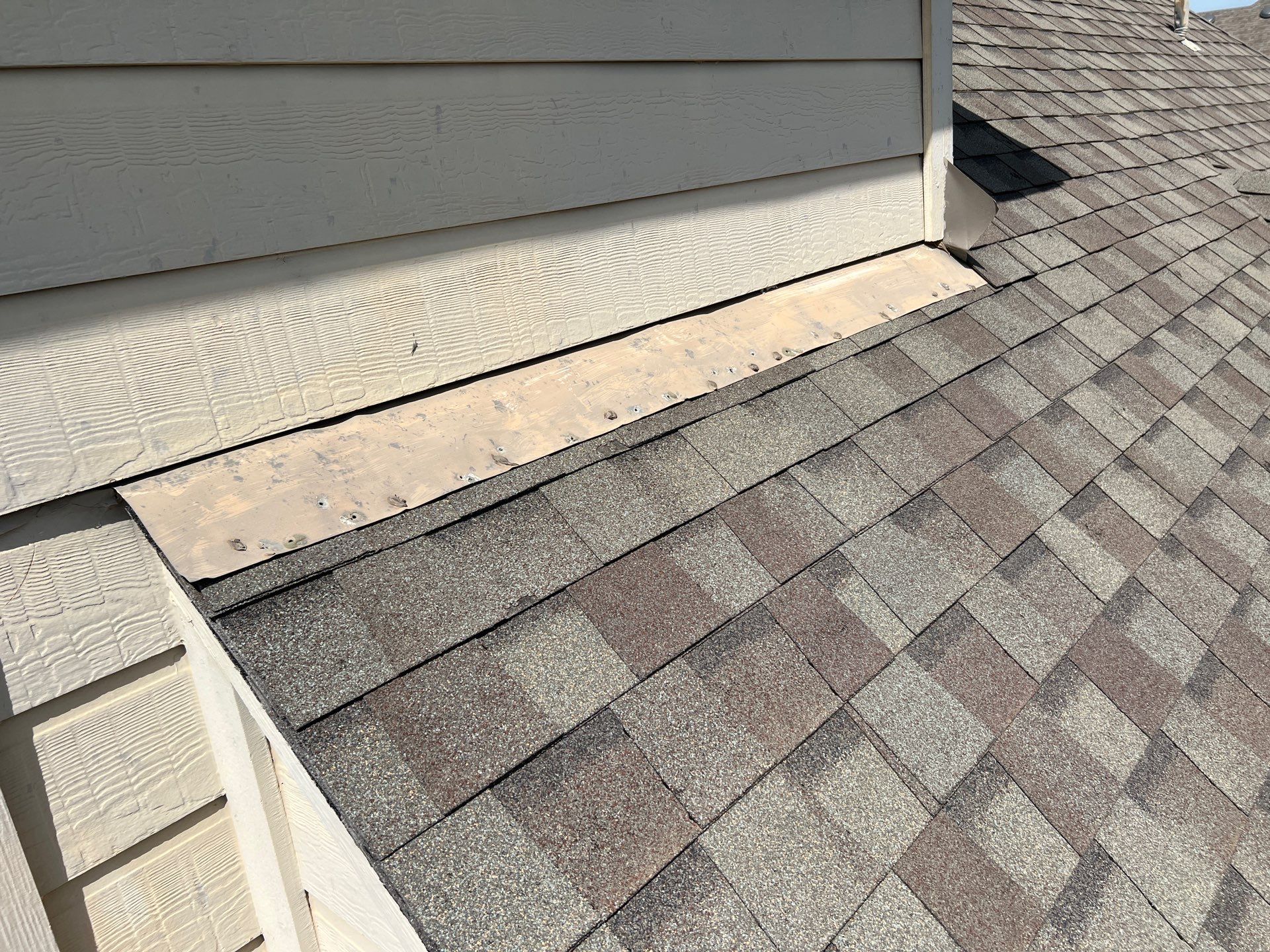
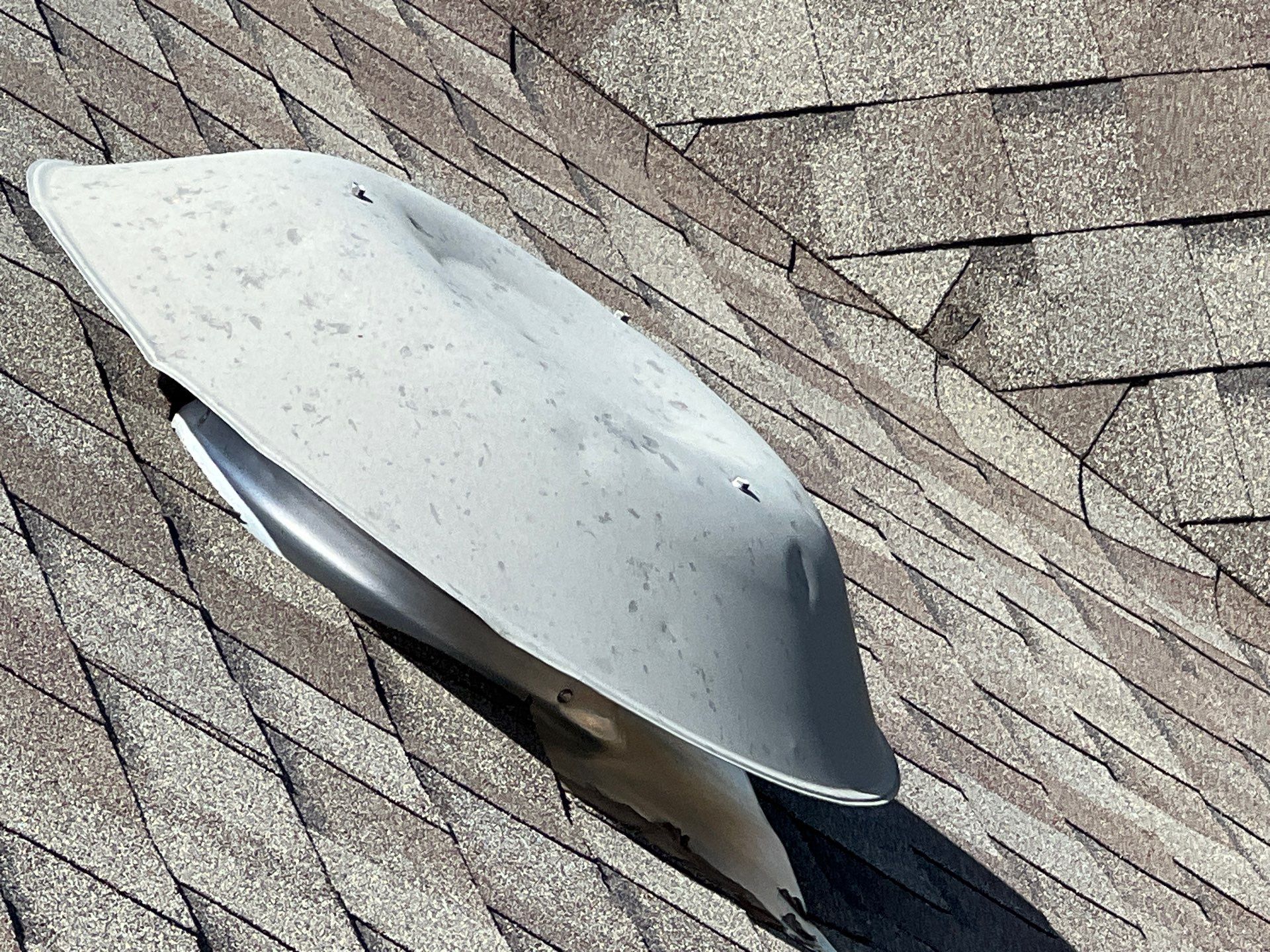
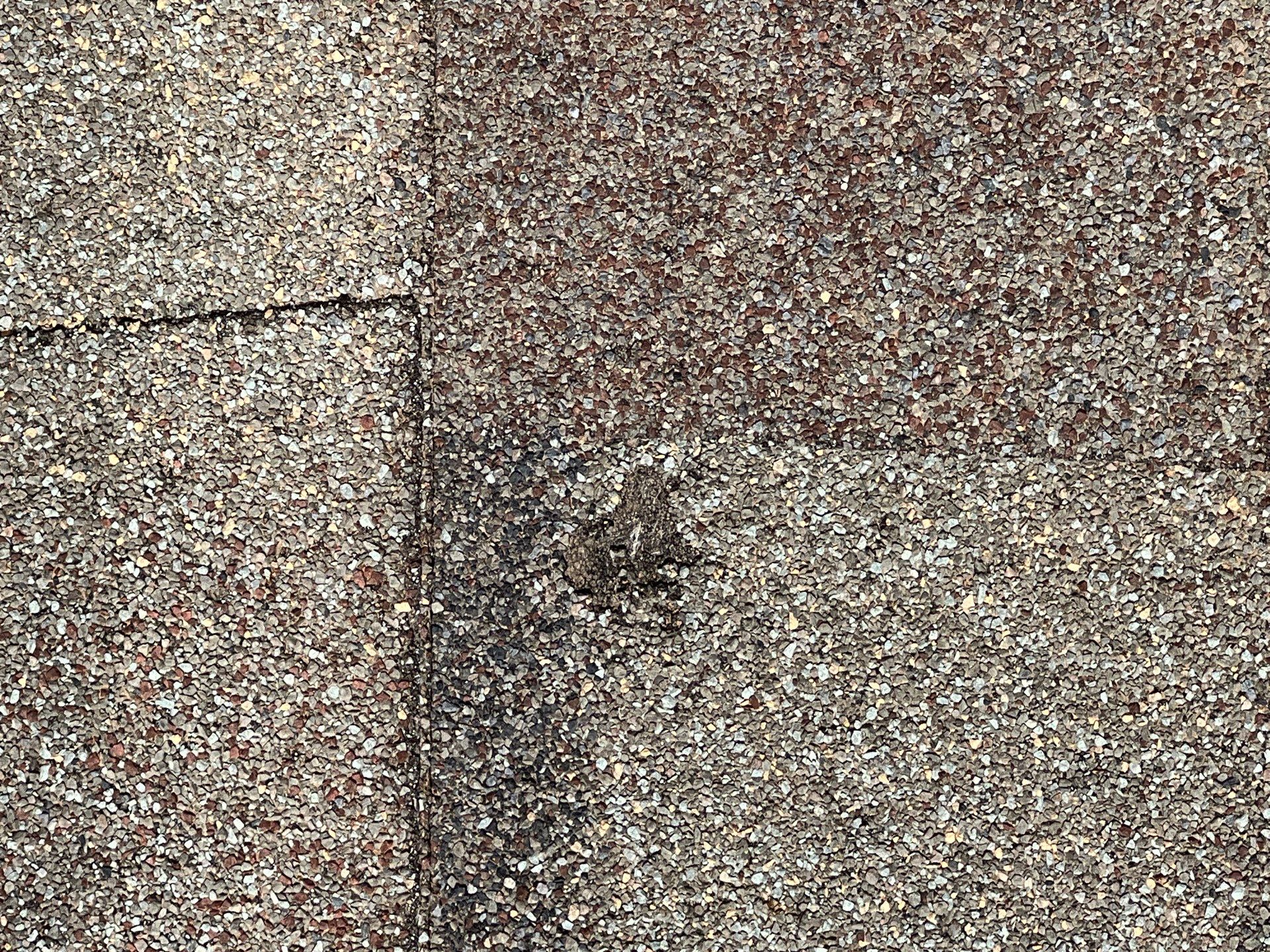
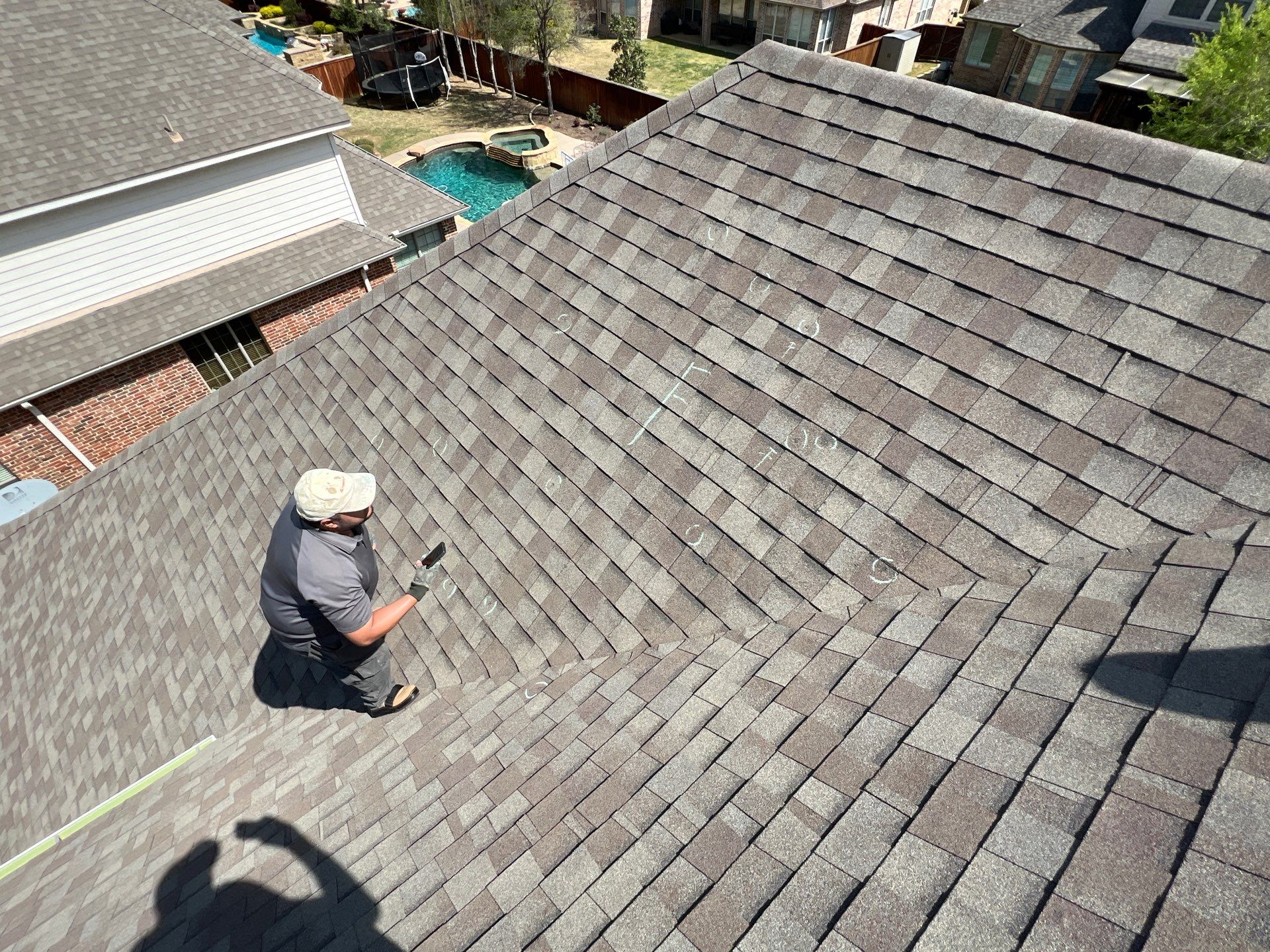
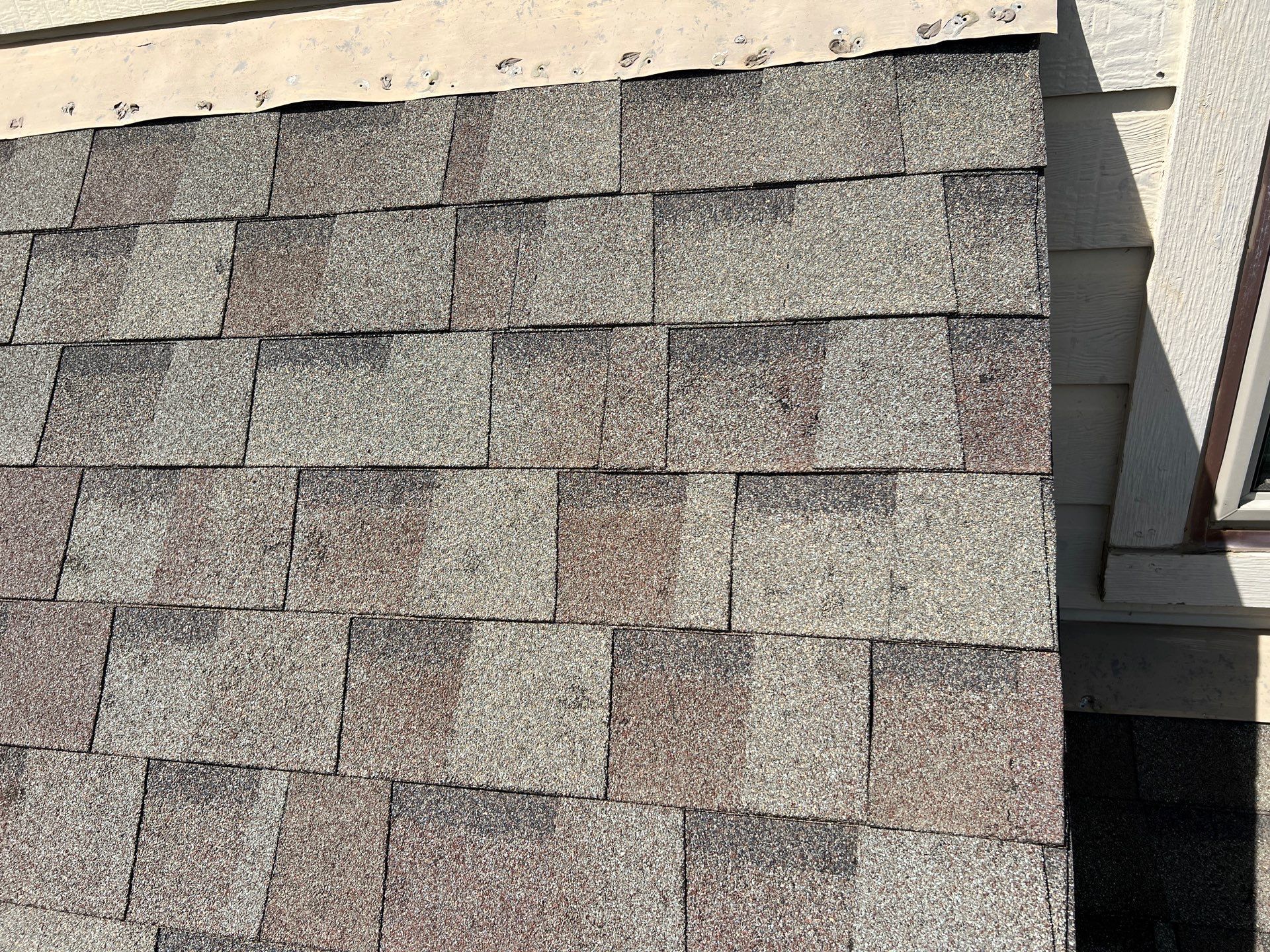
Three large hail storms, all dropping hailstones over 2 inches in size, and the insurance company still denied the claim. This is more common than most homeowners realize. When a loss lands on the higher end, insurers will often deny it first to see who pushes back. The math is cold: deny enough valid claims and a predictable share of homeowners won’t pursue them. At scale, across tens of thousands of denied claims, that saves insurers hundreds of millions of dollars. This roof alone cost over $60,000 to replace.
The Solution: Patience, Experience & Our Expertise
We spent more than three months going back and forth with the insurance company before the claim was approved. Multiple inspections, multiple revised estimates, video documentation, photo evidence, and a lot of time on the phone. We got the approval without going to appraisal or bringing in a public adjuster – which saved our client tens of thousands of dollars in extra fees. That kind of negotiation takes time and experience. It’s not something most roofing companies are positioned to handle.
Challenge 2: Steep Roof Pitch Created Dangerous Work Conditions
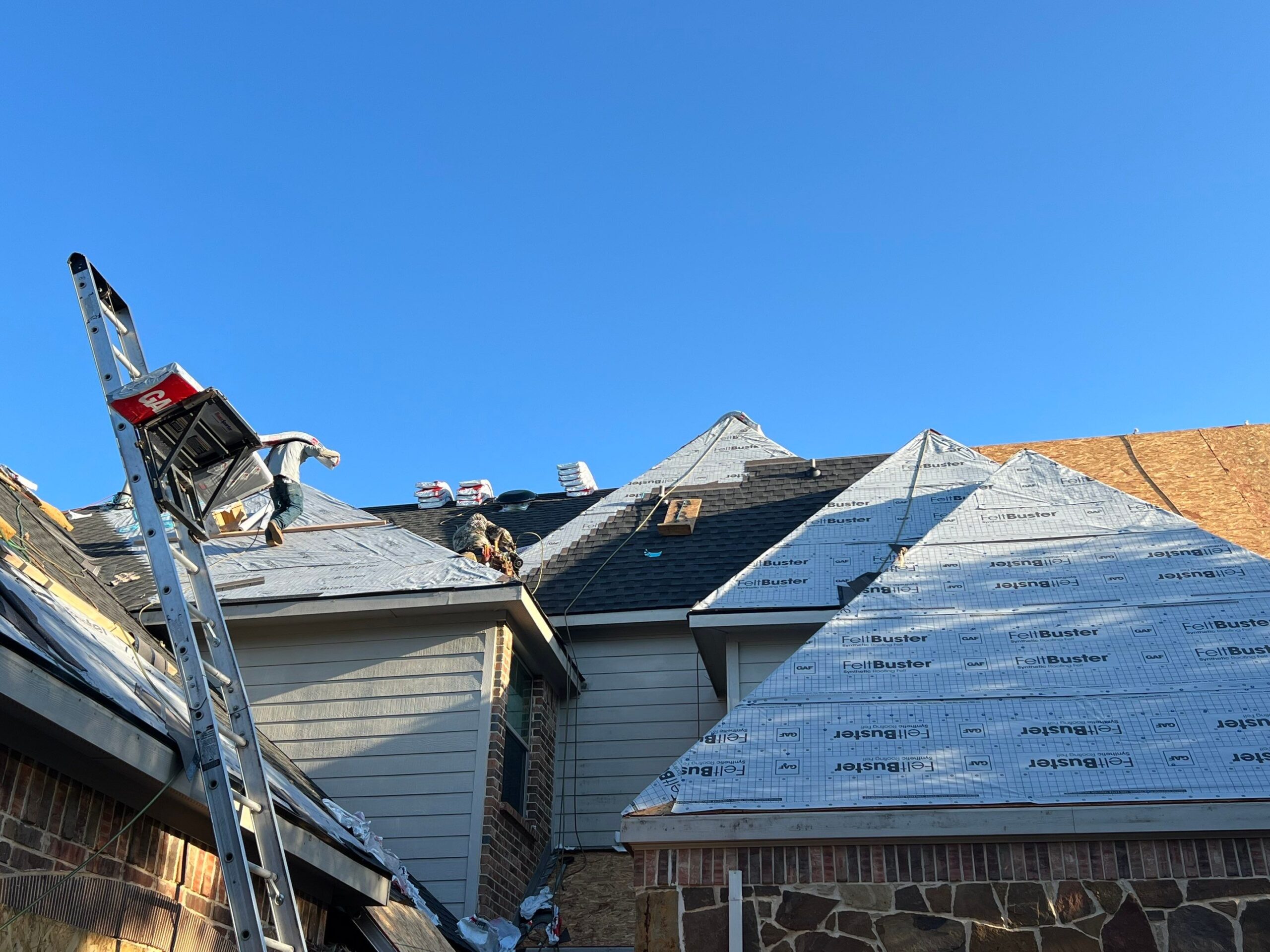
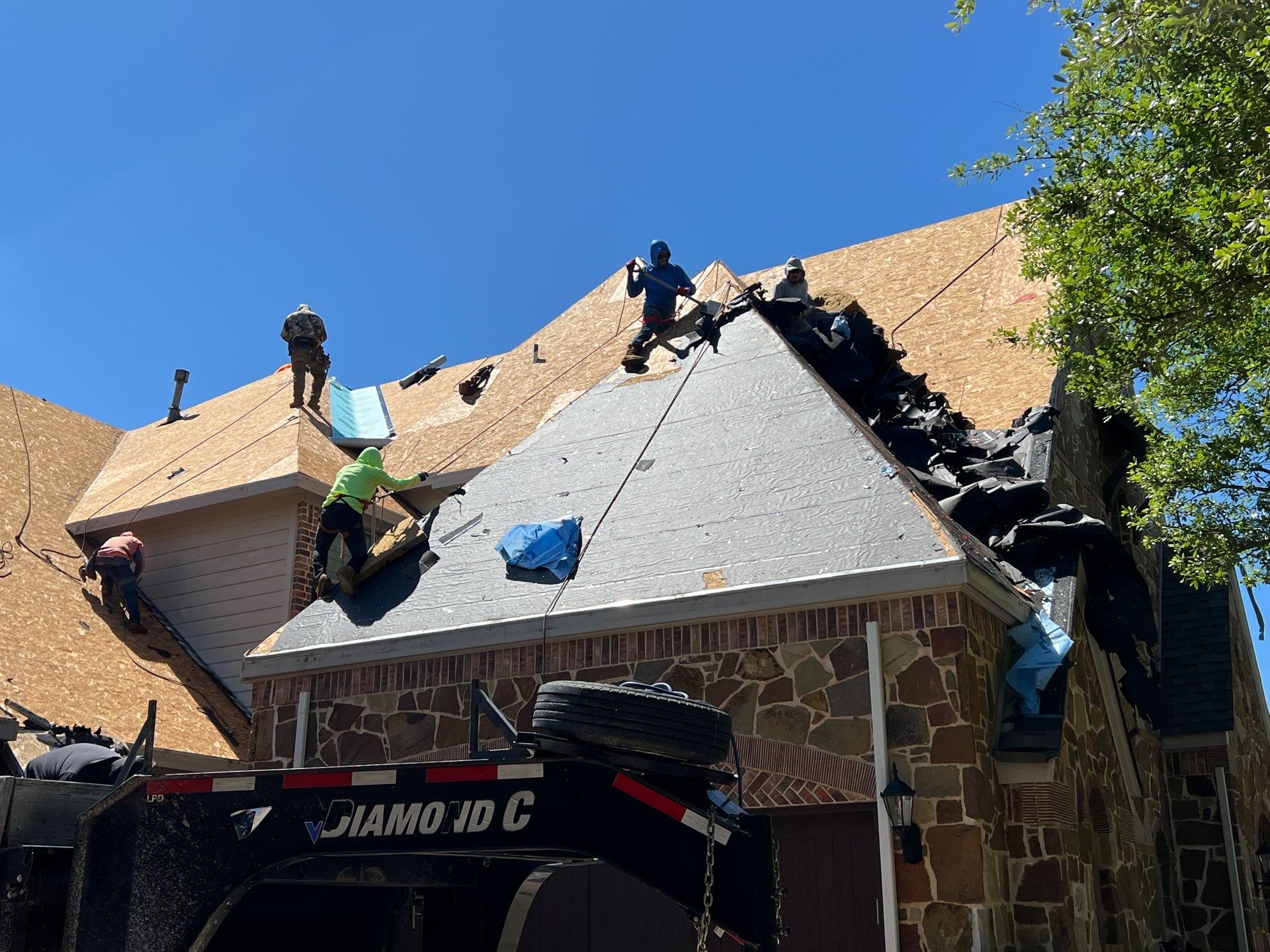
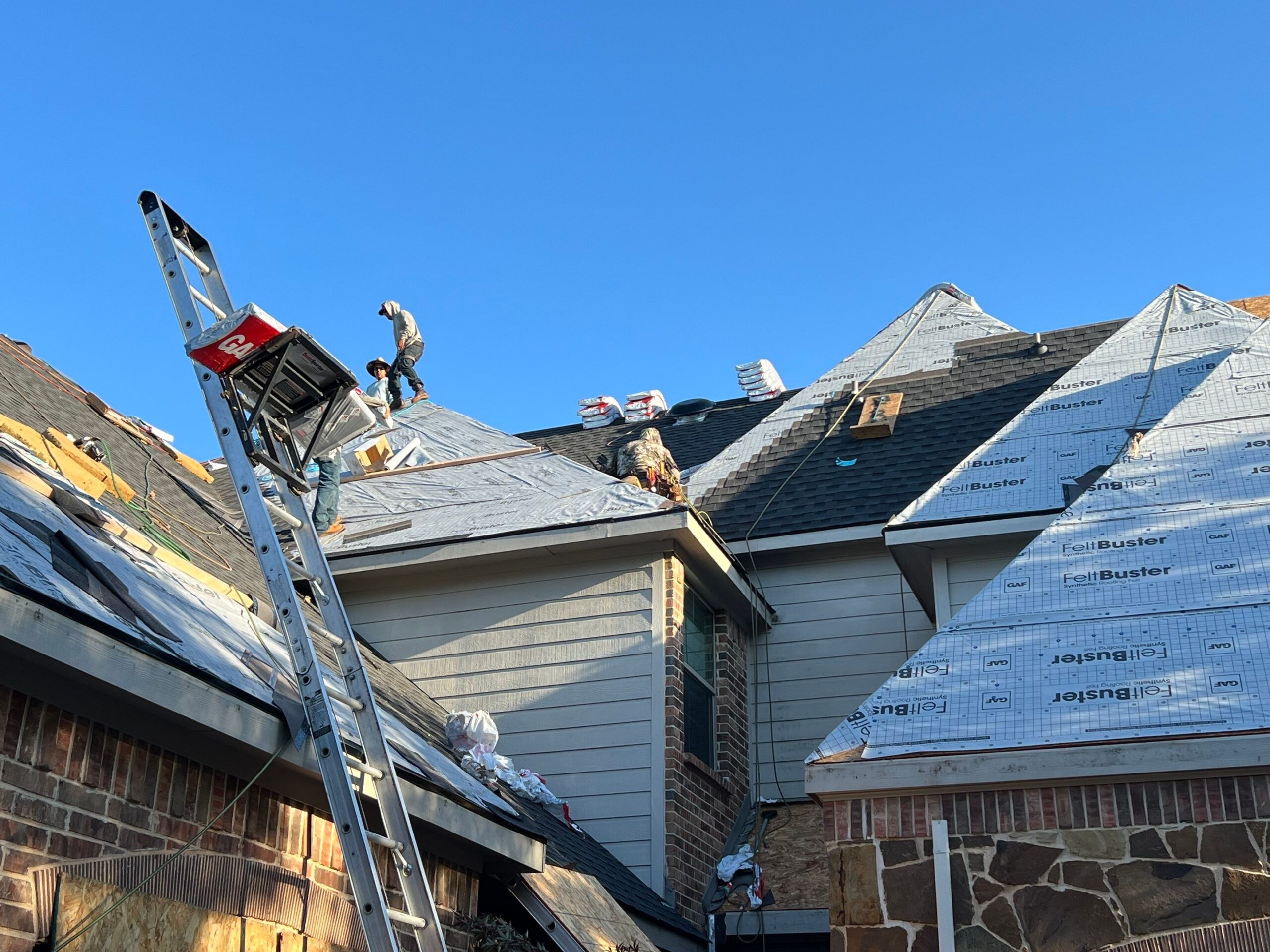
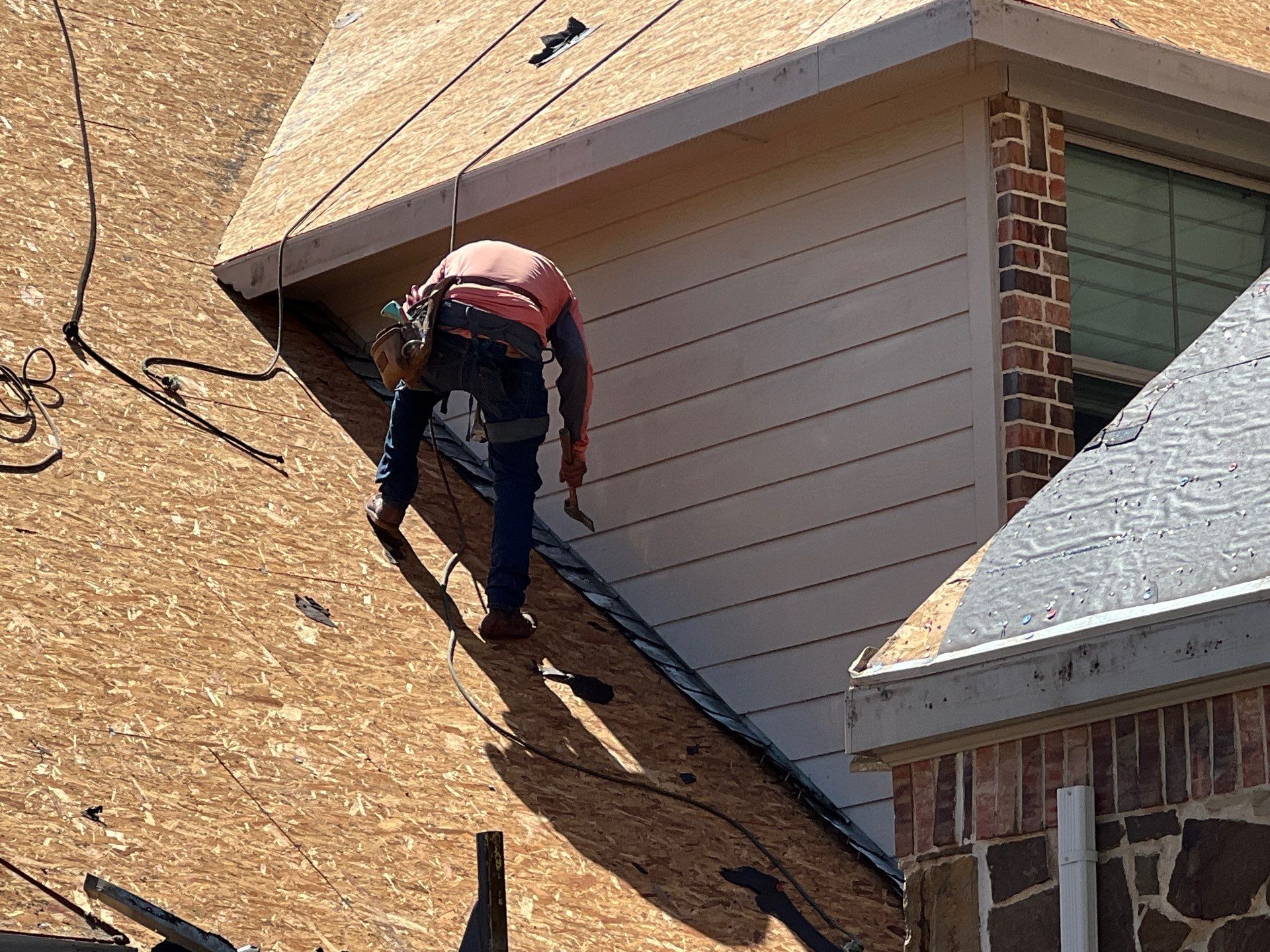
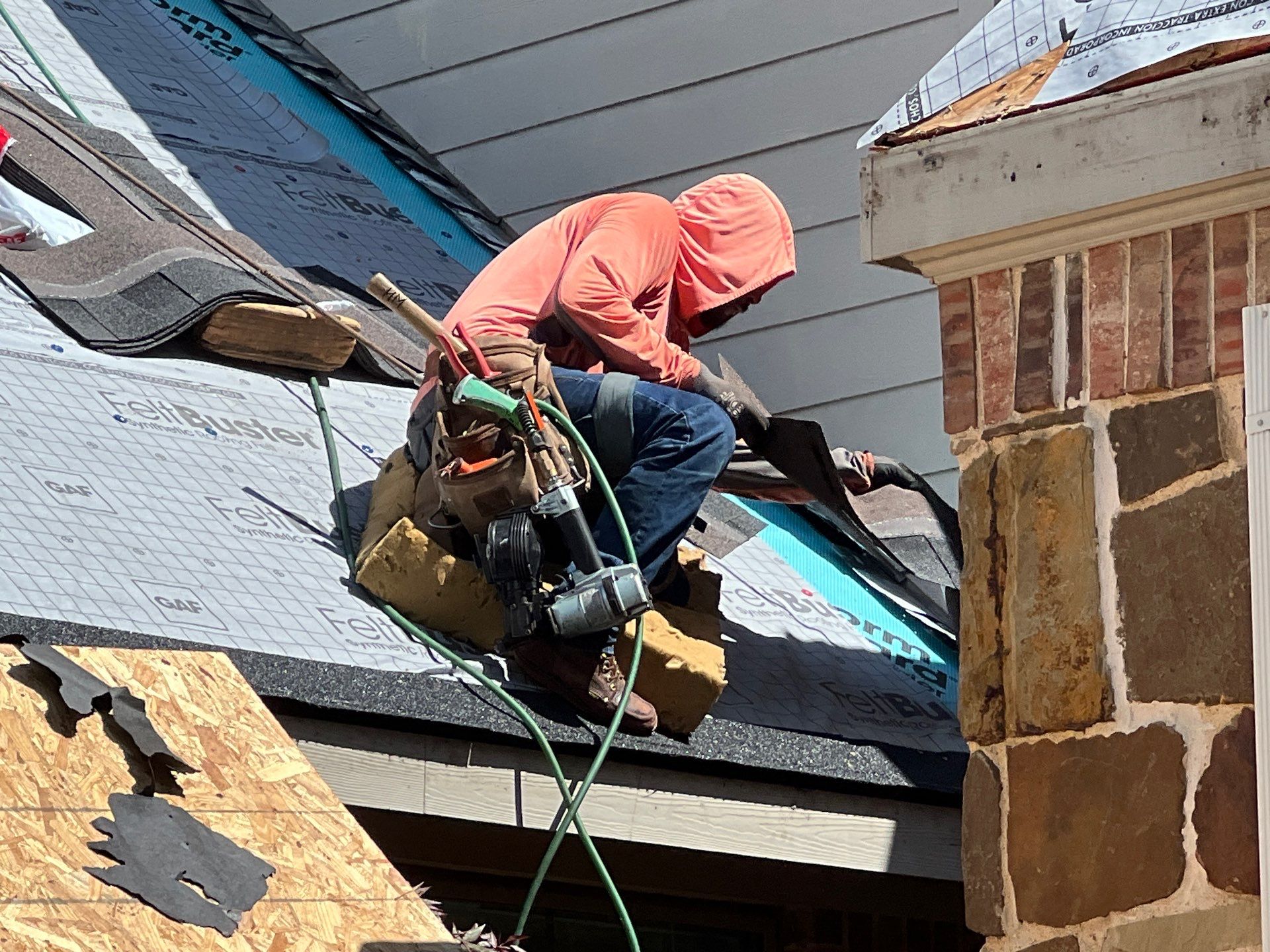
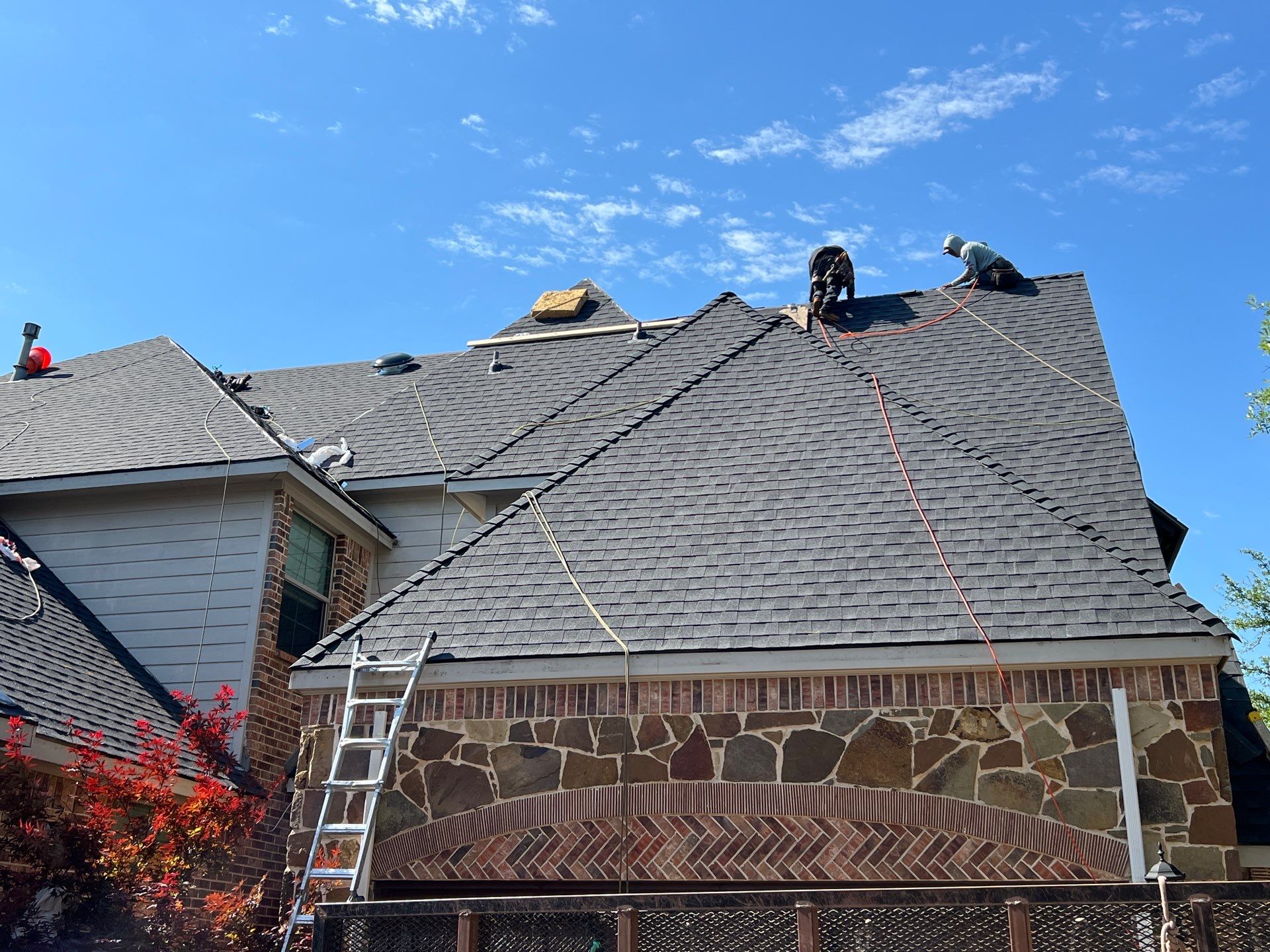
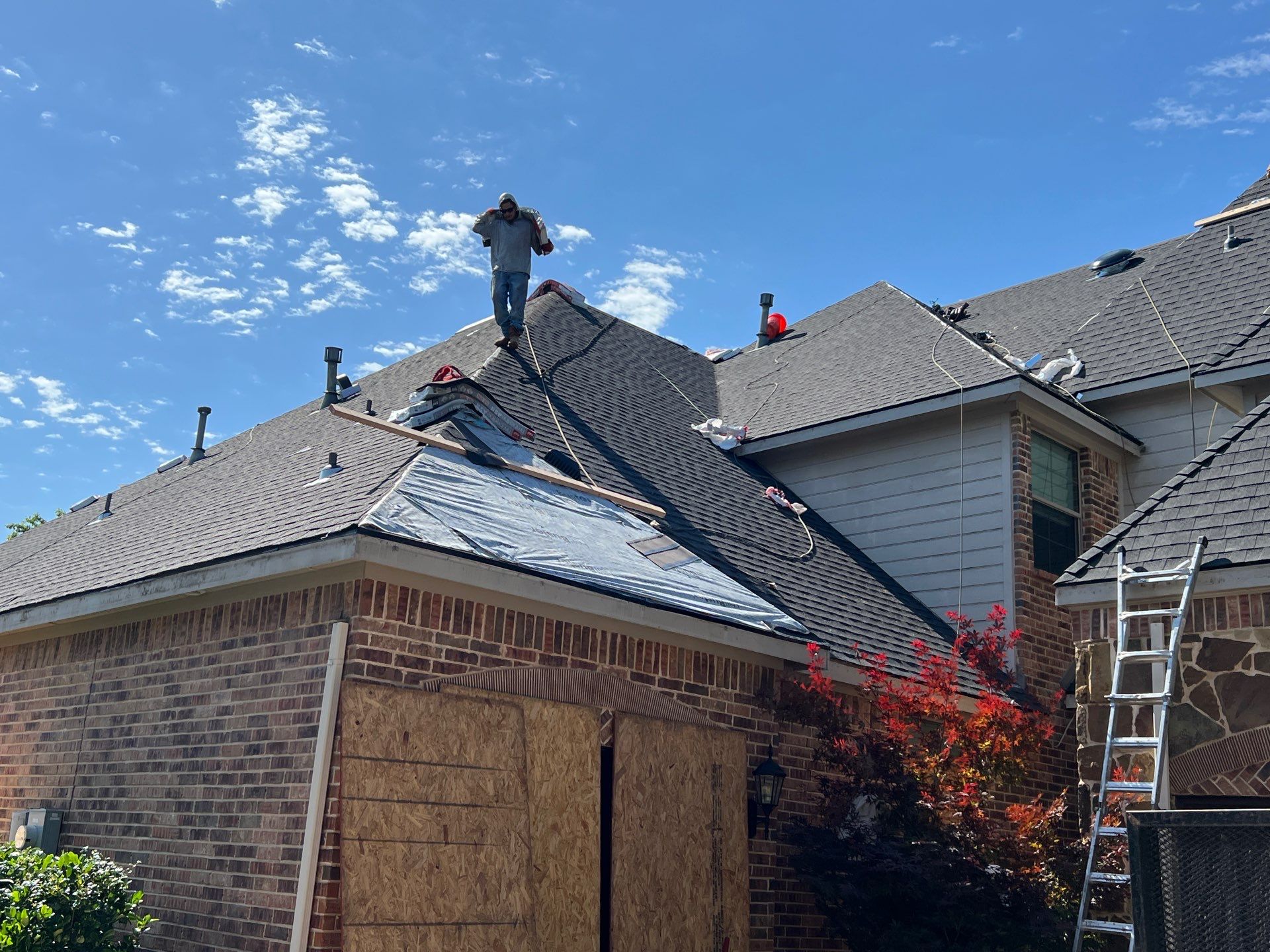
This roof was extremely steep. Above 9/12 pitch, the working environment changes in every way that counts. Large portions here ran above 12/12, and many sections hit 16/12. At those angles, you physically can’t walk the roof without a rope and harness. Only trained roofers can navigate slopes like these while still meeting the installation specs a Master Elite company like Presidio Roofing is required to hit.
The Solution: Proper Training, Experience & Our Skillset
Our crews are built for steep and tall work. Most roofers in the country won’t touch a 16/12 pitch. But in Argyle, Lantana, Flower Mound, and across DFW, roofs like this are common – and we’re equipped to handle them safely without cutting corners on the technical requirements steep-slope installations demand.
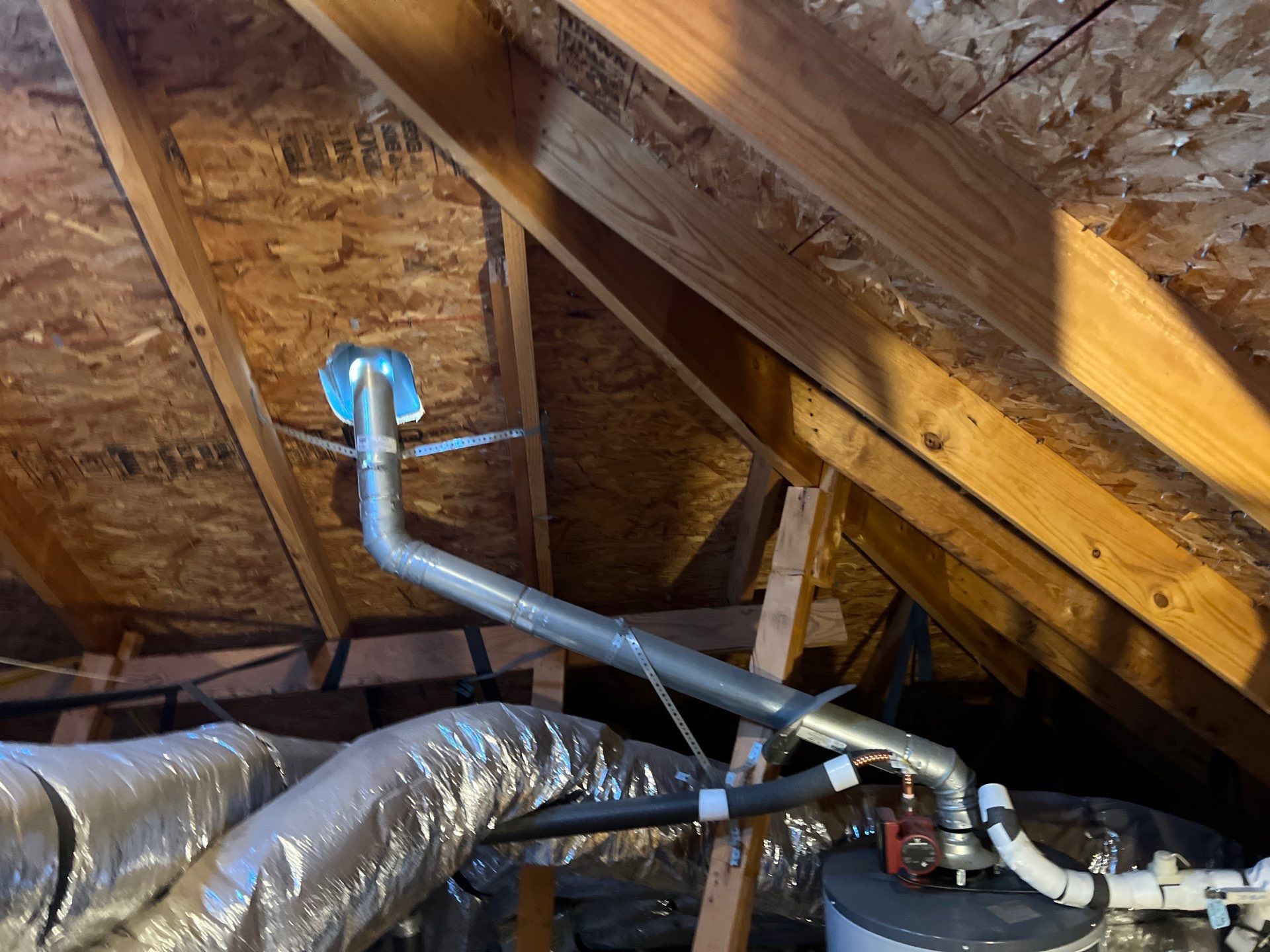
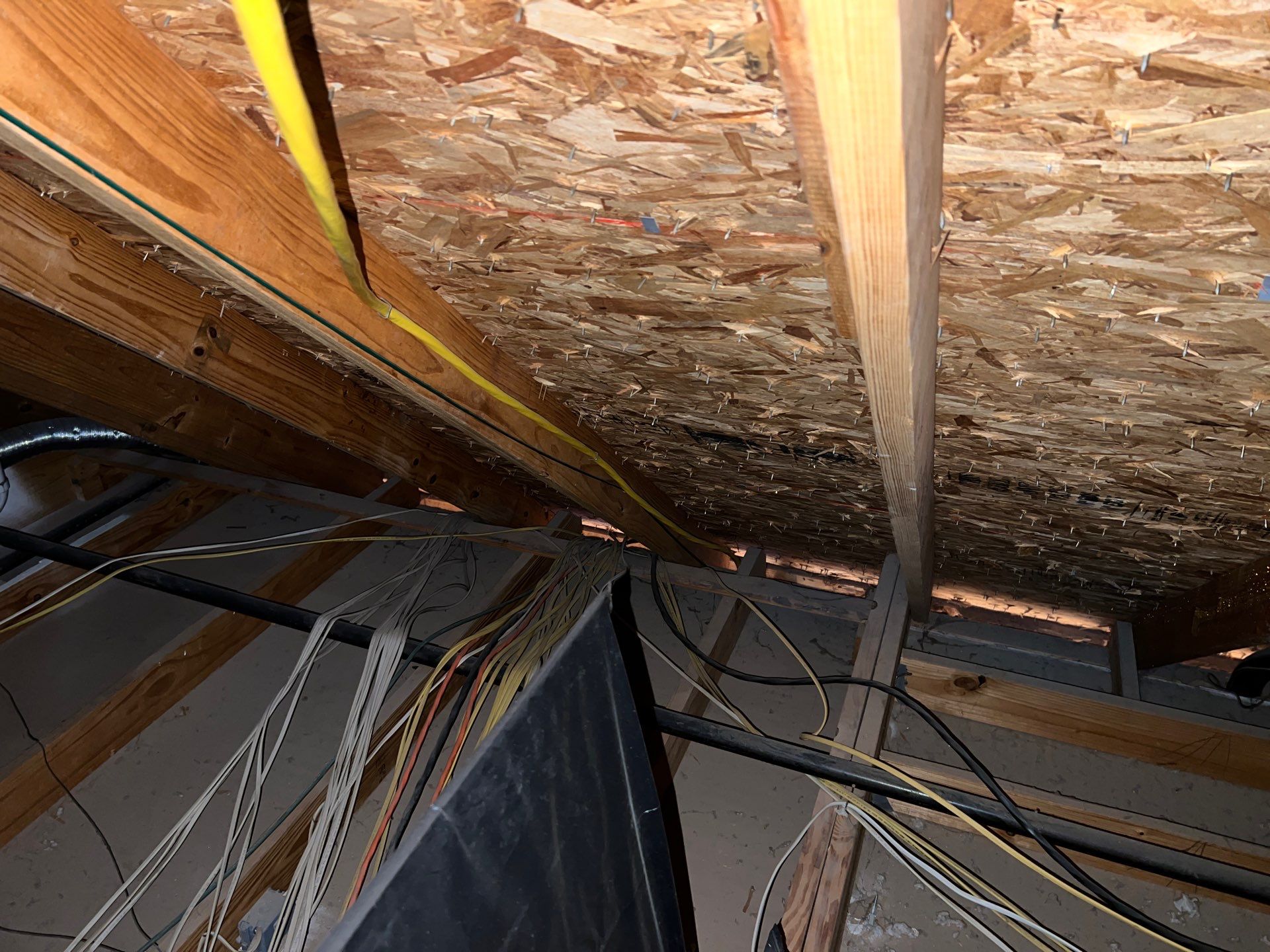
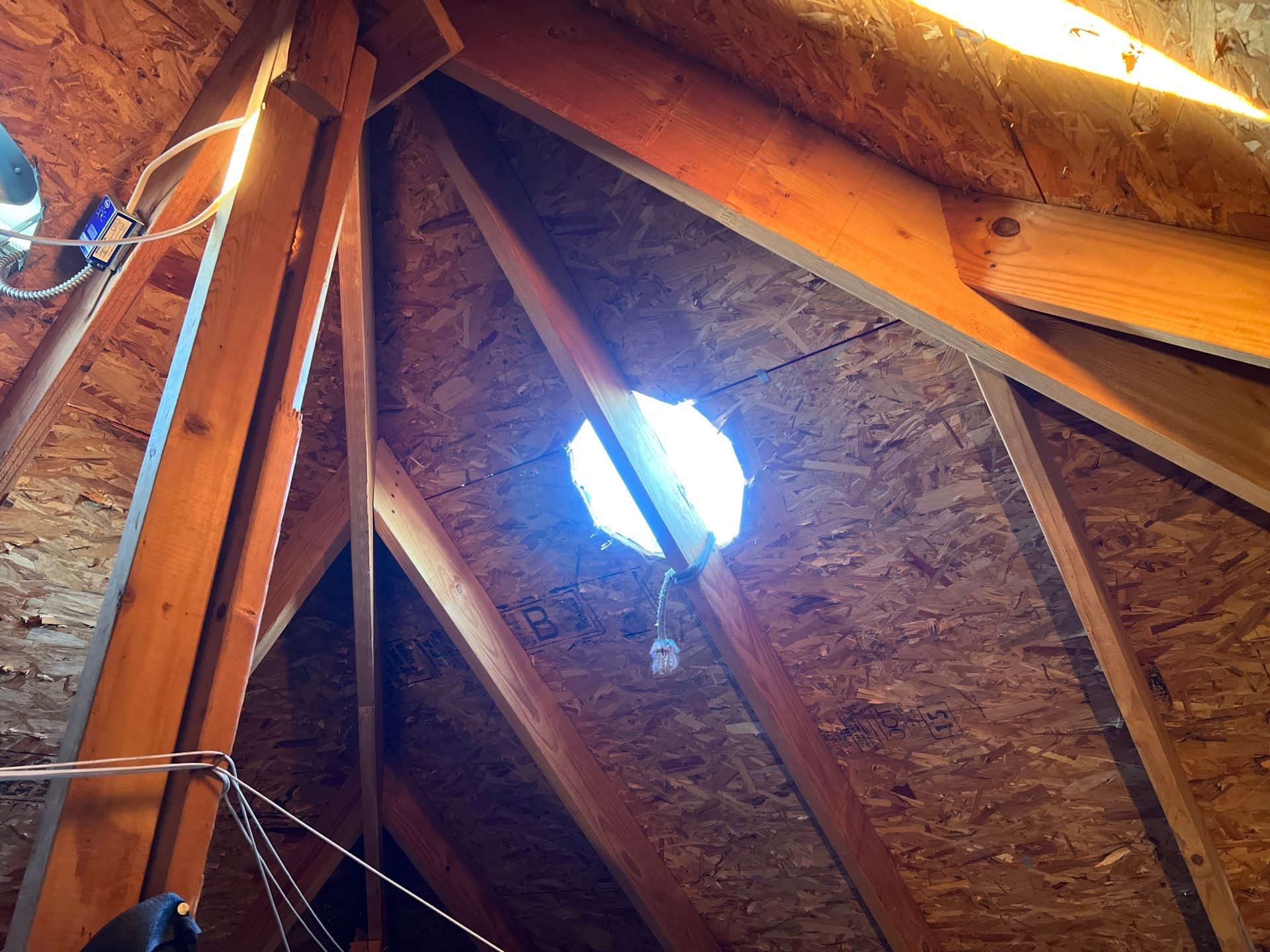
Challenge 3: Roof Mounted Power Attic Vents Needed Replacing
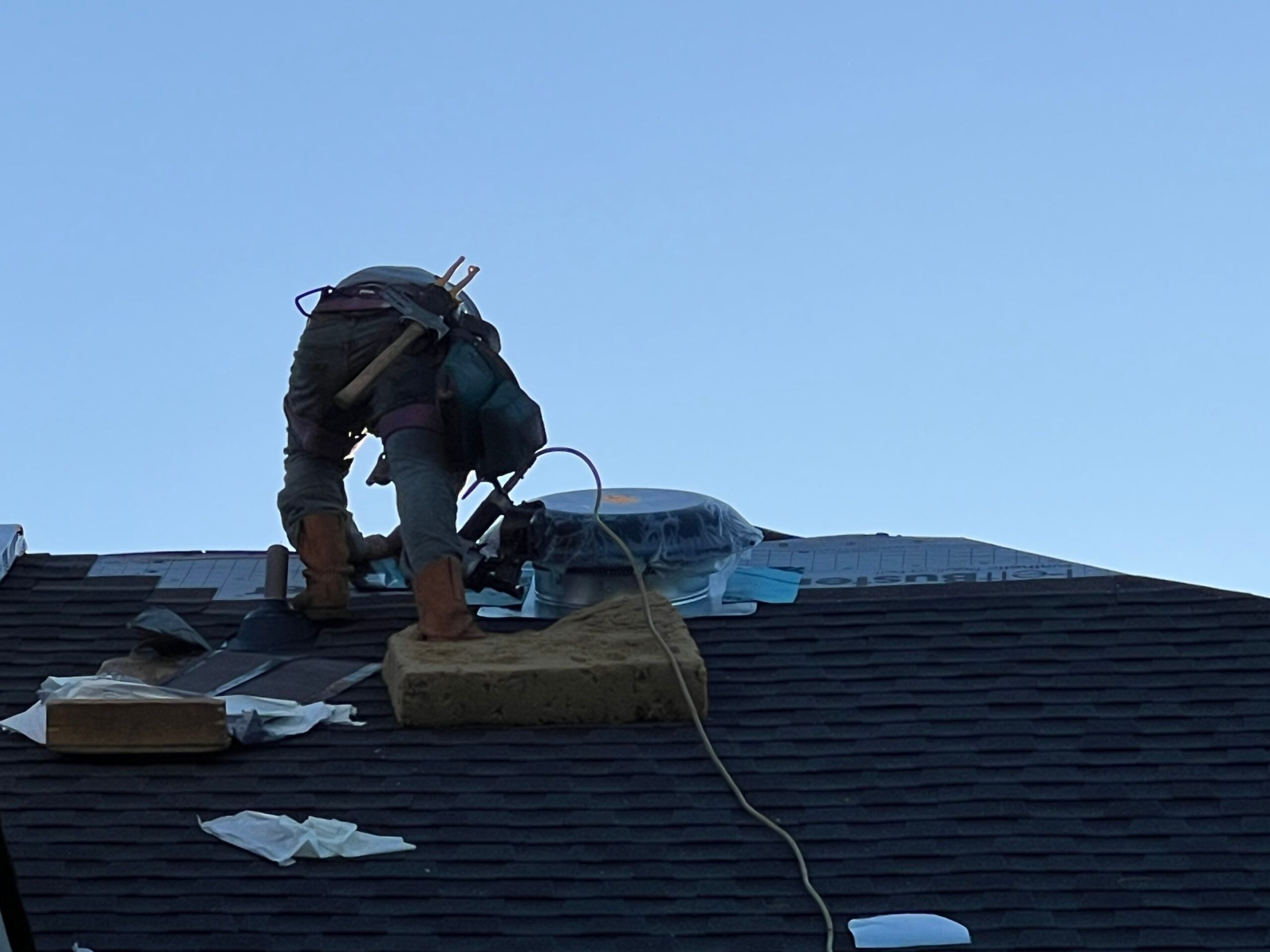
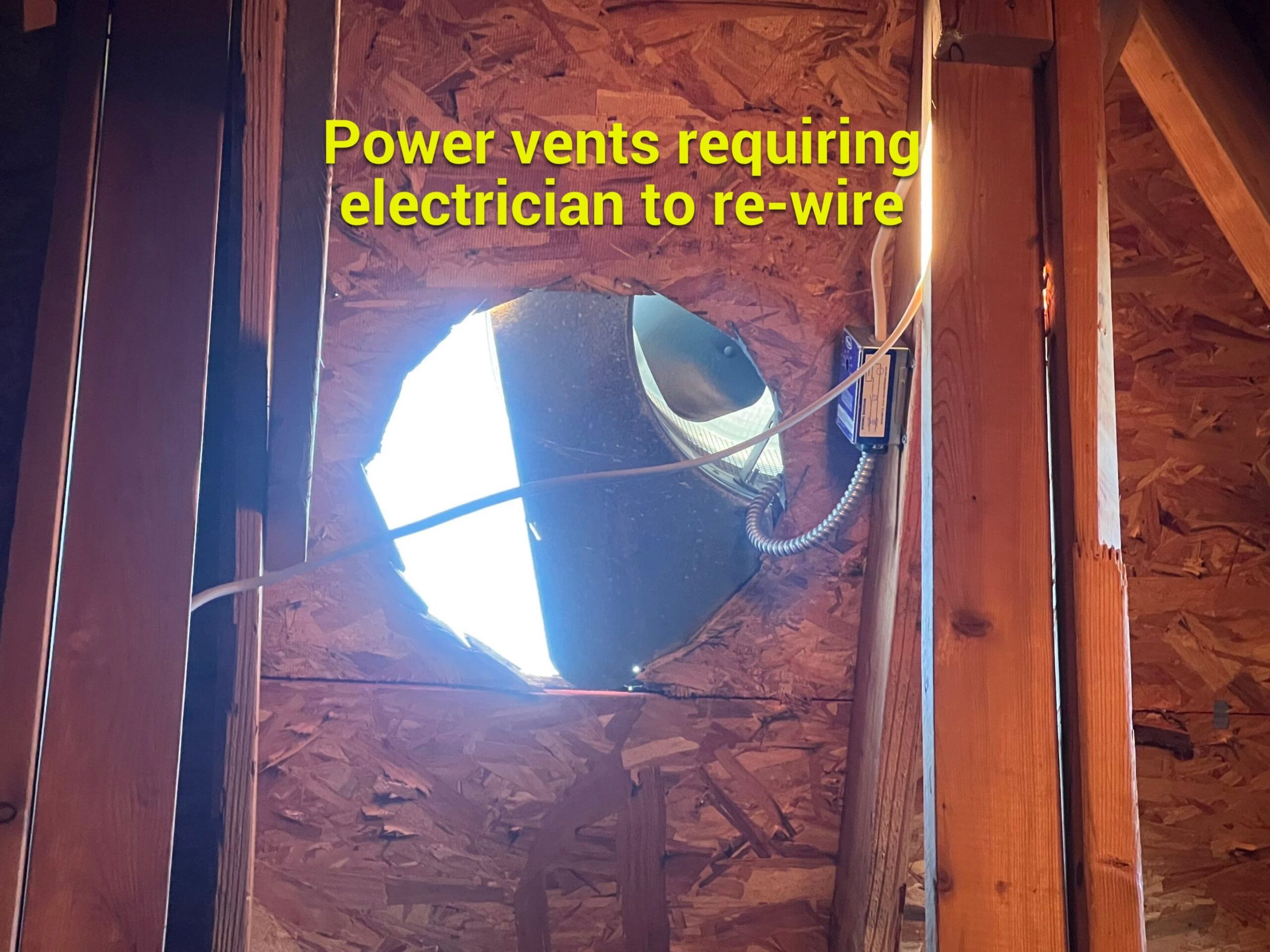
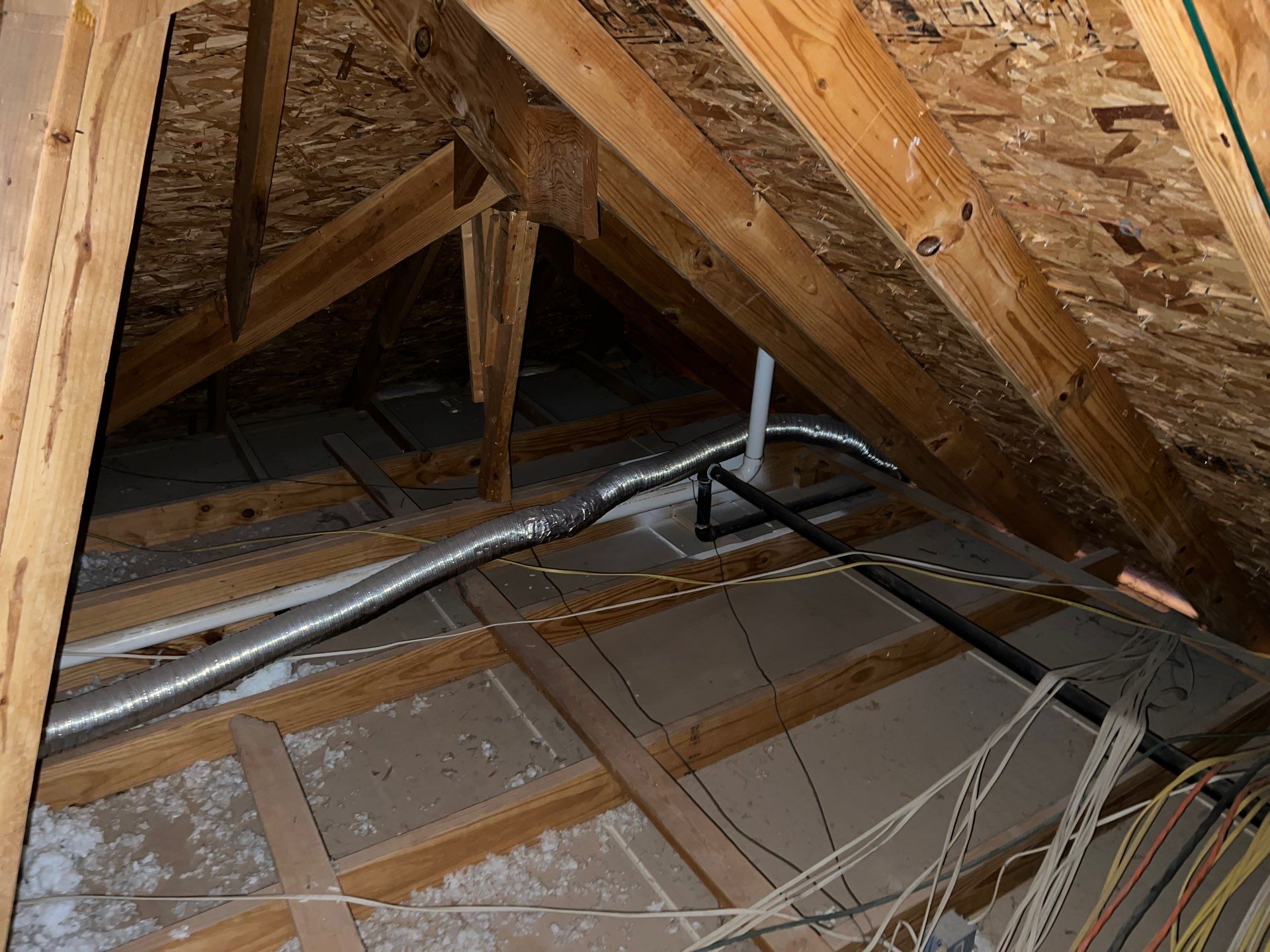
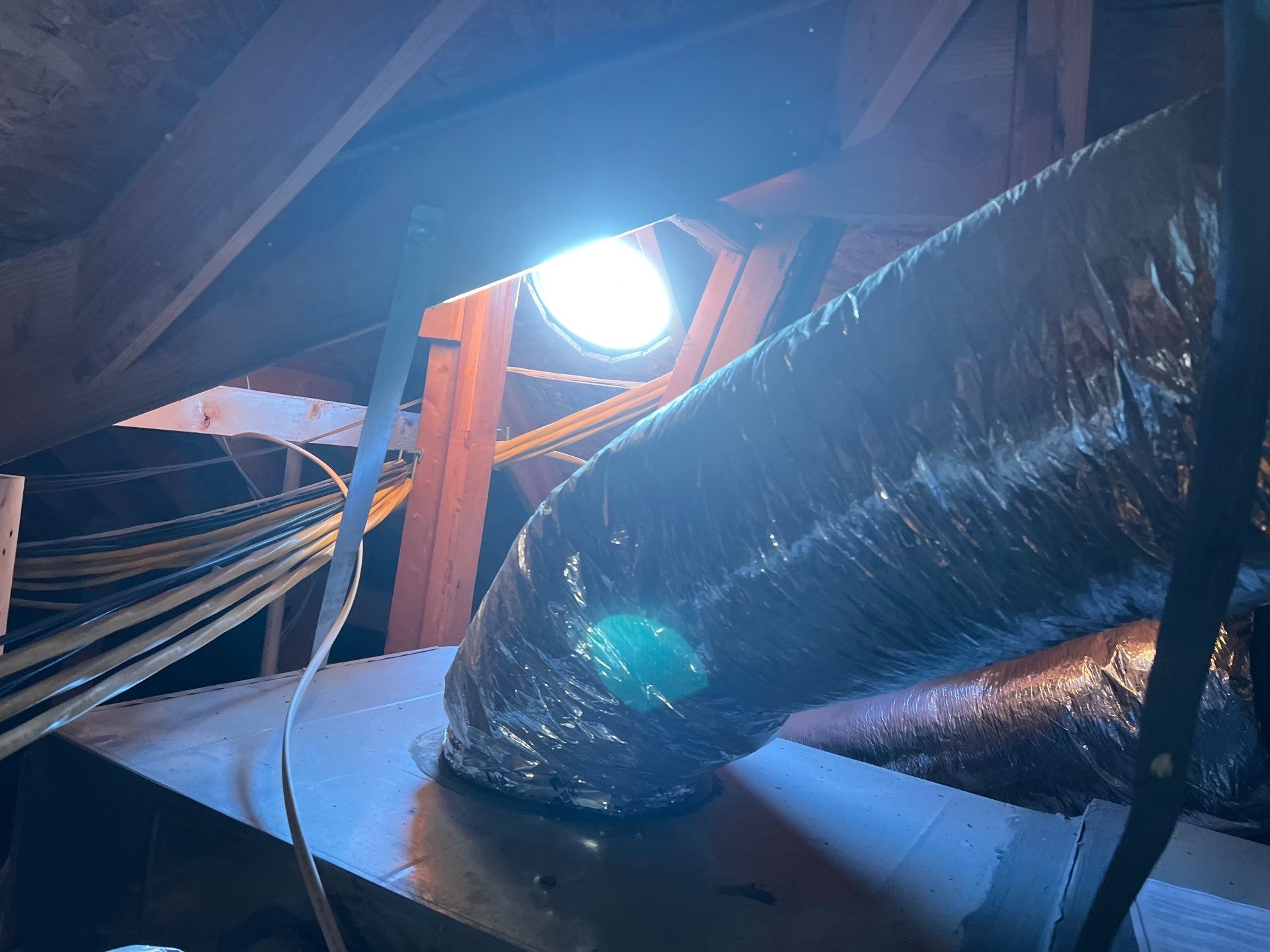
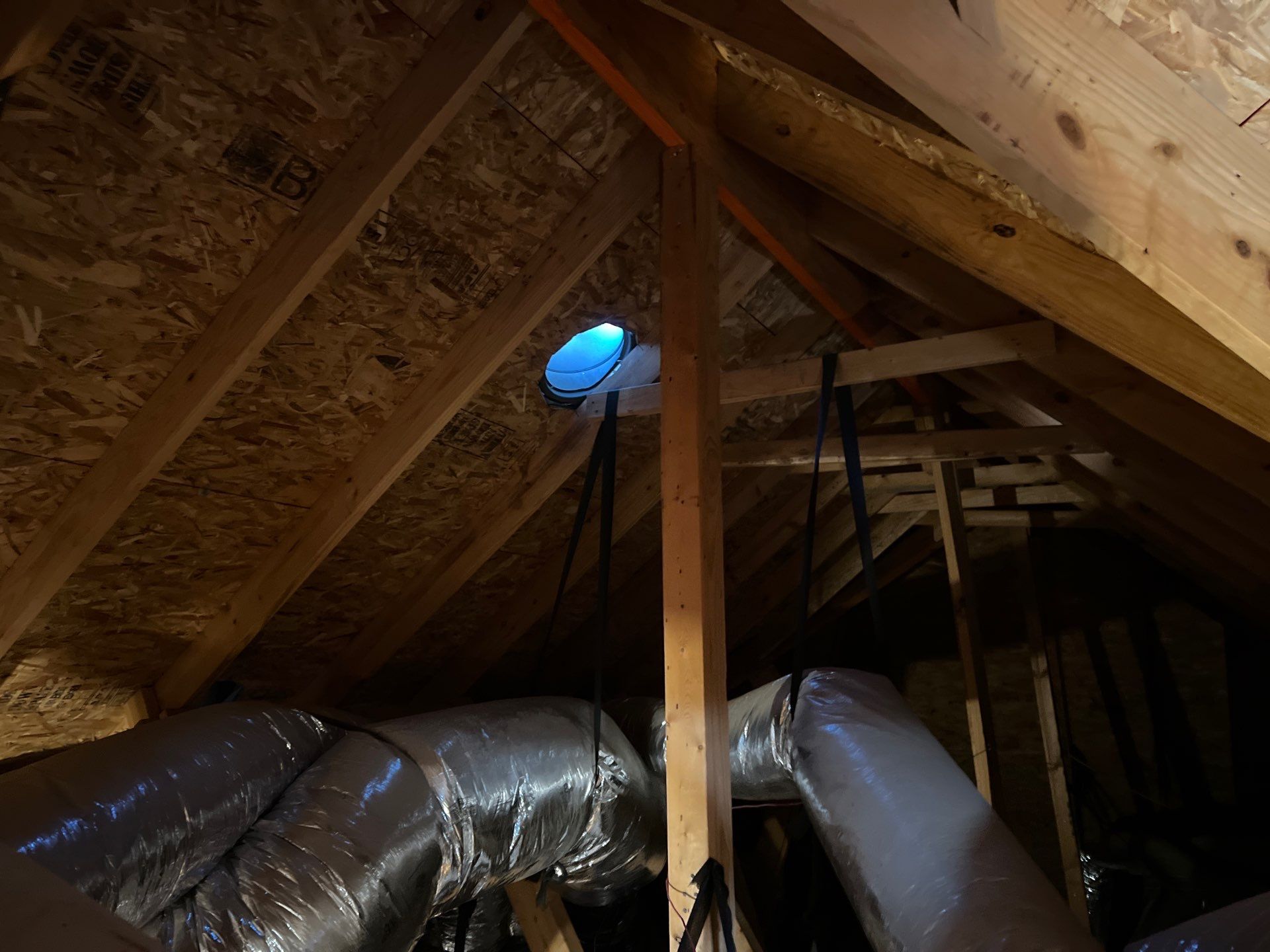
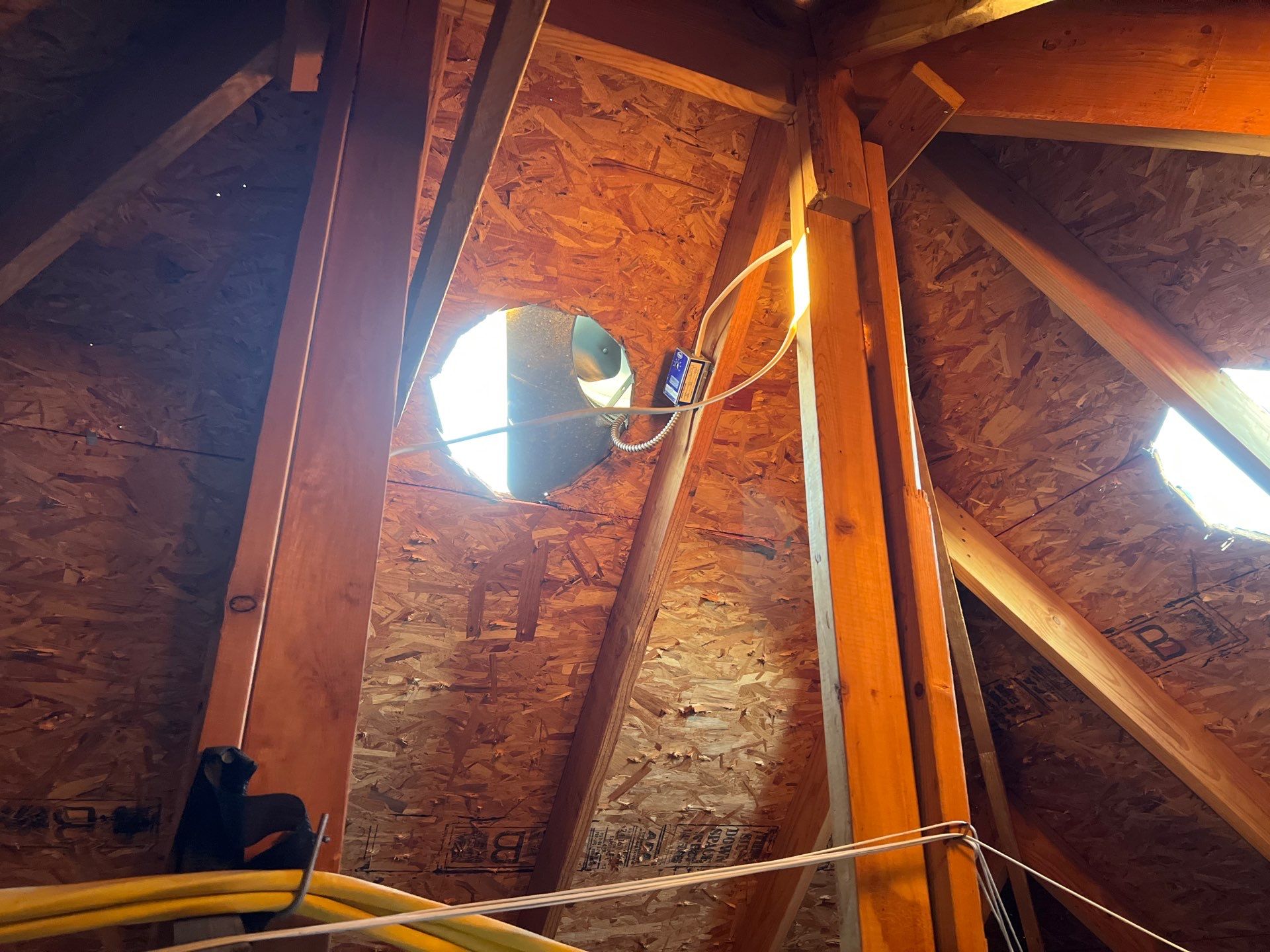
The hail knocked out the roof-mounted power attic vents. These aren’t units you can simply swap out – they’re hard-wired into attic electrical circuits, not plugged into standard outlets. Roofing crews can’t safely touch them without a licensed electrician involved.
The Solution: Working With the Right People
We keep a licensed electrician in Denton County available for jobs like this. He disconnects the existing units, wires in the replacements, and coordinates with the roofing crew so positioning and installation happen in the right sequence. In a Texas summer – with attic temperatures pushing well past 100 degrees – working vents aren’t optional.
The Result
The claim came back approved in full. After more than three months of back-and-forth, the insurer covered a $60,000-$65,000 replacement on a roof they had initially denied. No public adjuster. No formal appraisal. The homeowner avoided tens of thousands of dollars in fees that either of those routes would have added, because the contractor handled the negotiation from start to finish. The 6,500 sq ft installation finished in two days – new power attic vents included, with a licensed electrician handling the electrical side. The whole project is backed by a GAF Golden Pledge Warranty with 25-year workmanship coverage. The homeowner told us that going through a denied claim felt overwhelming at first, but having a contractor manage the entire process made the outcome feel manageable. Read more from clients who’ve been through the same process.


How to Maintain Your New GAF Timberline® ArmorShield II Class 4 Roof
A new roof still needs attention. Staying on top of a few basic checks protects your warranty eligibility and catches small problems before they grow.
After any major storm, walk the property and do a quick ground-level scan. Dings in gutters, torn window screens, or shingles in the yard are all signs worth noting. Don’t get on the roof yourself – if something looks off, call a professional.
Keep leaves and branches cleared from roof valleys and gutters. Debris sitting in a valley holds moisture, and trapped moisture eventually works its way under the shingles or encourages algae growth.
Check your downspout splash blocks after storms. Heavy granule buildup – the gritty material shed from the shingle surface – can point to normal aging or fresh hail damage. Either way, it warrants a closer look.
Frequently Asked Questions
What should homeowners do when an insurance company initially denies a roof replacement claim?
How do roofing contractors safely complete installations on extremely steep roof pitches?
How can homeowners identify potential hail damage to their roof after a storm?
What happens to roof-mounted electrical components during a roof replacement?
What are the advantages of impact-resistant shingles for properties in hail-prone regions?
What should homeowners understand about roofing warranties before selecting a contractor?
How should homeowners maintain a new roof to protect their warranty and maximize its lifespan?

About the author: Nick Van Slyke
Certifications & Affiliations