
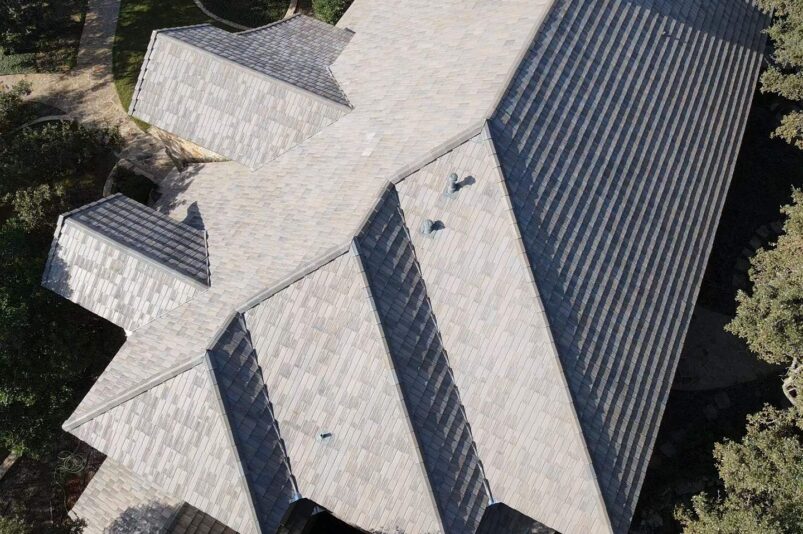
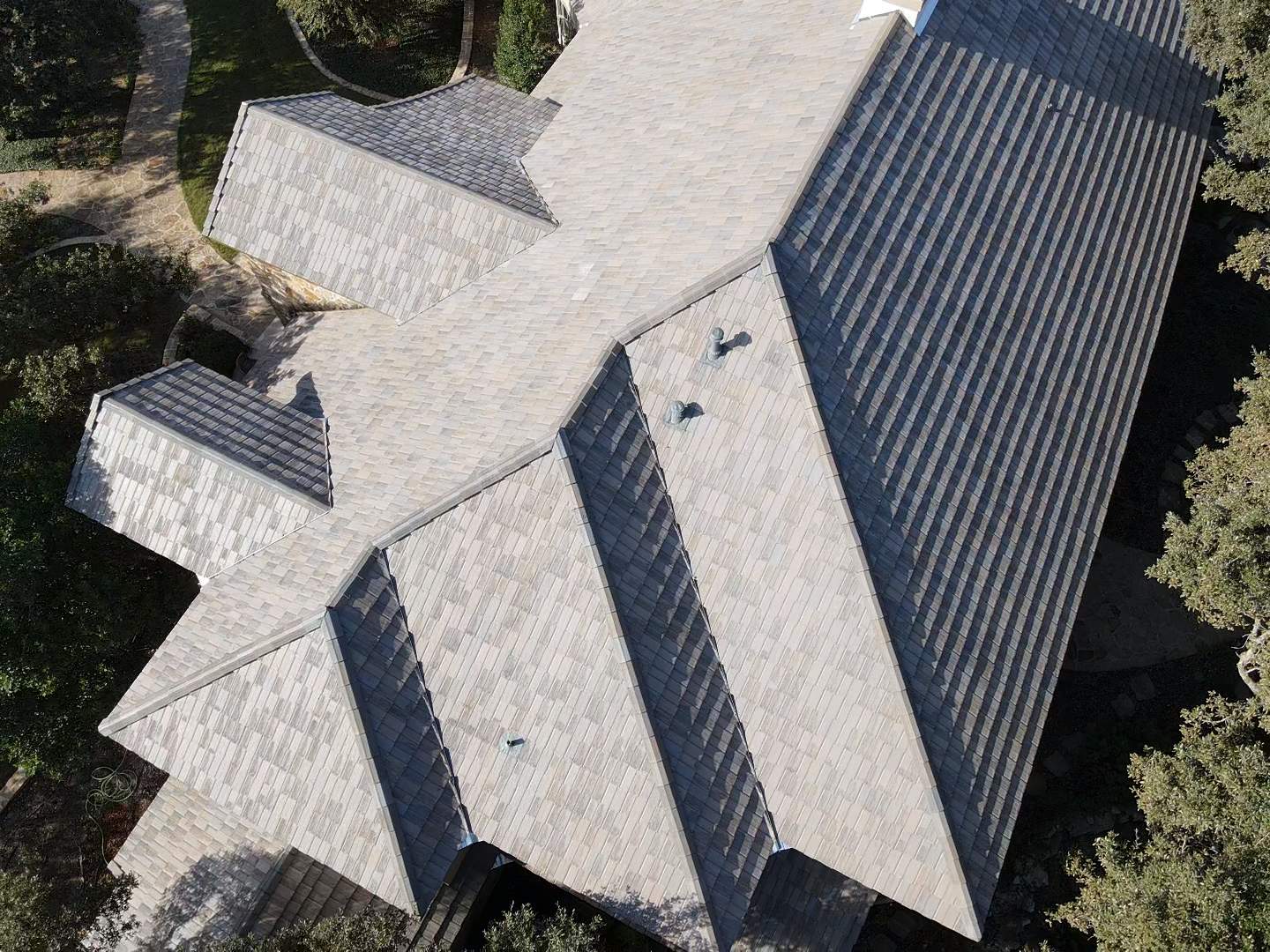
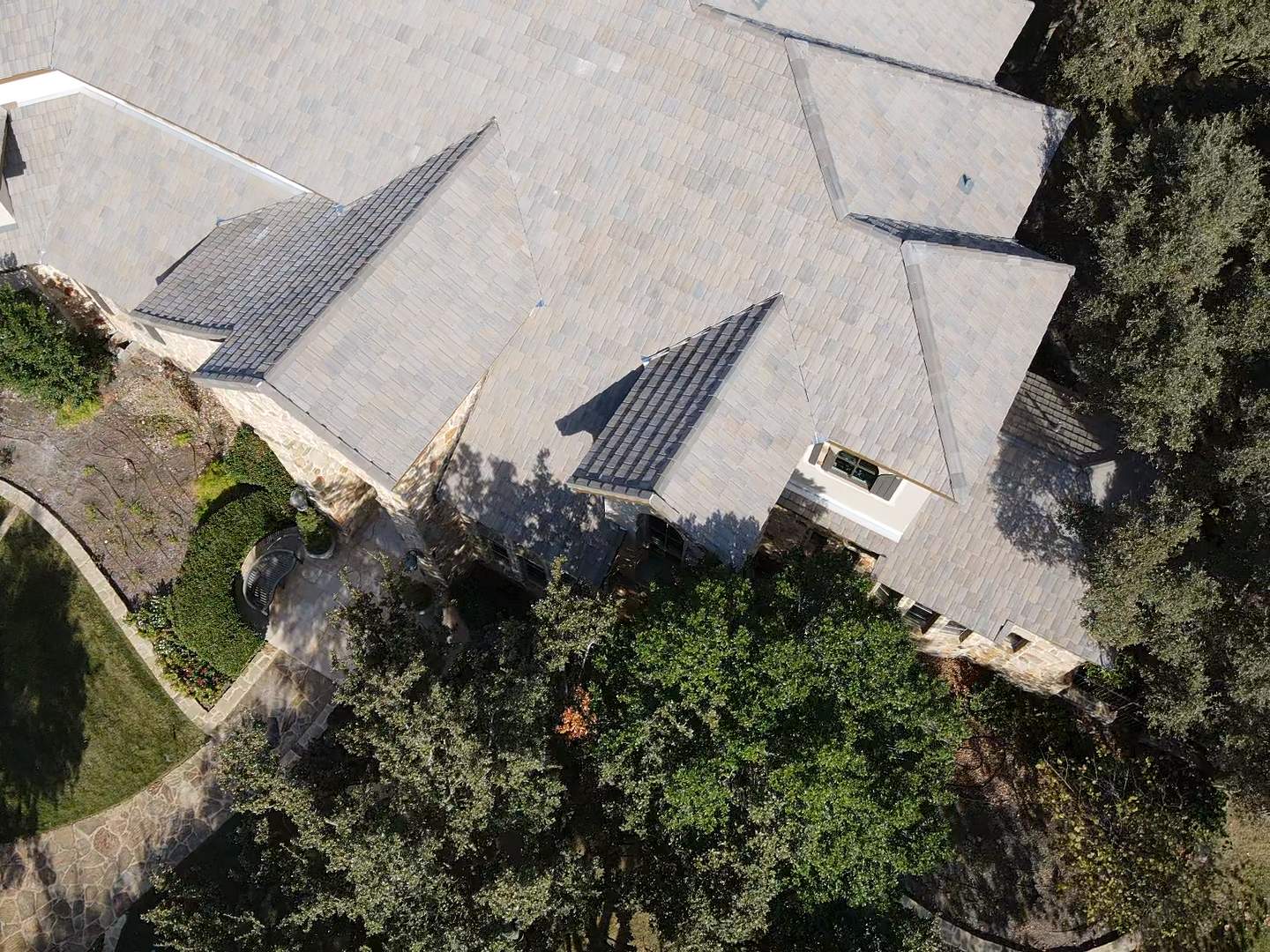
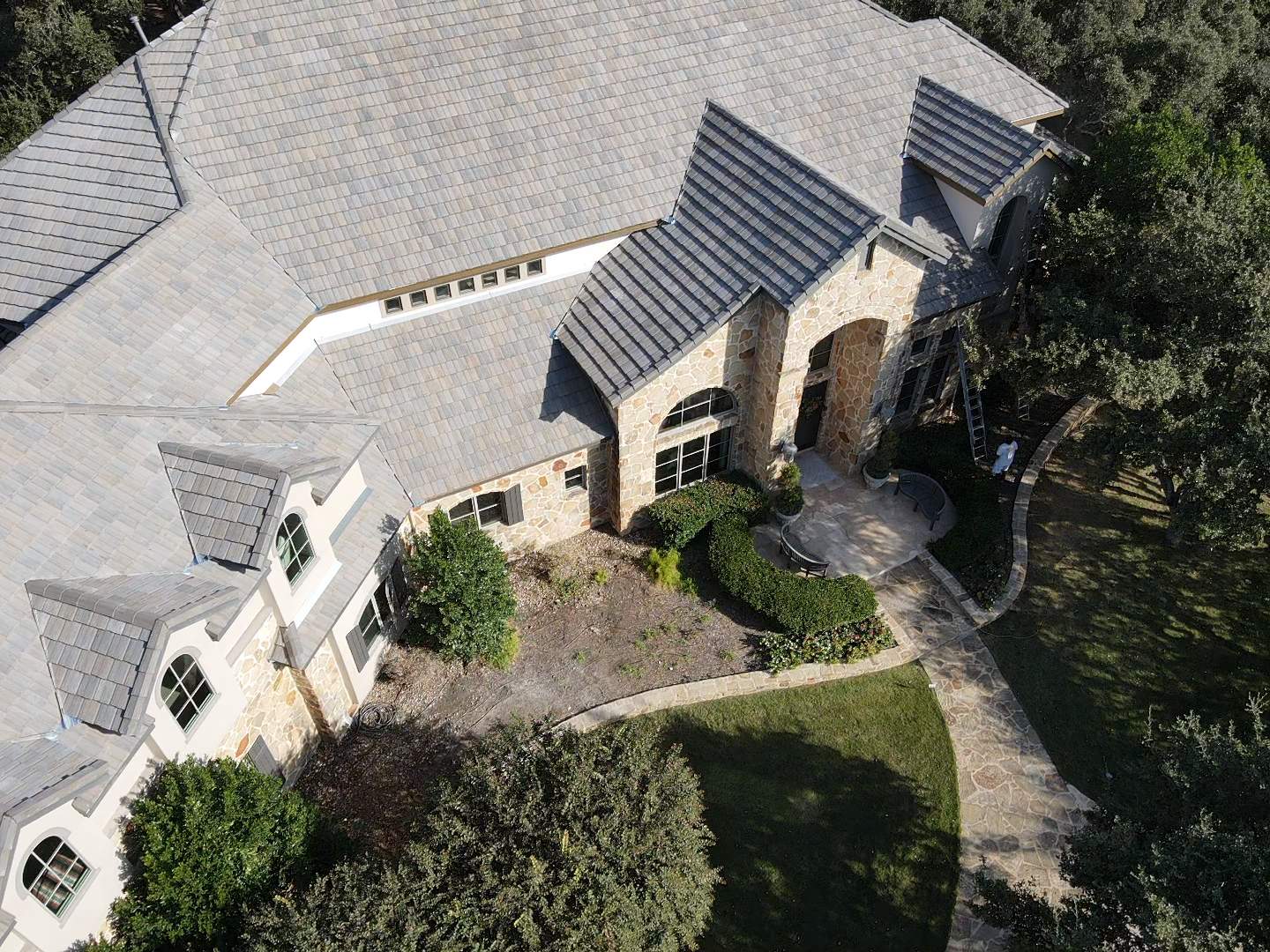
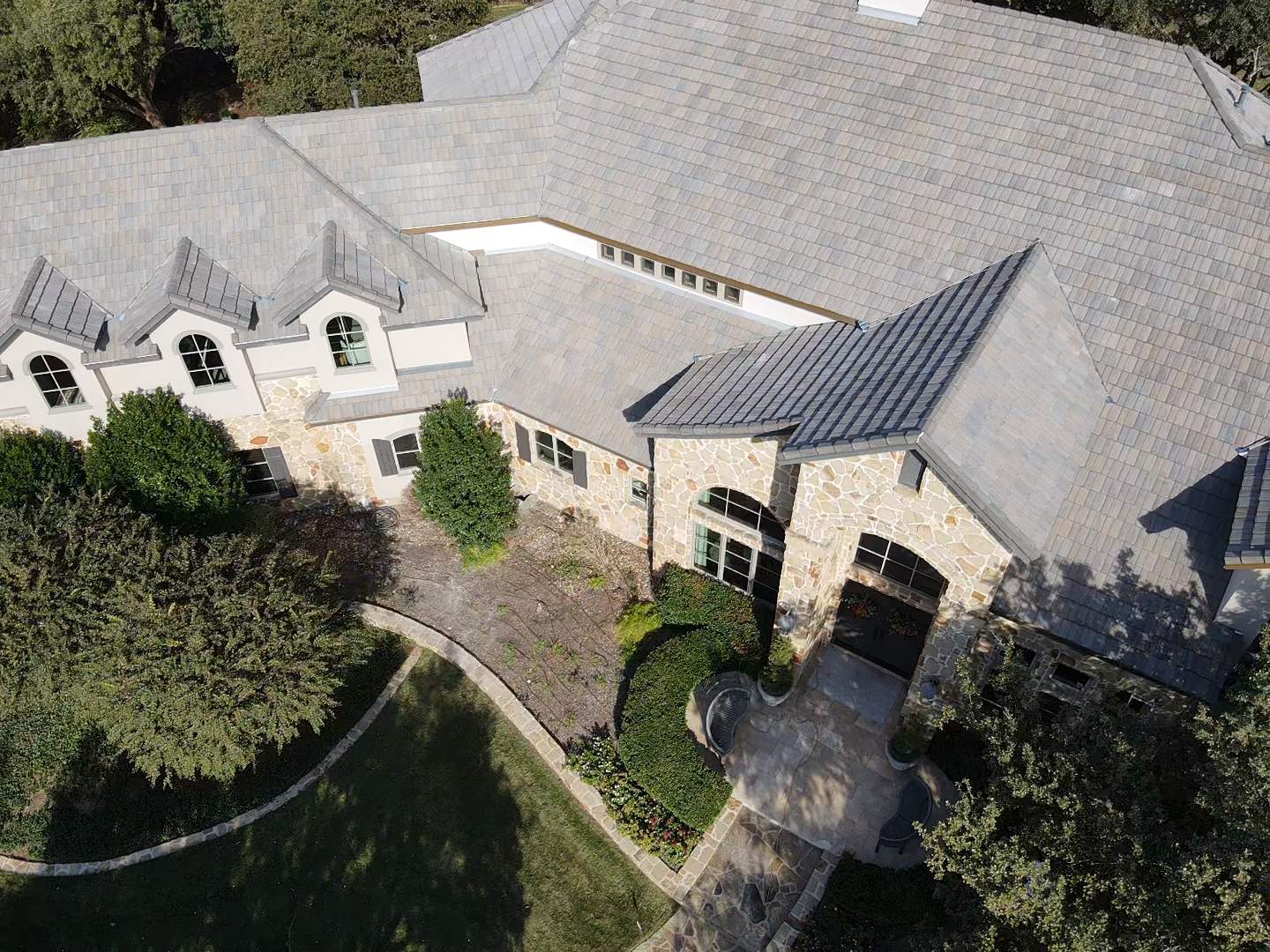
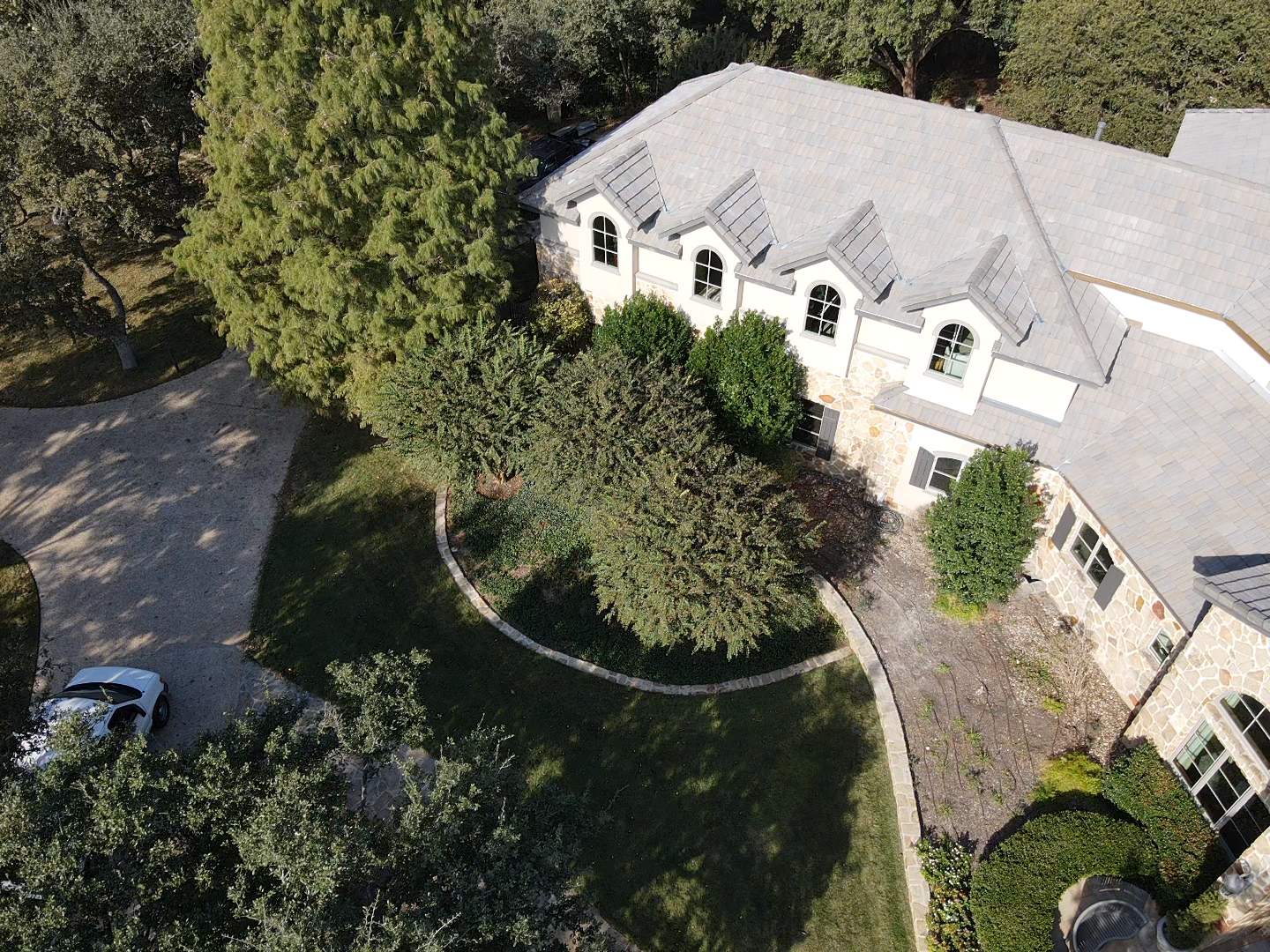
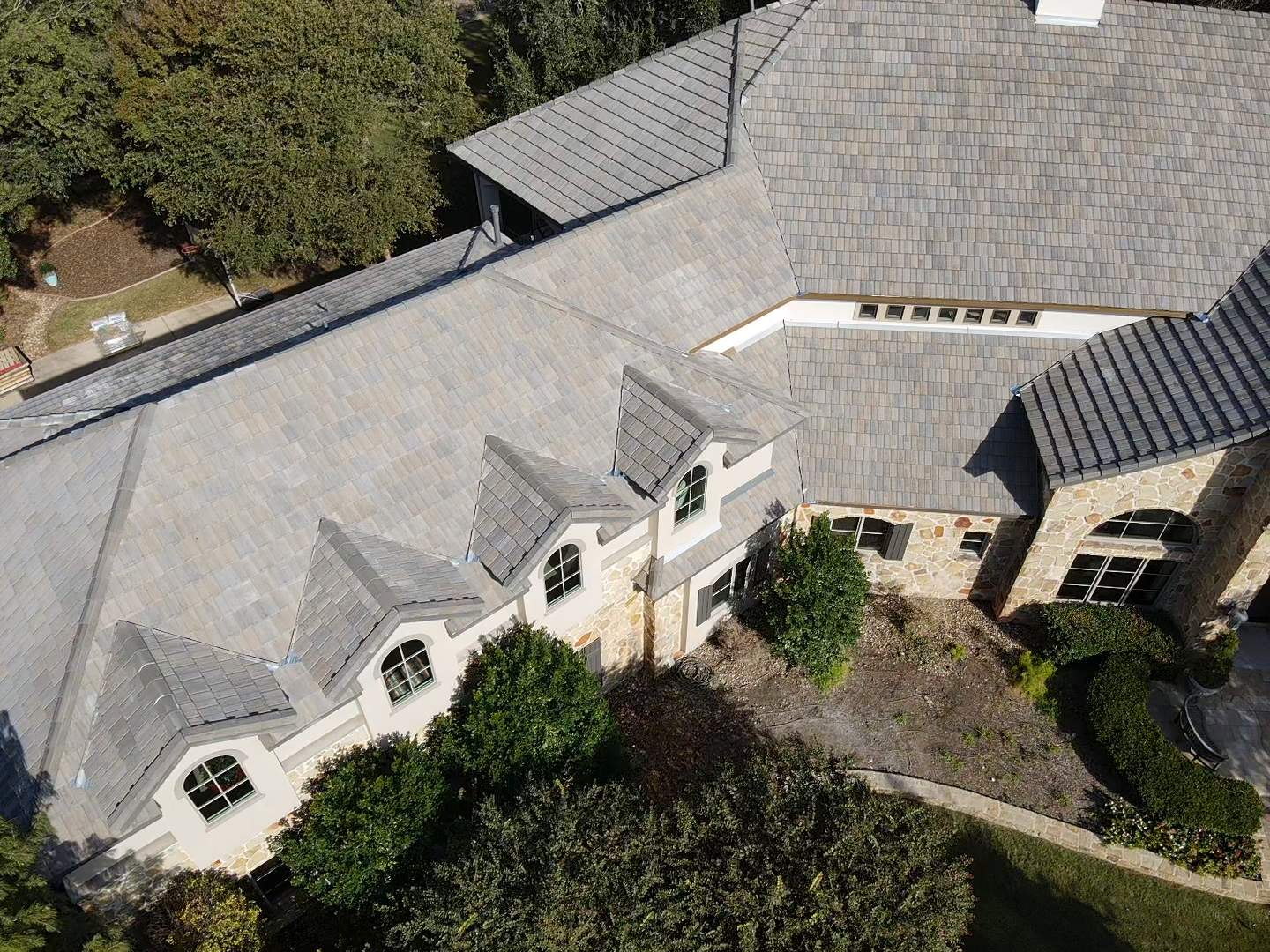
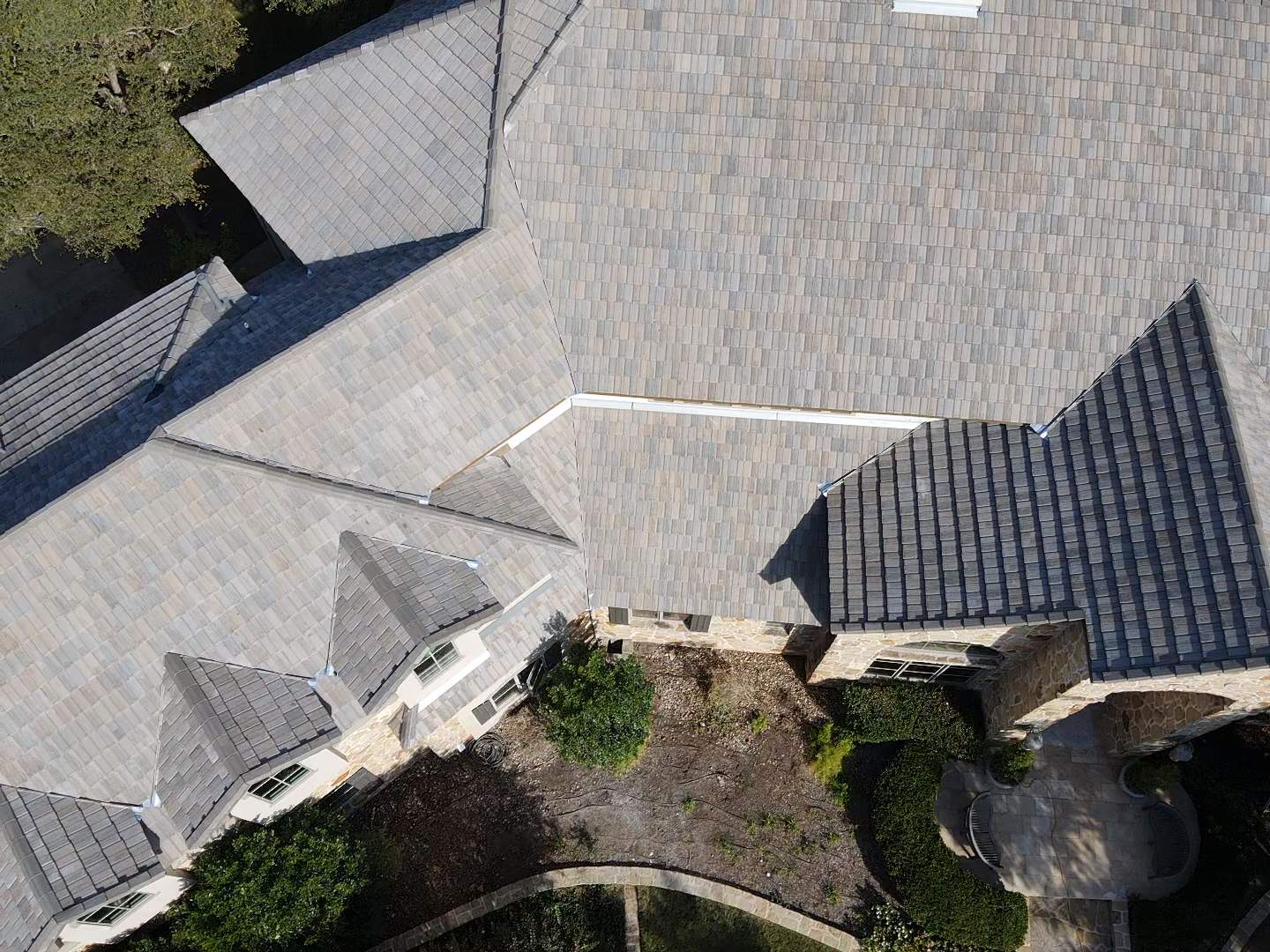
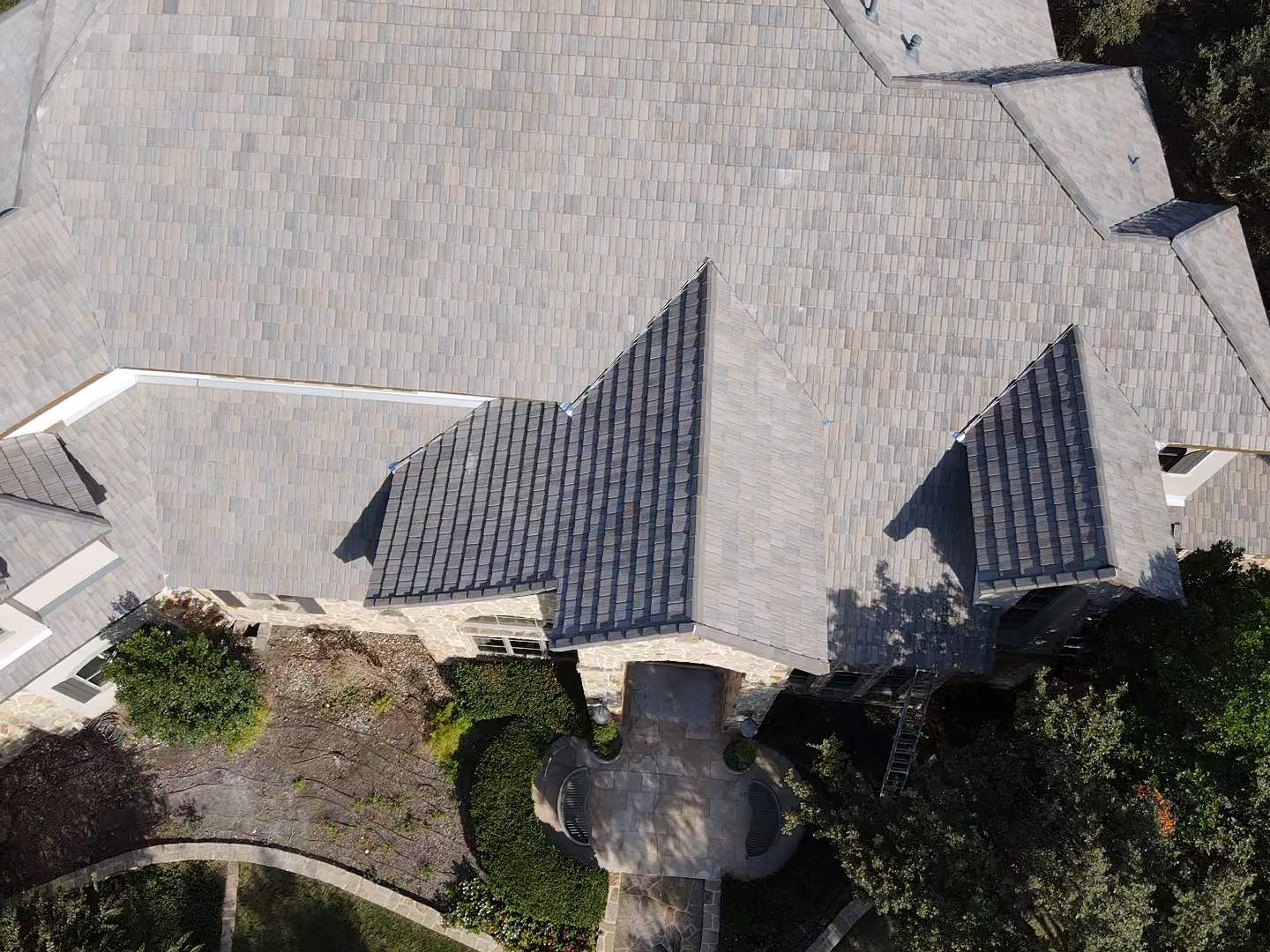
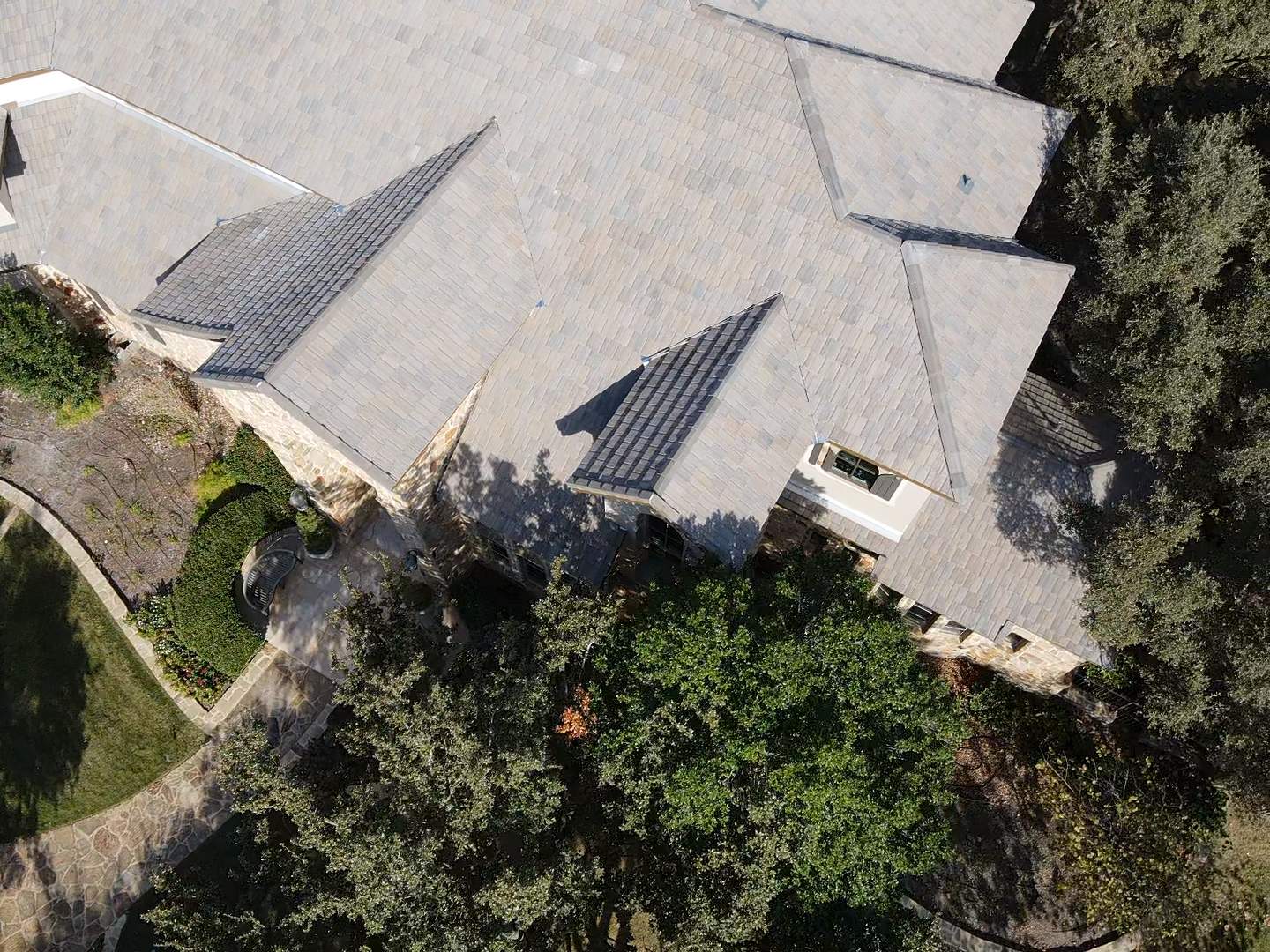
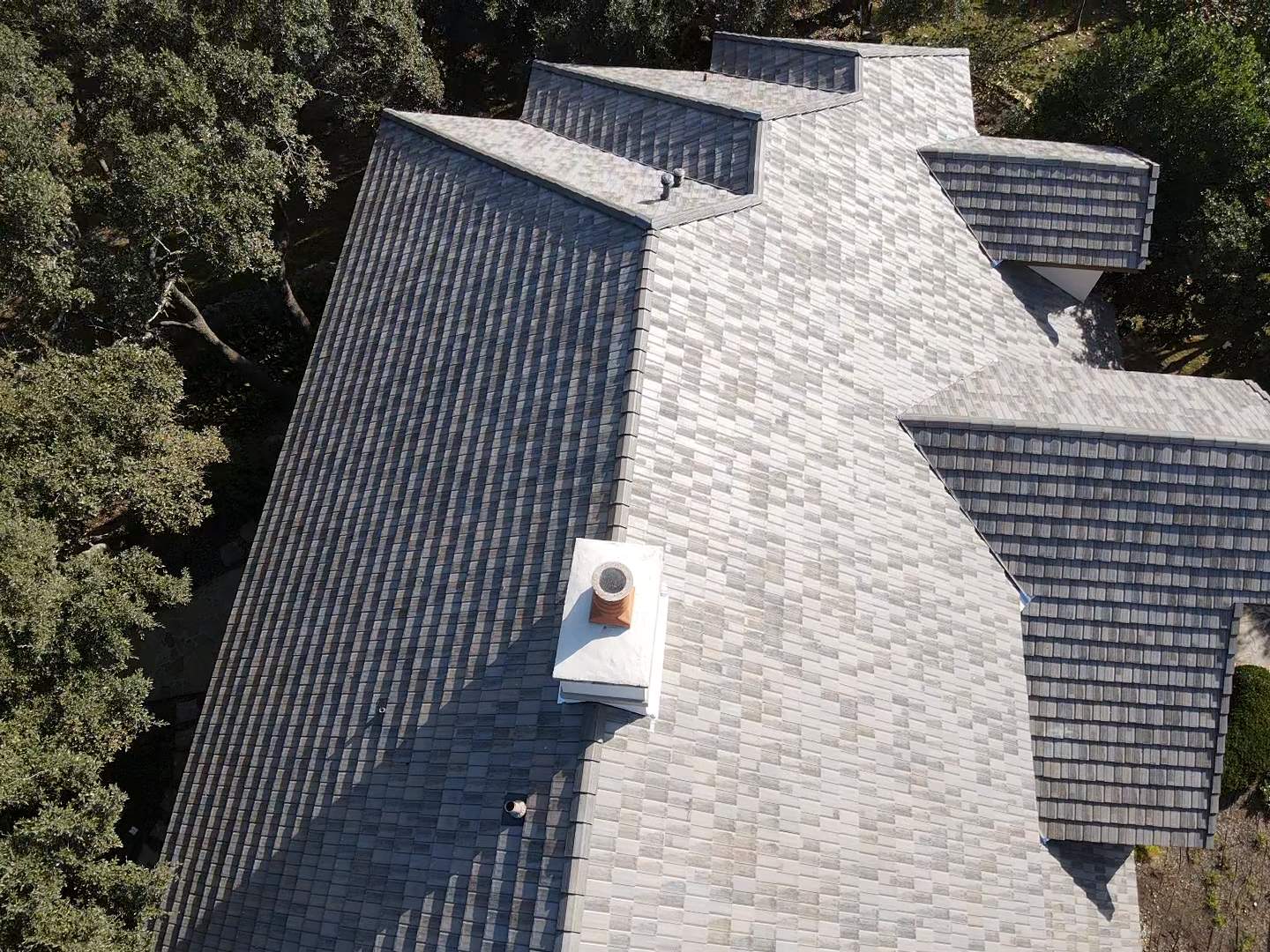
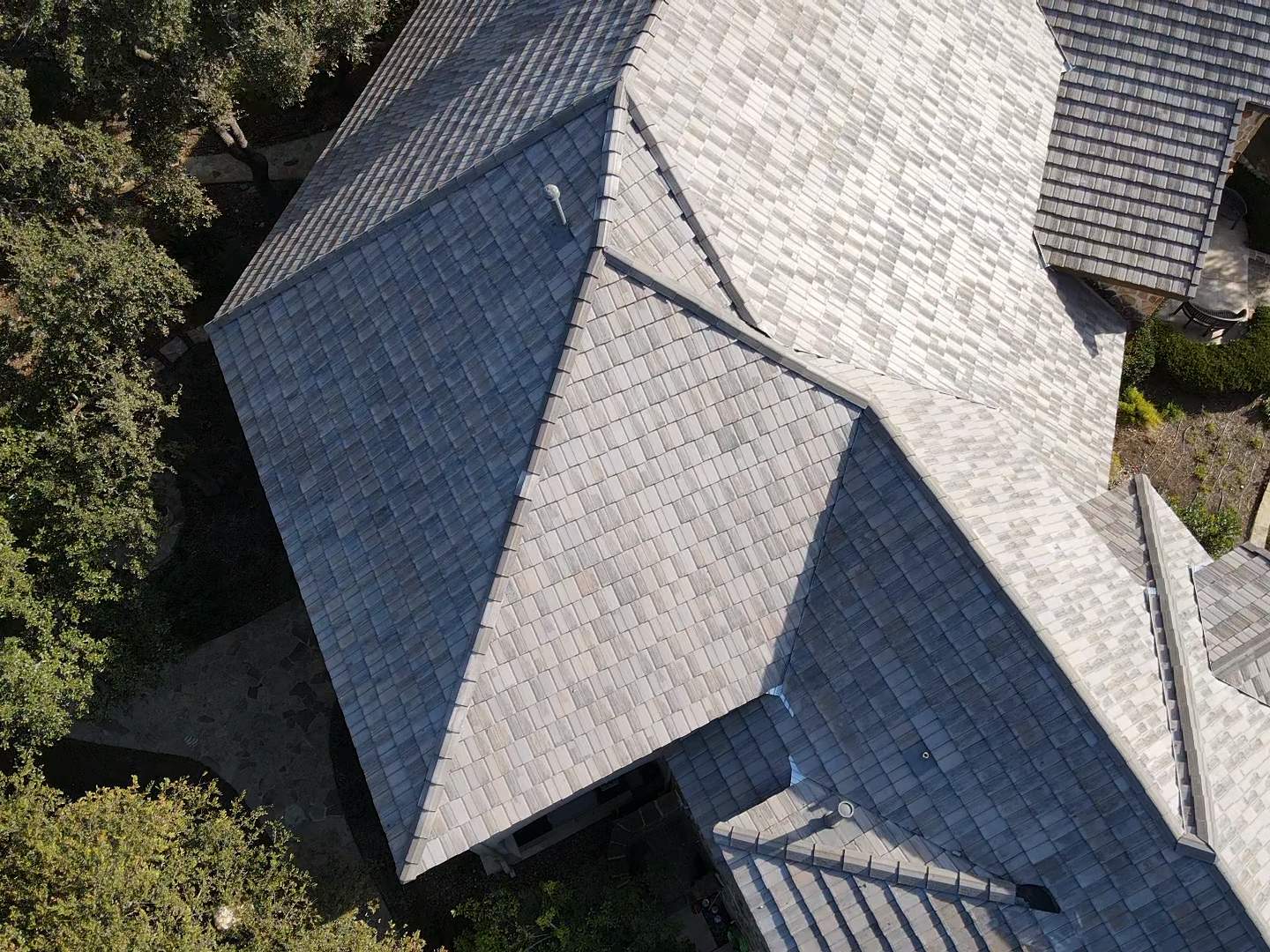
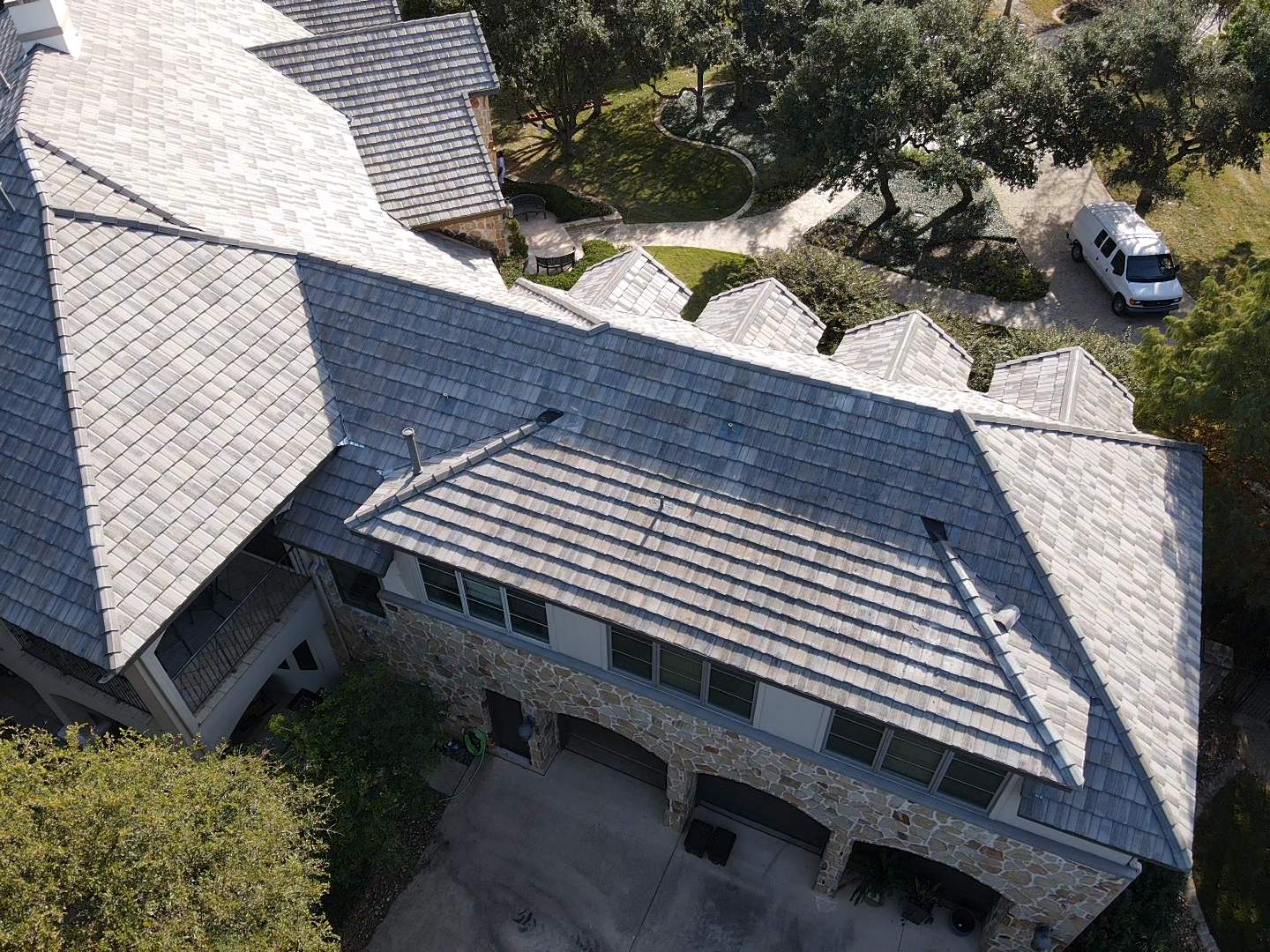
Presidio Roofing Company completed a full retail tile roof replacement at a two-story residential property in Greystone Country Estates, San Antonio, TX 78258, covering 8,300 sq ft (83 squares) at a predominantly 8-10/12 pitch. The scope involved tearing off the original concrete tile roof to the decking, installing a high-temperature self-adhering leak barrier underlayment across the full deck surface including all hips, ridges, and valleys, and laying Westlake Saxony Country Split Shake Tile (Cobblestone). The steep pitch and scale required forklifts and long-arm telehandlers for material handling. This was a retail replacement valued at $140,000-$170,000, backed by a Westlake Lifetime Warranty with a 10-year workmanship guarantee. The project was completed in October 2024.
In This Case Study:
- Project Snapshot: Key Specifications & Costs
- Introduction
- Challenge 1: Dangerous & Steep Work Conditions
- The Solution: Experience, Safety Systems & the Right Equipment
- Challenge 2: We Found a Cactus Growing on the Roof
- The Solution: Proper Training, Experience & Our Skillset
- Challenge 3: Work Around Rain and Protect the Decking
- The Solution: Working With the Right People
- The Result
- How to Maintain Your New Westlake - Saxony Country Split Shake Tile Roof
- Frequently Asked Questions About This Project
Project Snapshot: Key Specifications & Costs
| Metric | Project Detail |
|---|---|
| Project Type | Full Roof Replacement (Retail) |
| Location | Greystone Country Estates, San Antonio, TX 78258 |
| Roof Size | 8,300 Sq Ft (83 Squares) |
| Material Used | Westlake – Saxony Country Split Shake Tile (Cobblestone) |
| Duration | 4 Weeks |
| Budget Range | $140,000 – $170,000 |
| Warranty | Westlake Lifetime Warranty With 10-Year Workmanship |
Introduction
This case study covers the complete tile roof replacement Presidio Roofing performed for a residential property in Greystone Country Estates, San Antonio, TX. The project involved removing old concrete tiles and installing Westlake – Saxony Country Split Shake Tiles to stop water from getting into the home. It was completed in October 2024 and covered 8,300 sq ft.
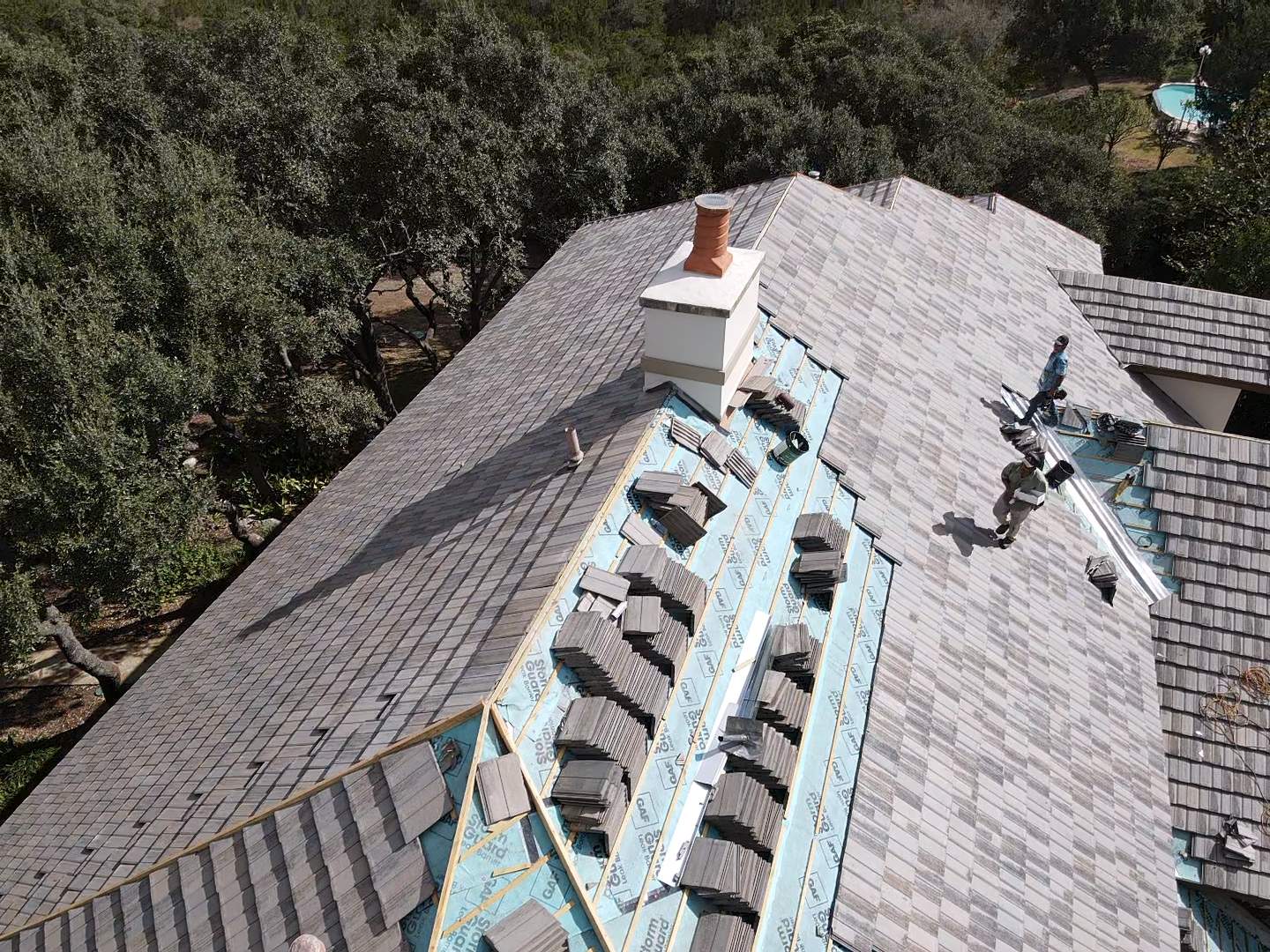
We tore off the original tile roof to the decking. The decking didn’t need replacement. We installed a high-temp self-adhering leak barrier underlayment across the entire deck, over all hips, ridges, and valleys. That creates a sealed, watertight surface for the tile to go onto. The difference compared to standard felt paper matters when things go wrong – if hail or wind damages the tile on this roof, the risk of an actual leak is very low. Your underlayment keeps water out. The tile protects that underlayment.
Large tile jobs like this need dumpsters, forklifts, and long-arm telehandlers for getting material onto the roof. This job took 4 weeks to complete. We installed a concrete split shake style tile by Newpoint, which was formerly Boral, under the Westlake company brand.
Challenge 1: Dangerous & Steep Work Conditions
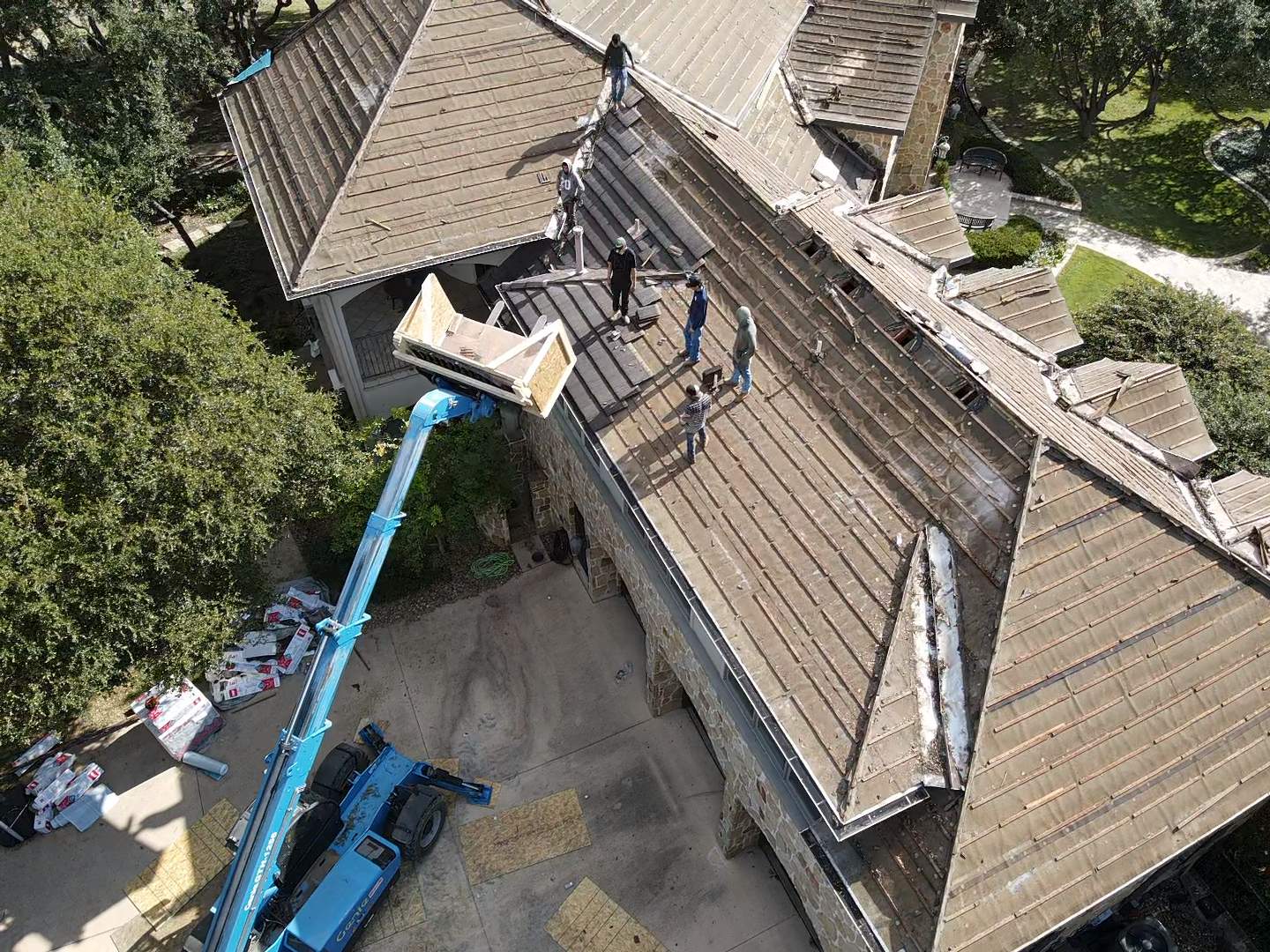
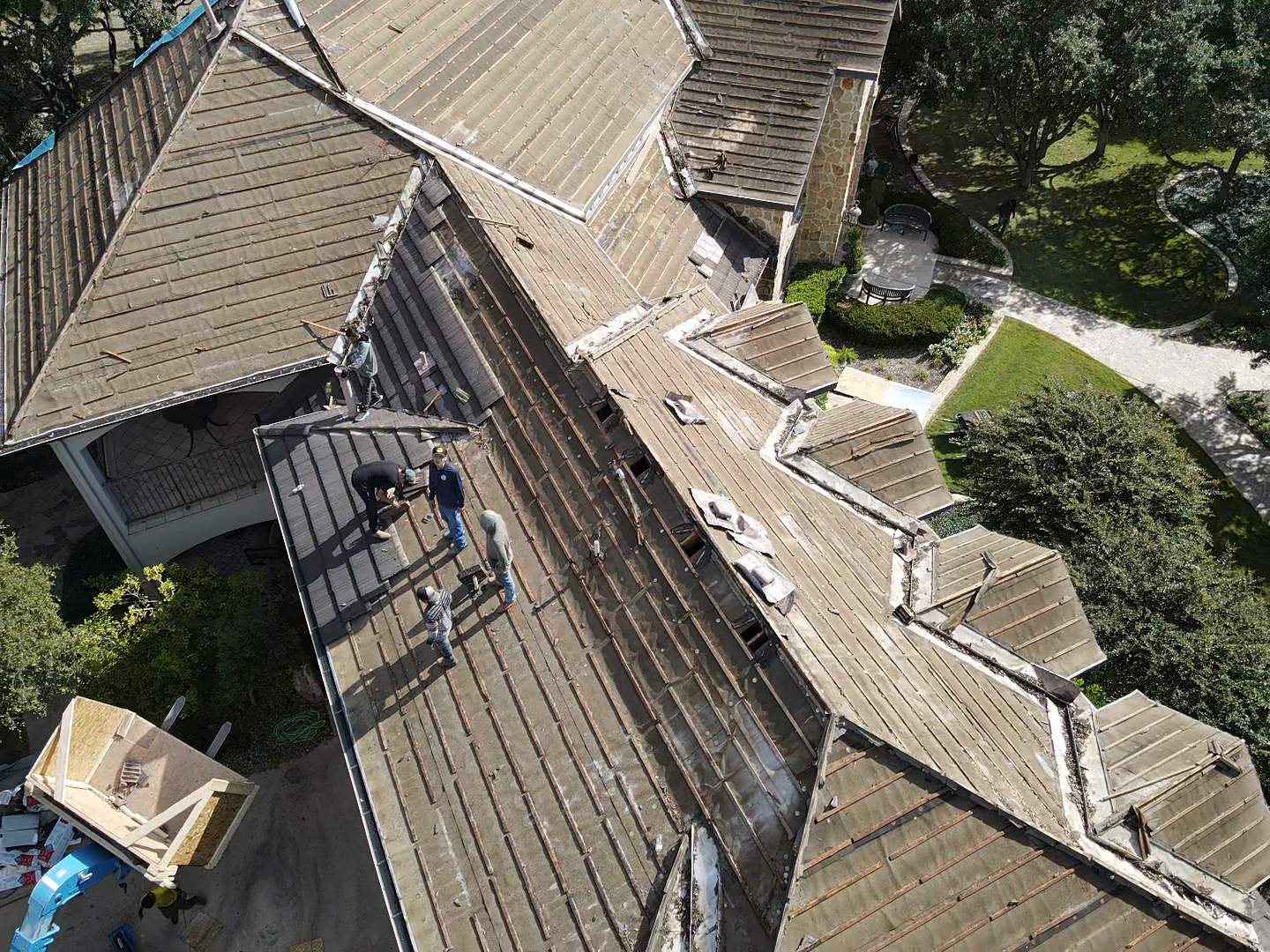
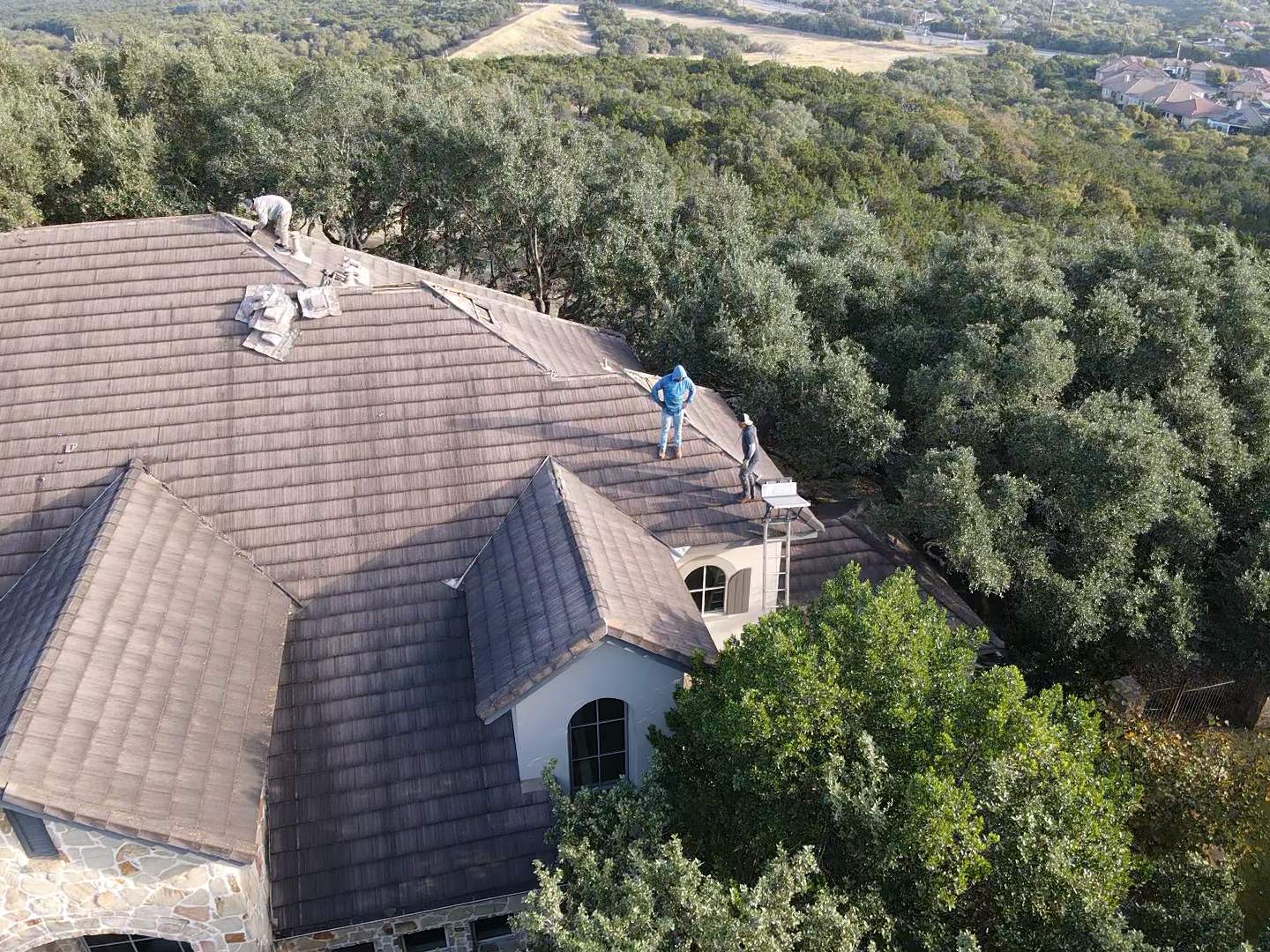
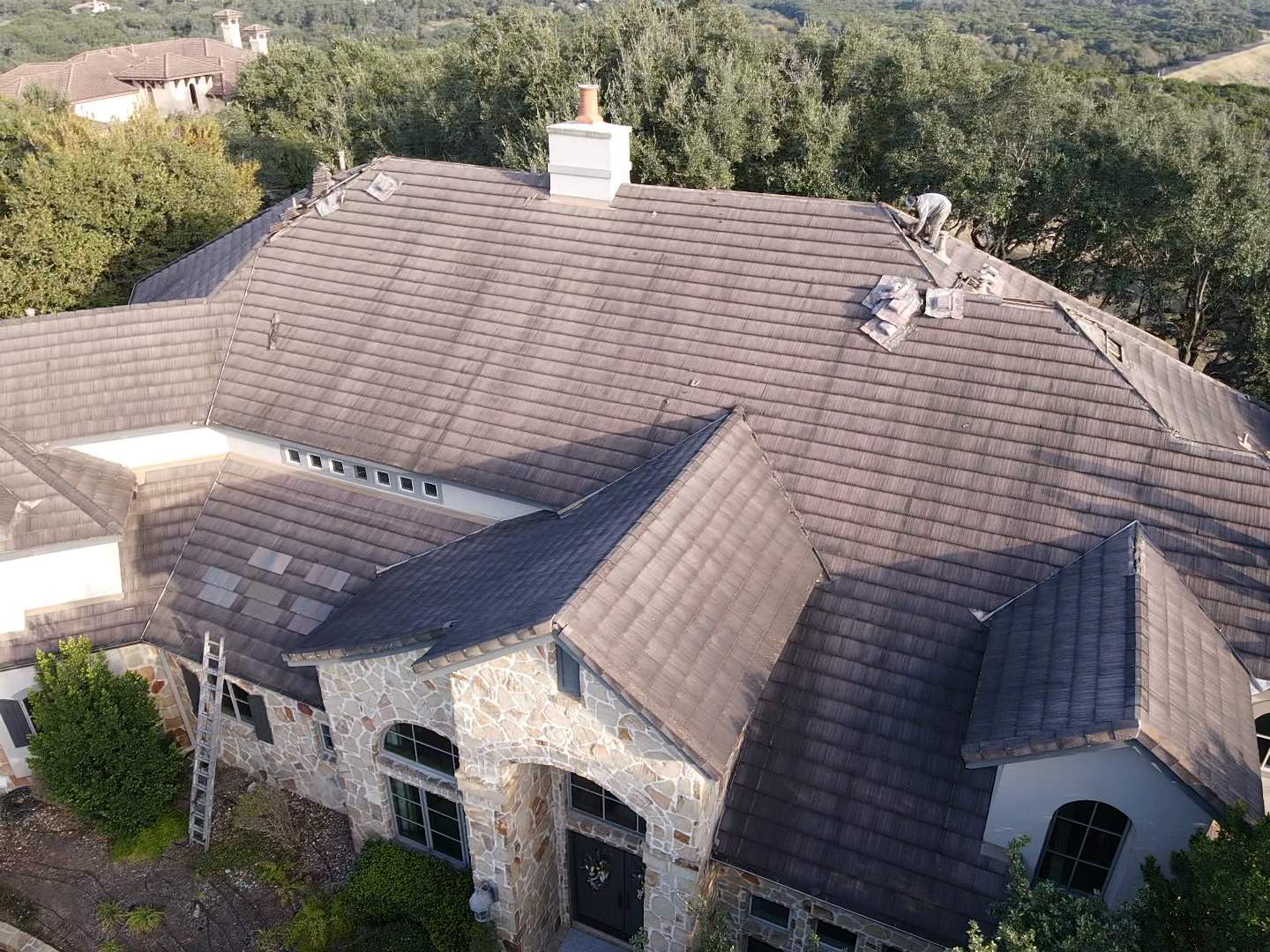
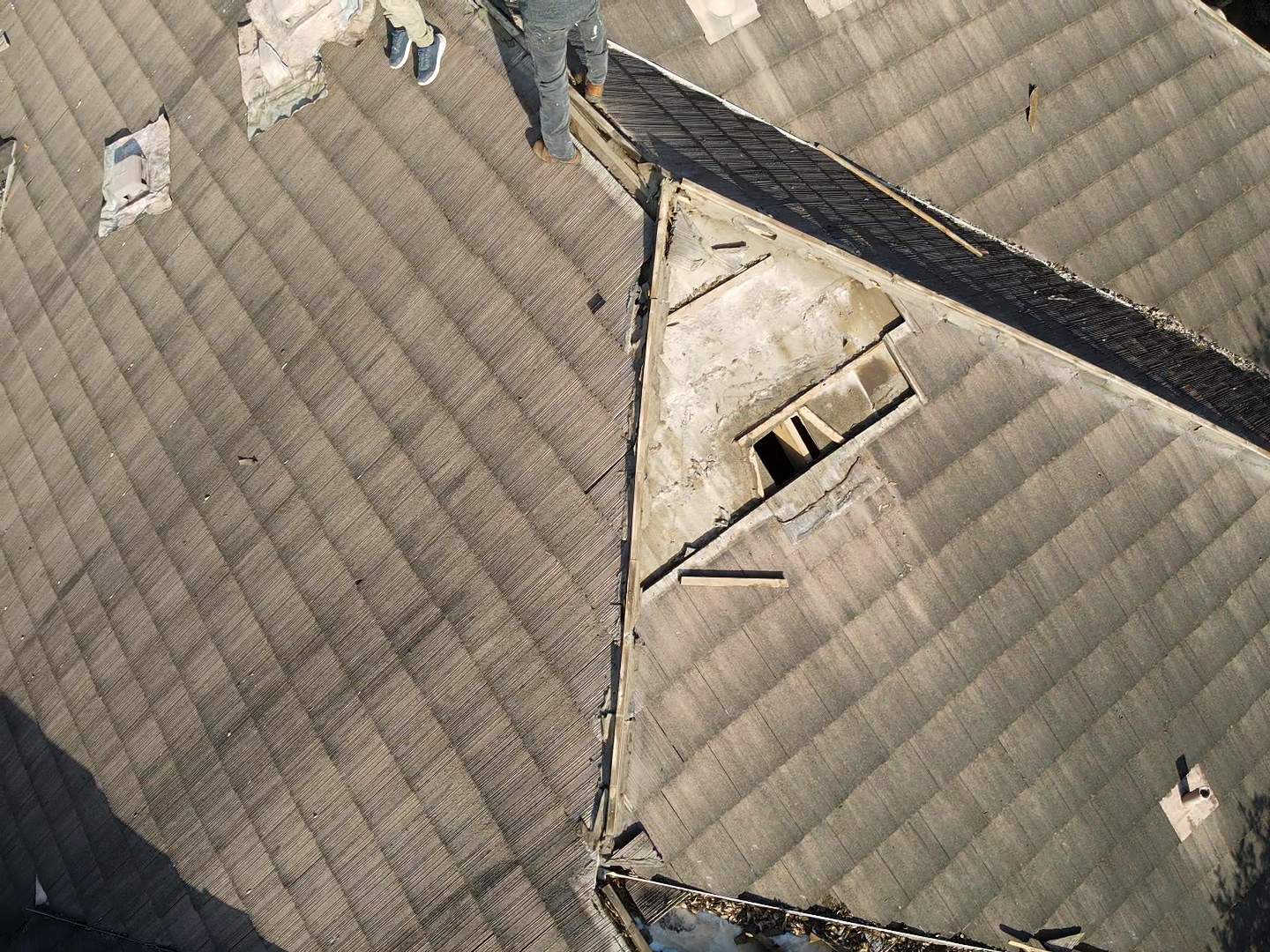
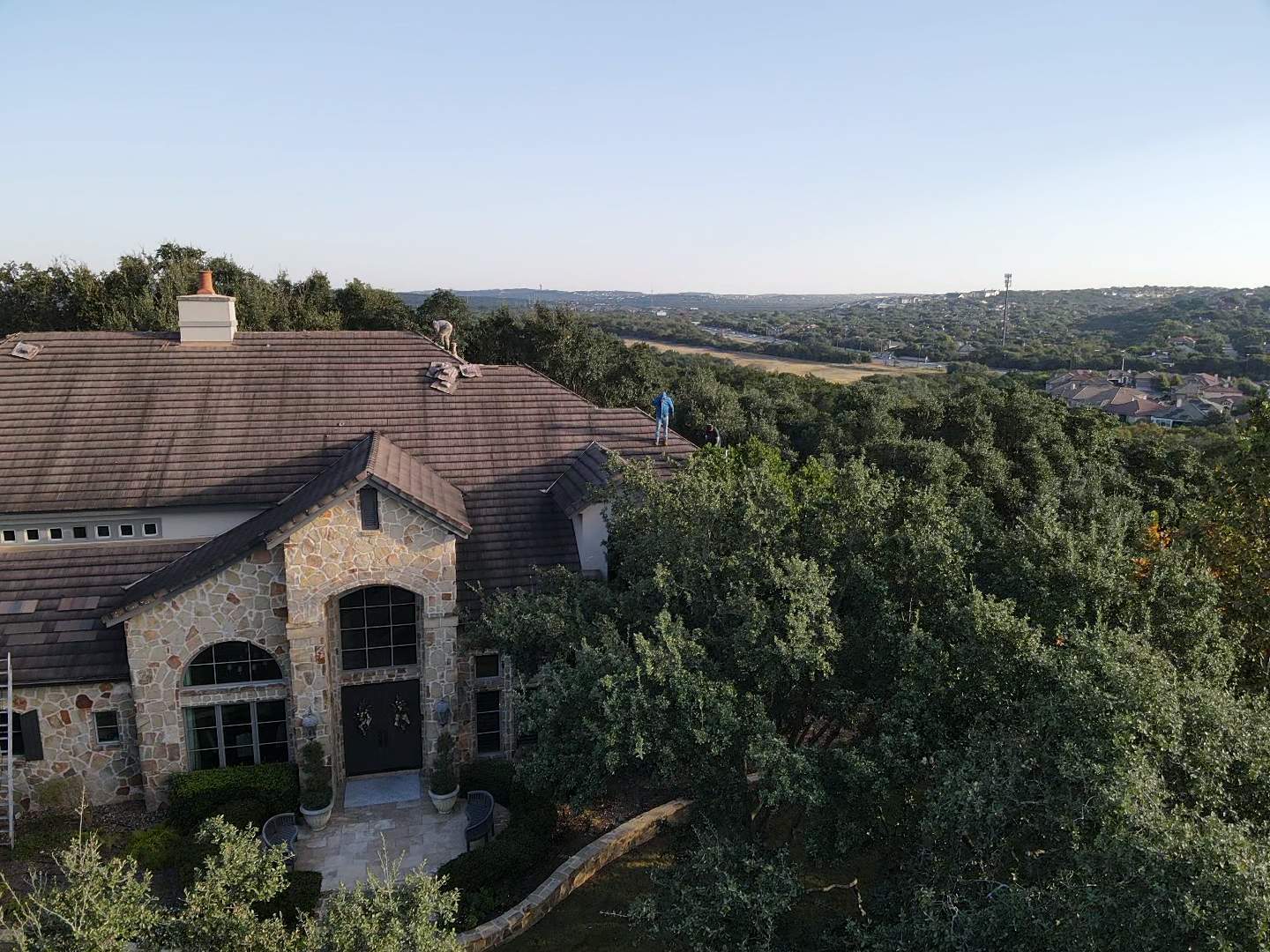
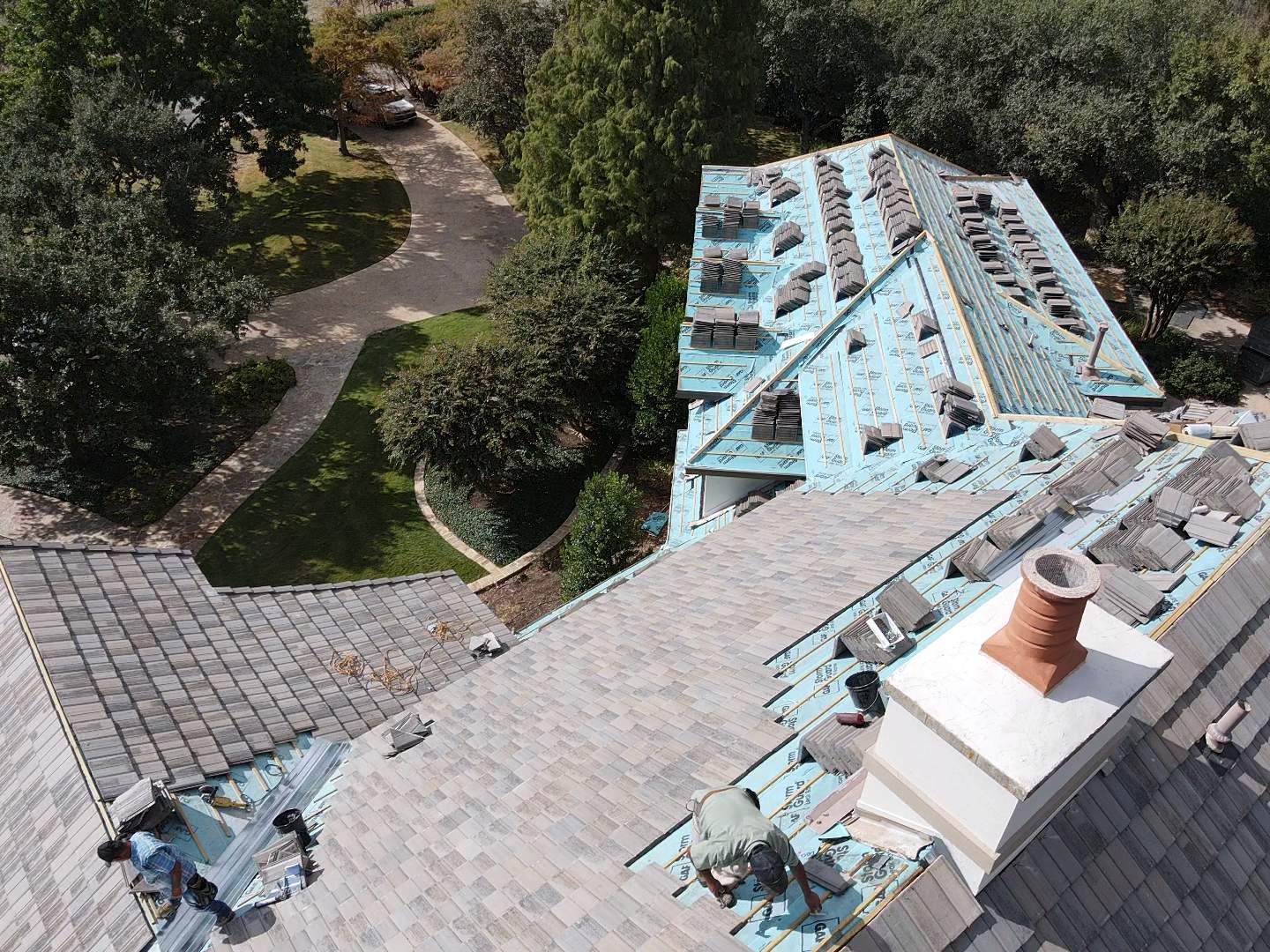
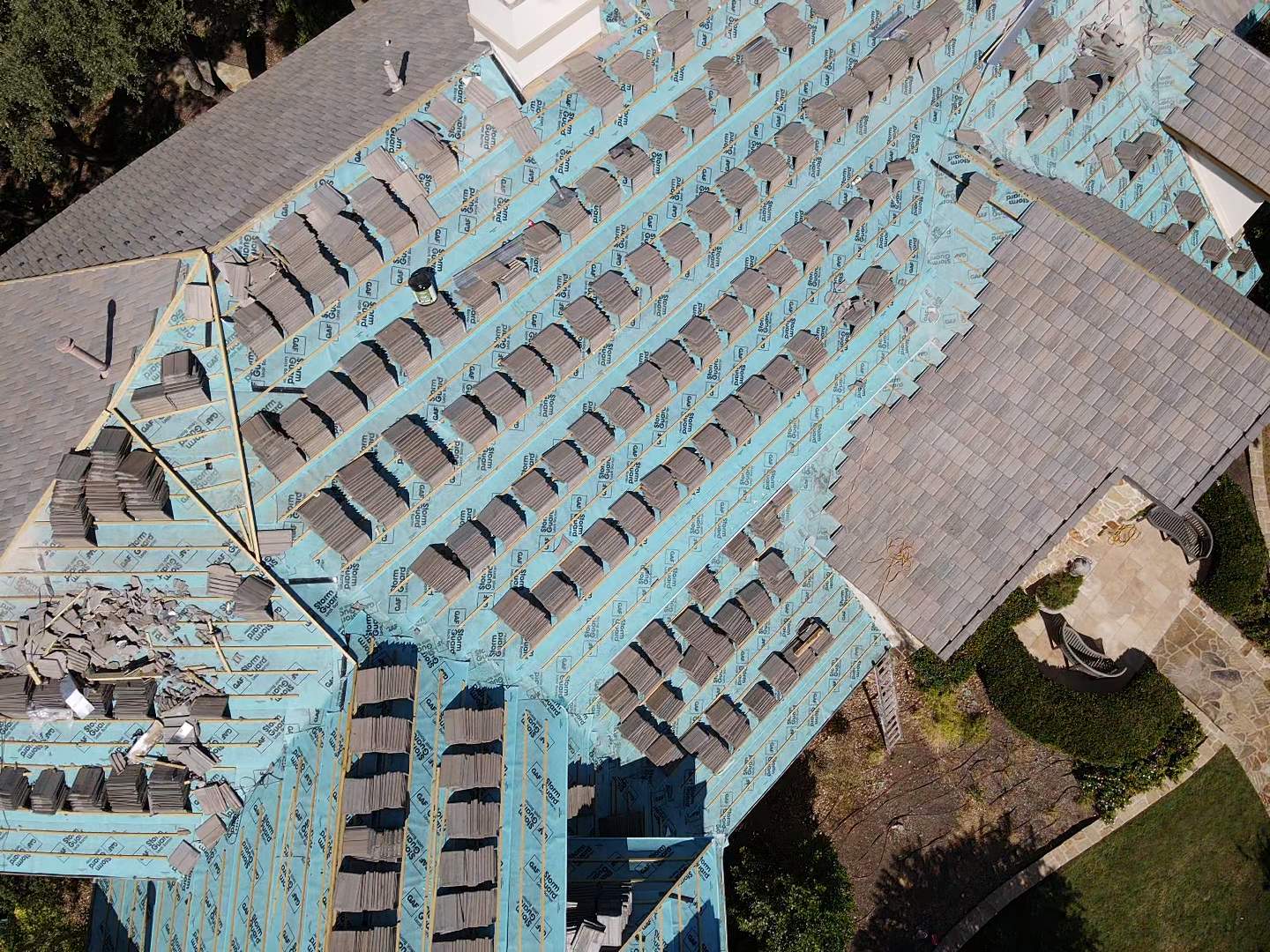
This is a 2-story roof with a steep pitch – predominantly 8-10/12, running from nearly 34 to nearly 40 degrees. Tile is heavy. That weight compounds every part of the job compared to shingles – tear-off, loading materials, moving them into position, cutting them. On a roof this difficult to walk, the steepness makes the work more dangerous, slows the pace, and demands closer attention to the small things.
The Solution: Experience, Safety Systems & the Right Equipment
We’ve worked steep, 2-story tile roofs all over Texas – Port Aransas, DFW, and across San Antonio and the hill country. Some neighborhoods run even steeper than this, like the Dominion, and we’ve completed many replacements there. On these roofs our crew adds safety measures: more ground coverage to catch falling tiles, rope and harnesses, bigger lift equipment, and more.
Challenge 2: We Found a Cactus Growing on the Roof
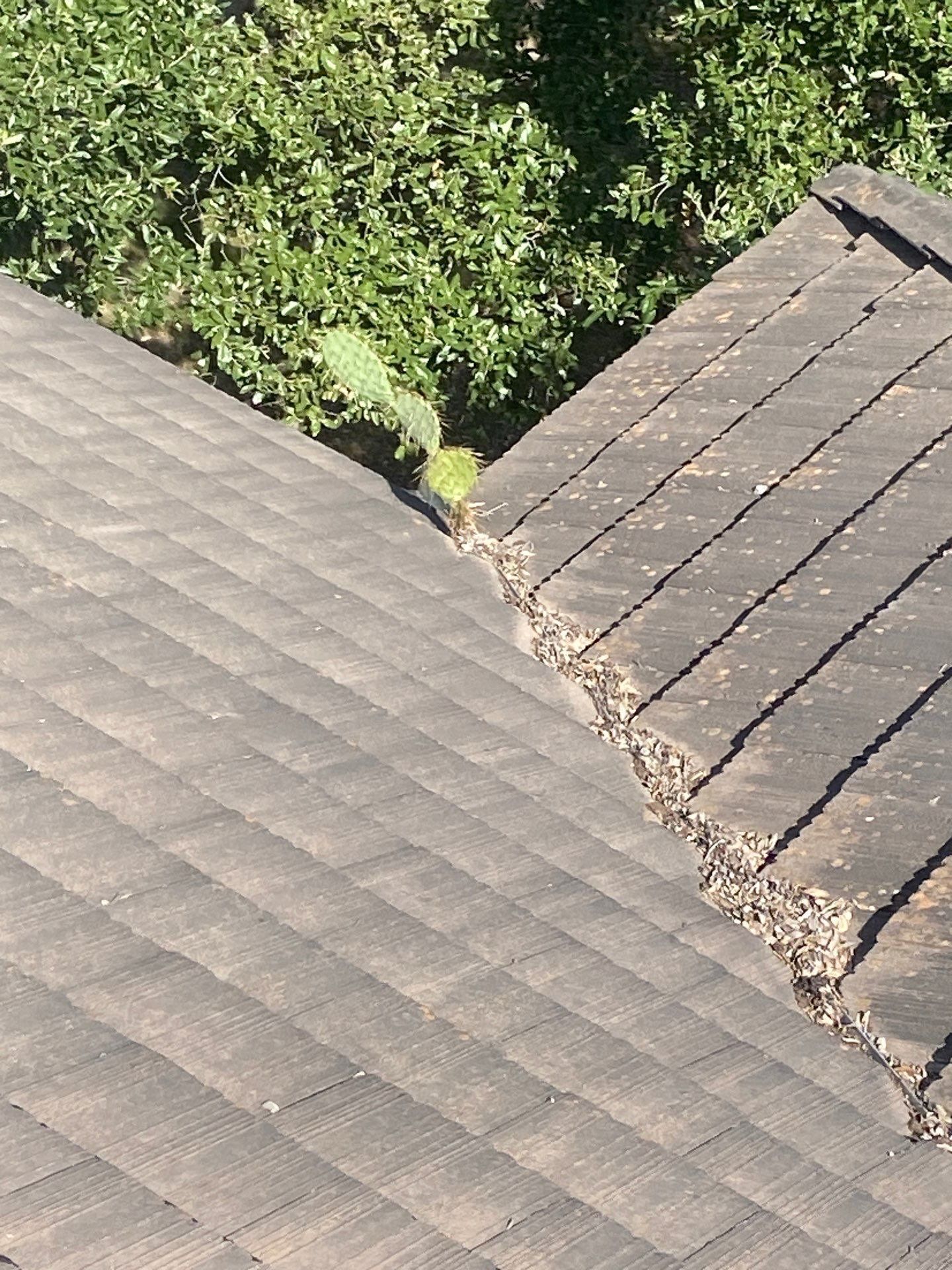
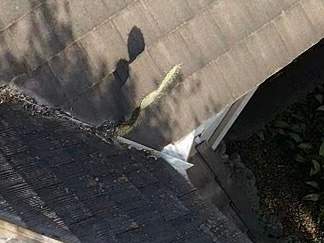
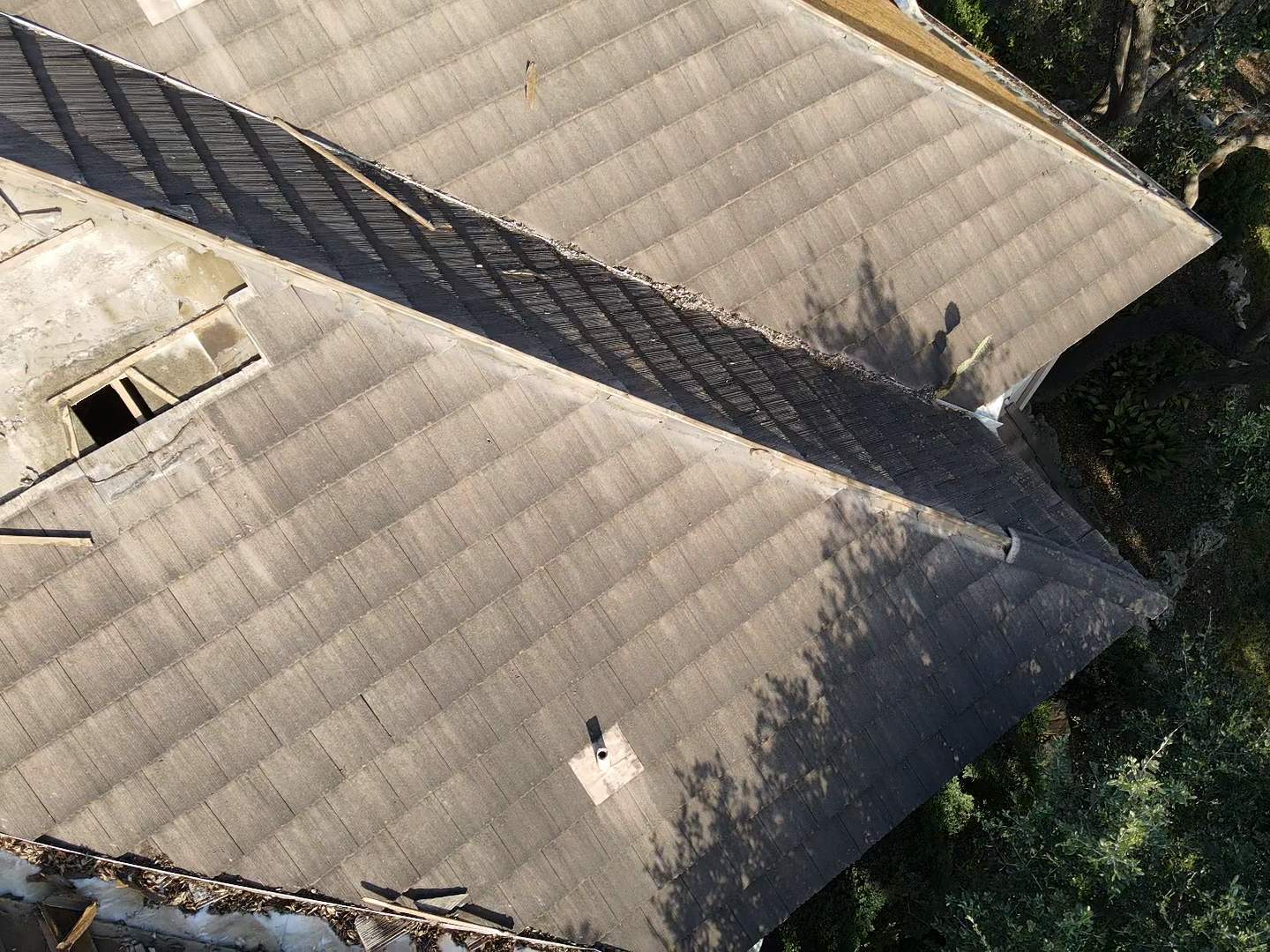
Yes, you read that right. A nearly 3-foot cactus was growing in the tile roof. We were concerned it might trigger a change order or uncover structural problems below.
The Solution: Proper Training, Experience & Our Skillset
Finding vegetation in tile roofs isn’t unusual in the Southern and Southwest U.S. Older tile roofs with organic underlayment can create good growing conditions for seed pods – given the right moisture and warmth, things sprout. High winds and animals like bats, which commonly burrow into older tile roofs, are the usual carriers.
Newer systems with better products and underlayment are far less prone to this. Still, it’s a solid reason to have a maintenance plan and stay ahead of vegetation or animal issues.
This growth was small enough that we removed it carefully. Had it been a different plant – one that had run roots under large sections of tile – we’d have been looking at structural issues and change orders. It’s something we can often catch before work even starts, and another reason to take the initial inspection seriously.
Challenge 3: Work Around Rain and Protect the Decking
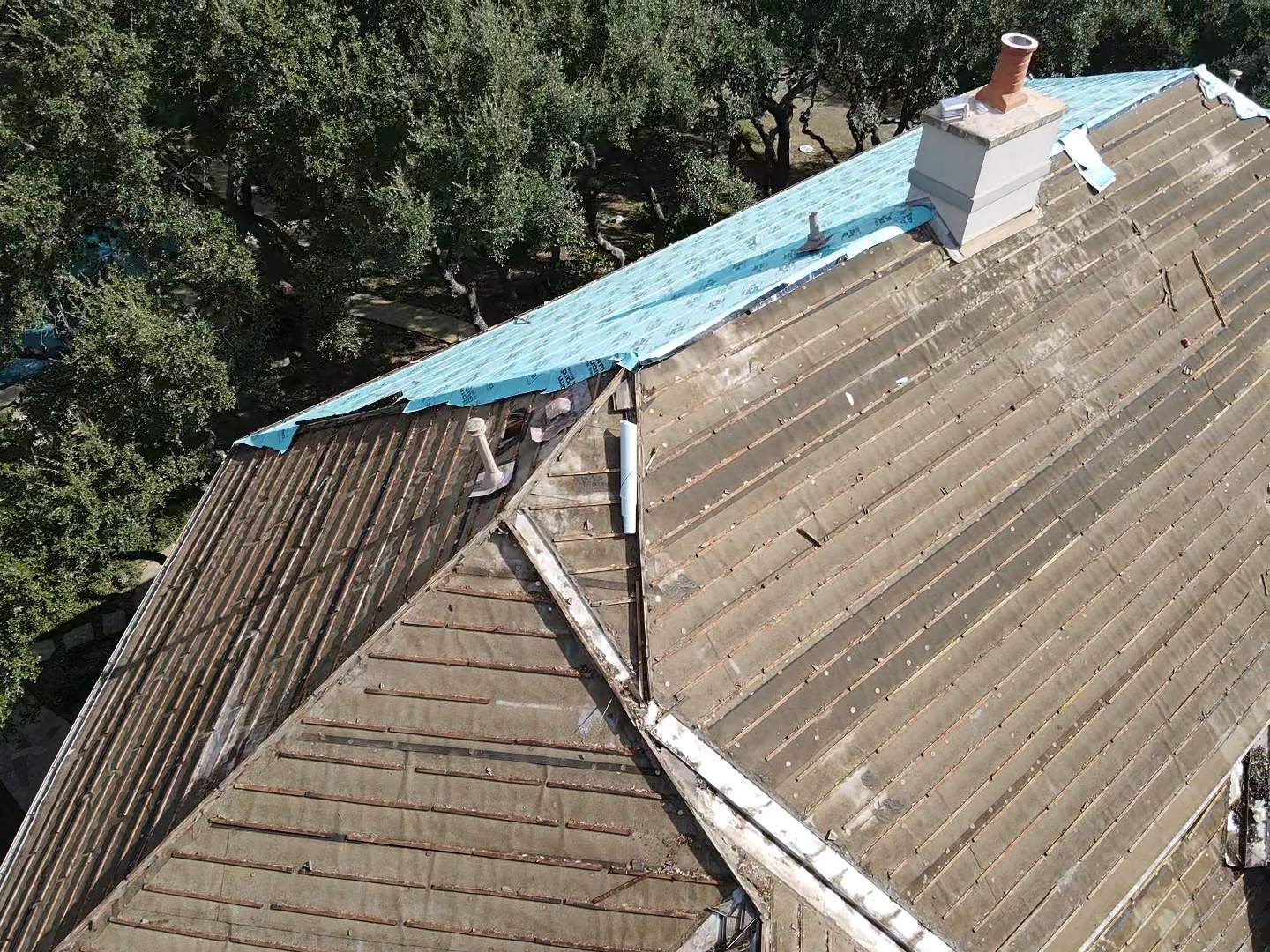
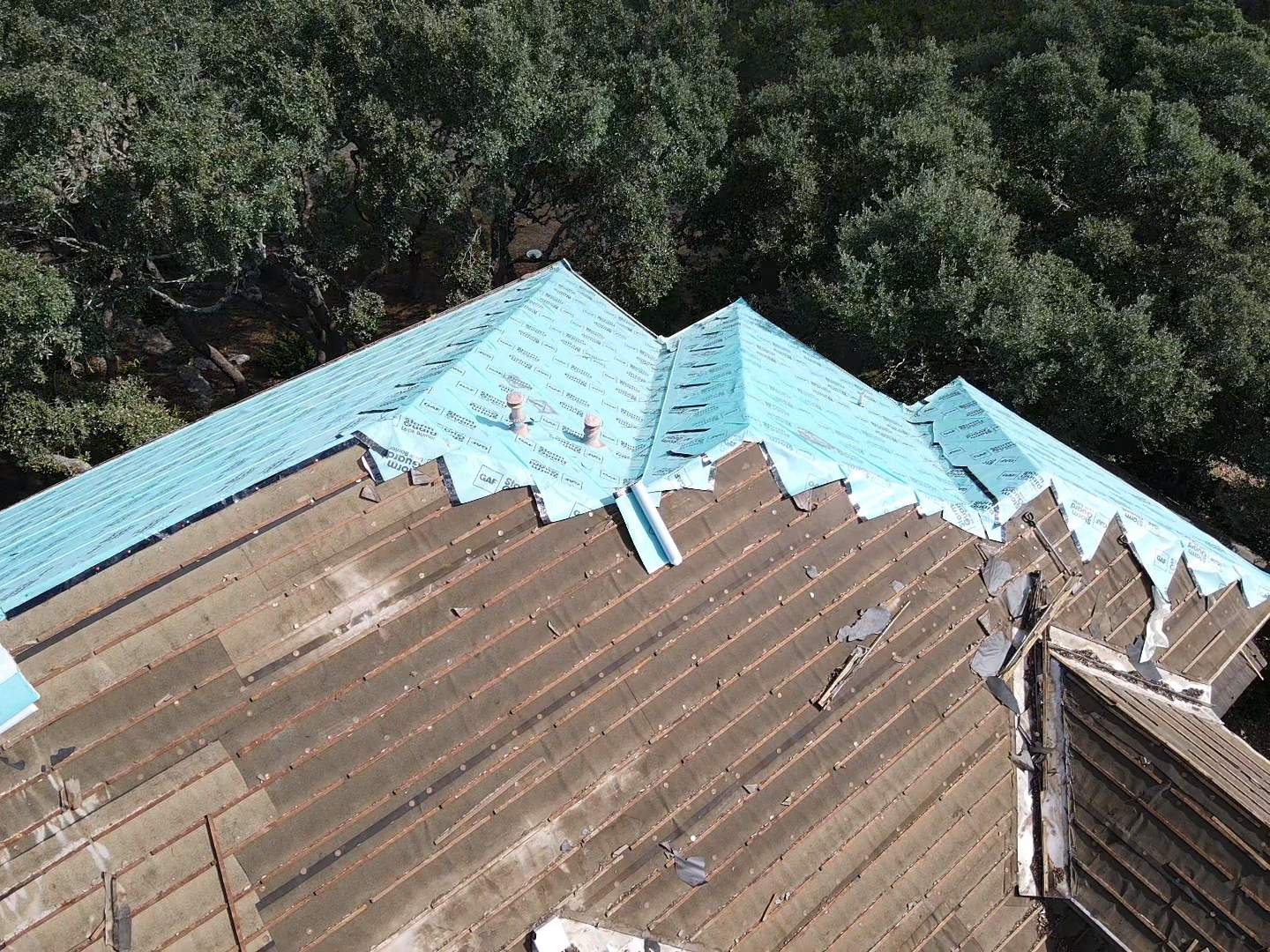
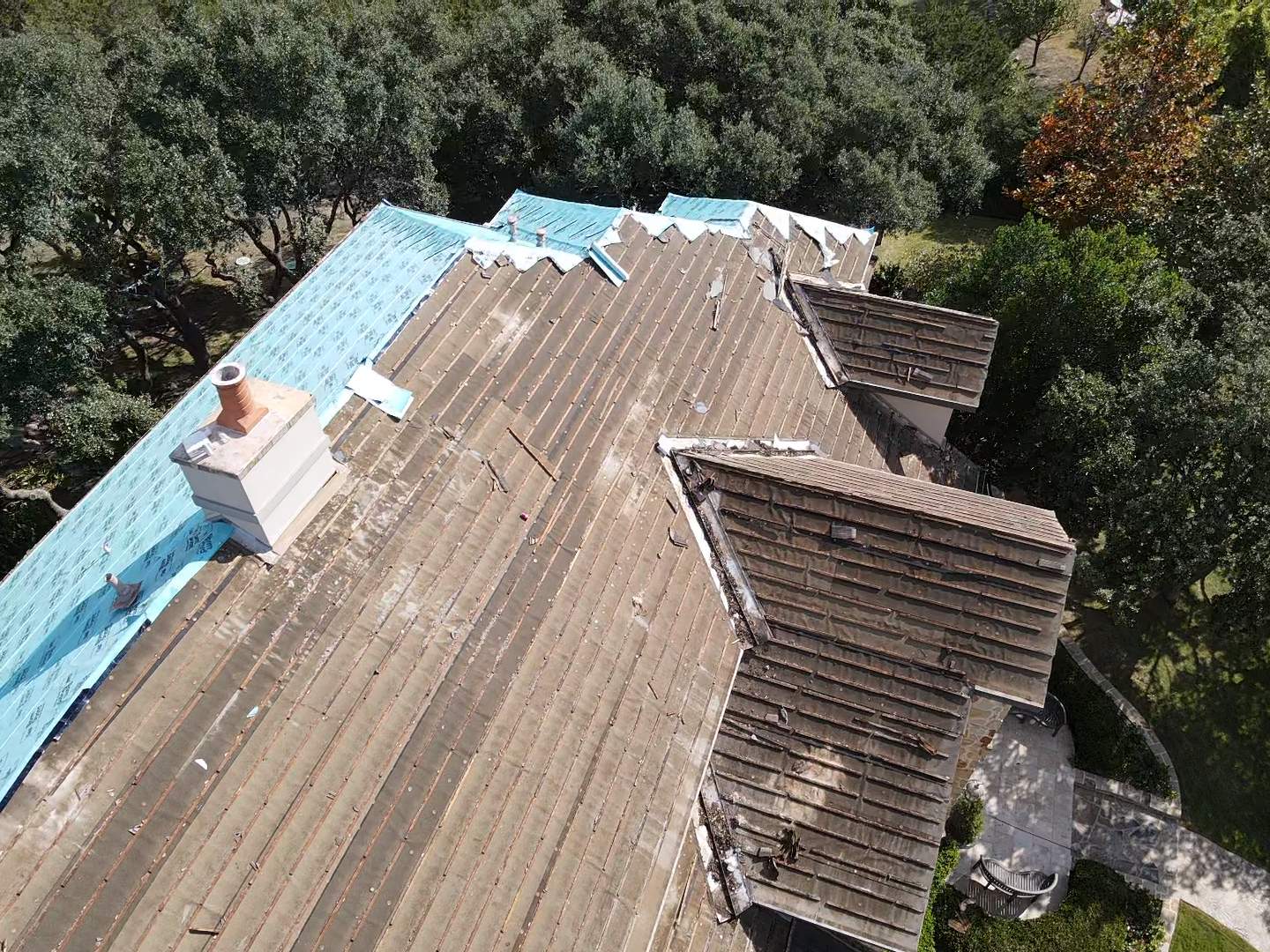
This was a large job, and we had to sequence the work carefully to keep the roof protected through any rain events during the build.
The Solution: Working With the Right People
We tore off and dried in the roof in sections. That way the decking stays covered at all times, and a pop-up shower doesn’t turn into a bigger problem. In some of the photos you can see it clearly – parts of the roof showing the light blue of fresh underlayment while others still carry the worn look of the old tile and underlayment.
The Result
The project delivered a complete concrete tile roof replacement across 8,300 sq ft, wrapped up on schedule and completed in October 2024. The installed system carries a Westlake Lifetime Warranty backed by a 10-year workmanship guarantee.
The homeowner told us the finished roof was exactly what they had envisioned when they first contacted us – and that the phased approach kept the project moving without any weather-related setbacks. At $140,000-$170,000, this was a substantial project, and the roof it produced reflects that investment. Read more from clients who have been through the same process.


How to Maintain Your New Westlake - Saxony Country Split Shake Tile Roof
While your new roof is built to last, regular maintenance ensures it remains eligible for warranty claims and performs optimally.
After any severe weather event, do a ground-level inspection. Look for dings in your gutters, tears in window screens, or broken, cracked, or displaced tiles. Don’t climb the roof yourself – call a professional if you suspect damage.
Keep gutters and downspouts clear at least twice a year and after major storms. Backups trap moisture and can damage your fascia, roof decking, and the tile system underneath.
Keep trees trimmed back at least 6-10 feet from your roof edges to cut down on debris and protect tiles from impact damage.
Frequently Asked Questions
What safety measures should homeowners expect when a roofing contractor replaces a tile roof on a steep or multi-story home?
What heavy equipment is typically required for a large-scale concrete tile roof replacement?
What unexpected conditions can be discovered beneath an old tile roof during tear-off, and how should contractors handle them?
How do contractors protect an exposed roof deck from rain during a multi-week tile replacement project?
What is the difference between self-adhering leak barrier underlayment and standard roofing felt on a tile roof?
Why is a detailed initial inspection especially important before a concrete tile roof replacement?
How should homeowners maintain a concrete tile roof to protect their investment long term?

About the author: Nick Van Slyke
Certifications & Affiliations