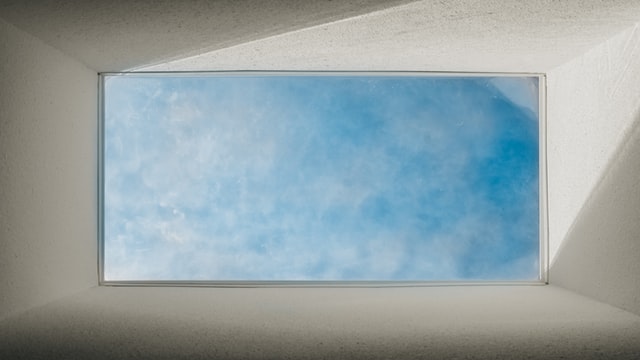
Your roof can be more than just a hat for your property. There are elements that can make it an aesthetically pleasing piece of architecture. Others can make it an instrument for improved energy efficiency. These aren’t mutually exclusive either. A skylight can add a touch of beauty to your home while also maximizing the natural light and heat available to your internal spaces.
However, there may come a point at which a skylight’s not adequately serving its purpose anymore. It may have become damaged, weathered over time, or perhaps it’s just not the right size, shape, or material for what you currently have in mind for your home. As such, a replacement may be in order. Alongside design, your considerations here are likely to revolve around the skylight replacement cost.
The Short Answer
On average, skylight replacement costs range between $900 and $2130, including installation. However, this varies with each situation. Supplies, current roof problems, etc, can all change this price.
It also depends on the circumstances. For instance, if you’re planning to fit it yourself, you won’t be paying for installation costs. On the other hand, if you hire a contractor you’re more likely to save money on material costs as experts tend to have relationships with suppliers. There may also be underlying issues with your roof that need to be taken care of in order to make sure the replacement skylight has some longevity.
So, we’re going to dig into the issue a little further, and explore some of the costs you’re likely to have to factor into your budget when planning your skylight replacement project.
Opening Changes
When you’re replacing your skylight, it’s not always going to be the case that you’re just swapping it out for an identical item. If it’s an older product, the same size or shape might not be available anymore. Alternatively, you might have decided to go for something a little larger or smaller for personal preference. This doesn’t just affect the material skylight replacement cost, it can also add labor to your budget as you’ll need to make changes to the roof opening.
This is not something usually recommended to be attempted by the DIY enthusiast. Making changes to your roof requires a certain amount of expertise. Particularly if it involves removing, repositioning, or installing roofing tiles. Indeed, depending on the positioning of your opening, your plans to make it larger may involve having to alter structural elements, like joists. As such, even if you’re planning on installing the skylight yourself, it’s important to get a quote for opening changes from a contractor. The cost of this will usually depend on the time it will take to adjust the opening, and the complexity of the project.
Type of Skylight and Materials
Another key area impacting the overall skylight replacement cost is the style you choose. It’s worth bearing in mind that these material costs when you’re utilizing a contractor are usually going to be lower. This is because they likely aren’t going to be subject to the higher markups you’ll be subject to through a retailer, or they may have relationships with a supplier that garners discounts.
The choices you’ll have to make come down to the following:
Fixed
This is usually the lowest costing type of skylight. Its functions are fairly basic, as it is a fixed flat panel in your roof. While this is still a great option to get more light into your home, you’re usually not going to be able to open it. That said, the basic nature of its functioning is reflected in its costs. Depending on size, mounting, and glazing, the costs will usually fall in around $150-$1500.
Tubing
If you’re looking for a skylight replacement that’s simple but effective, a tube can be a good and budget-friendly way to go. However, if you’re replacing a fixed version for a tube you’re likely to have additional costs for making roof repairs or altering the shape of its location in your roof. Alongside representing a funnel for sunlight, these can also be fitted with internal lights for use during darker hours. Generally, the cost for this is around $450-$1300.
Ventilating
Among the most popular options for skylights at the moment, these give you the option to open the window to let in fresh air. This can be particularly useful in a bathroom to let the moisture out. The cost of these can vary considerably as you can choose those which open via a simple crank device or one that opens by a motor. As such, the skylight replacement cost for this type usually comes in at around $300-$2,500.
Insulation
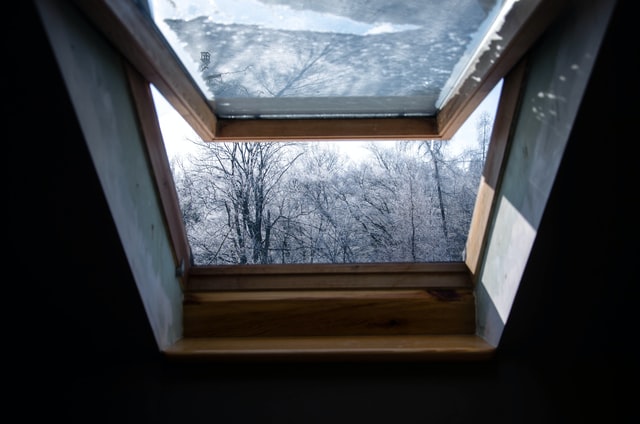
Like any other part of your roof, your skylight will be directly subjected to the extremes of weather. Therefore, when replacing it you need to make certain there is sufficient insulation surrounding it to prevent issues relating to roof leaks, moisture, and heat loss. While this isn’t likely to be huge it still needs to be factored into your total skylight replacement cost.
As with every other element of the project, the price here will usually depend on the size of the skylight, the type of skylight, and the materials you’re using to insulate. Foam insulation is the most common choice here, though it’s not uncommon to use fiberglass if it’s properly encapsulated to make sure the insulation makes connection with all surfaces. Material costs alone are unlikely to go much above $50.
Professional Installation
When most people consider hiring an expert they can have trouble getting past what they consider to be the additional costs involved in doing so. Yet there are various ways that hiring a contractor can have a positive impact on your budget.
The first is the aforementioned skylight replacement material costs. It’s not just the fact that a professional contractor can usually get lower cost components. It’s also that when you’re going it alone without experience you can wind up buying too much of a component, or the incorrect part for the job, and overspend on these elements. An expert knows what the circumstances call for and they’ll be charging you for the minimal amount of materials; you don’t foot the cost for any wastage or errors.
Perhaps above all else with an expert you’re paying for longevity and efficacy. You can be confident in the fact that it has been fitted correctly and you aren’t going to discover problems that at best cause damage to the skylight and at worst lead to additional issues with your roof that need to be repaired.
The labor costs alone depend on the size and complexity of the project. But on average in the U.S. you’re looking to add between $300-$1200 for professional installation without taking materials into account.
Wrapping Up
Skylight replacement costs are dependent on a number of factors, you can’t just assume the national average of $900 and $2130. The type of skylight you’re replacing along with any roof adjustments will play a role in your budget for the project. In some ways the most significant costs are related to whether you choose a professional installation. This isn’t black and white — though you might initially save money on labor, there’s the potential to spend more further down the road if mistakes are made. Consider your project complexity, your budget, and your confidence in your abilities carefully before making any solid decisions.

About the Author
Certifications & Affiliations