

Choosing the right materials for a roofing project is about more than simple curb appeal. The homeowners we talk to every day want to get the maximum protection for their property, preferably without spending a fortune.
Among the many decisions involved in a roofing project, one that often gets overlooked is what you should put under the surface. Despite being hidden from view, roofing underlayment plays a critical role in shielding the building from the elements.
When it comes to the underlayment on your roof, there are two types of material that are popular in the industry: synthetic and felt. But which one is the better buy for your home? Read on to find out.
What is underlayment?
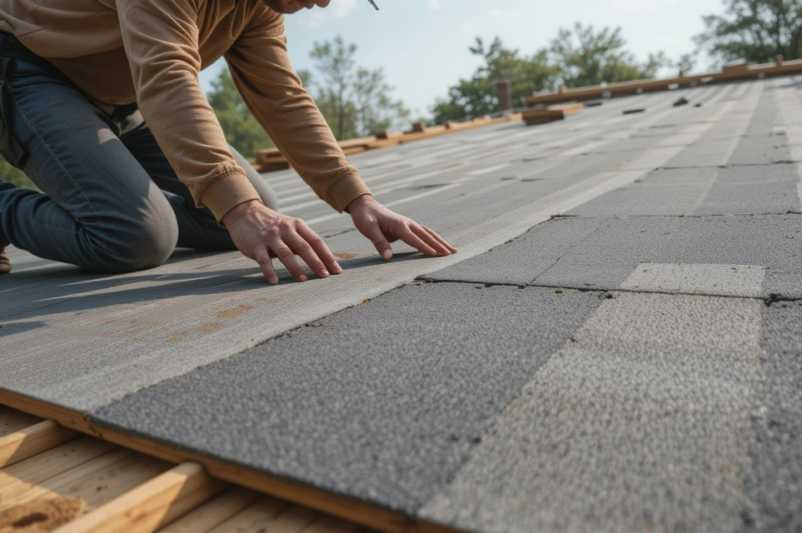
Underlayment is the part of your roof that’s between the sheathing and the outer layer.
Even though it’s not visible to the naked eye from the outside of the building, underlayment is important for a number of reasons:
- It provides an additional layer of protection from the elements. With the amount of hail and other extreme weather we get here in Texas, this is the most important consideration.
- It acts as added insulation, which both keeps you warm in the winter and prevents heat from penetrating into your attic in the summer, saving you money on your AC.
- During rainstorms, it acts as a noise barrier and reduces the amount of sound you hear.
- It’s a legal necessity in order to claim on warranties for your roof covering.
- During construction, it smooths out your sheathing layer, making it easier to install your chosen roof covering in a uniform, professional manner.
There are two main types of underlayment: felt and synthetic. Let’s look at them in more detail.
Pros and cons of felt underlayment
Felt is the older and more traditional of the two underlayment materials. It’s typically created by combining paper or fiberglass with asphalt. While technically not 100% waterproof, felt is highly resistant to water, and is durable enough to last for up to 30 years when installed correctly.
You can typically get felt in rolls of either 15lb or 30lb, which are attached to the roof using staples or plastic caps. The 30lb variant is generally preferable, since its added weight means it’s less likely to tear or get ripped off a roof during a storm. However, provided your roof isn’t pitched very steeply, you can also get away with the lower cost of the 15lb rolls.
Here are the pros and cons of felt:
Pros
- The biggest advantage felt has over synthetic underlayment is that the material itself costs less. As of the time of writing, felt typically costs $5 per square, while synthetic underlayment costs around $7-10.
- Since felt has been around as a material for a long time, while synthetic underlayments were only developed more recently, you can expect felt to meet 100% of building codes. Synthetic might be a bit more touch and go.
- Felt is also good for breathability and airflow, reducing the risk of poor ventilation.
Cons
- Although the material costs of felt are less than synthetic underlayment, the associated labor costs may well be higher. This is because felt is a heavier material, so it requires more manpower to lift.
- Felt will absorb water, but when it does so, it often wrinkles up, causing it to lose some of its protective function.
- Felt is susceptible to damage from UV, particularly if left exposed for a prolonged period of time before the shingles are installed.
- Felt is durable, but not as durable as synthetic underlayment. So it’s more prone to ripping or tearing both installation and adverse weather conditions.
Pros and cons of synthetic underlayment
Synthetic underlayment has been on the market for around 20-25 years, and has become increasingly popular during that time as a result of its durability and resistance to moisture. It’s made out of long-lasting polymers like polyethylene and polypropylene that have been woven together.
The pros and cons of synthetic underlayment are as follows:
Pros
- Compared with felt, synthetic underlayment is much more resistant to tears during installation or storms. It’s also more resistant to UV damage.
- Since the surface of synthetic underlayment is normally textured, it offers much more traction than felt does, so it’s safer for roofing contractors to walk on while they install the rest of your roof.
- Synthetic underlayment is waterproof, so it will stop moisture from penetrating the sheathing on your roof. Add to this the fact that it’s made from plastic, and you can be sure that no mold will grow on it, either.
- Because synthetic underlayment is so much lighter than felt, it comes in larger rolls. A typical roll of synthetic underlayment can cover 1,000 square feet, while felt might only cover as little as 300. This makes synthetic underlayments faster to install, and the lighter weight also means it’s easier on your roofing crew.
Cons
- The biggest issue with synthetic underlayment is that the material costs are higher than they are for felt.
- A less often appreciated downside is that synthetic underlayment acts as a vapor barrier for your roof. If your roof already doesn’t get enough ventilation, then synthetic probably isn’t the right choice for you.
- In some parts of the country, building codes still haven’t caught up to the fact that synthetic underlayment exists. So depending on where you live, you might be forbidden from using it altogether.
How to decide which underlayment is right for your home
When choosing the underlayment for your roof, it’s natural that the first thing you’ll look at is your budget. The cheaper option is almost always going to be felt, so you might be tempted to go with that in all cases. However, before you commit one way or the other, I’m going to suggest that you also reflect on the following, less obvious factors.
Your local area
If you live in an area where the building codes mandate the usage of felt underlayment, the decision is made for you automatically and you don’t need to read any further.
Do you live in an area that’s prone to hail or storms? If so, investing in a more durable synthetic underlayment might be more cost-effective over the long run. You don’t want to install something cheap and then have to replace it once it gets damaged by water.
Is your local area prone to wildfires? Consider that synthetic underlayments are generally rated Class A for fire protection, while felt is only rated Class C. If you live near a wood that is at risk of fire, a synthetic underlayment might offer your roof better protection.
Your house
I mentioned earlier that felt is thicker and heavier than synthetic material. If you live in an older property and need to redo the roof, the structure might not be able to take the weight of a felt underlayment.
Consider how long you plan to stay in your current property. If you plan to leave in a few years and just want to do up the roof to increase the value of the property, you’ll have less of an upfront investment if you choose felt. On the other hand, if you want to stay in your house for 30 years or more, the added durability of synthetic material will pay for itself over time.
Your roofer
I mentioned earlier that synthetic underlayment is safer for roofing crews to work on, and less prone to damage during installation. For this reason, some roofers only work with synthetic underlayment. Check with your roofing team to see if this is the case for them.
You should also check the warranty information for the other roofing materials your roofing company is going to use. For example, a manufacturer of a metal roof covering might require you to use a synthetic underlayment in order to claim on the warranty.
Recommendation for Texas: synthetic underlayment
More often than not, if you’re living in Texas and your building code allows you to, going with a synthetic underlayment is going to be a better choice. Here’s why:
- Texas is prone to hail, and synthetic is more resistant to both water and tearing. By contrast, felt can sometimes wrinkle if exposed to too much water.
- Synthetic won’t dry out or buckle in the Texas sun, whereas felt can become brittle and deteriorate when it gets too hot.
- Ultimately, a synthetic underlayment extends the life of your roofing system, which is valuable in a climate that’s tough on roofs.
Conclusion
While using a synthetic underlayment is a better choice for most Texas households, the devil is in the detail. Families with smaller budgets, poorly-ventilated roofs, or who only intend to stay in their current home for a couple of years might get more out of using felt instead.
Whatever your decision, the reality is that roofing projects are significant investments. For peace of mind, we therefore recommend that you consult an expert before making any major decisions about materials. A professional roofing company will not only advise you on which underlayment to use, but will also install it for you.
To get started on your underlayment, call Presidio Roofing on (210) 679-1065 today. We’ll be happy to come take a look at your roof for free.