
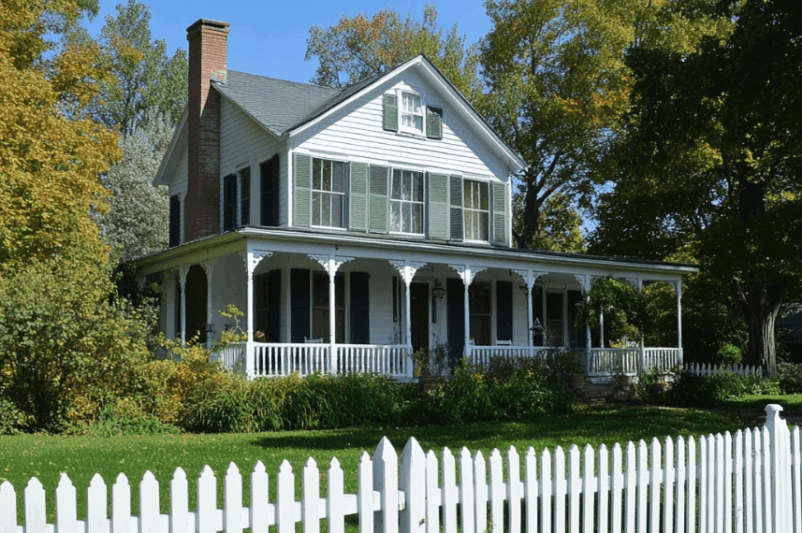
Fascia is the long, straight board that runs along the lower edge of your roof, capping the exposed ends of the rafters and giving your gutters something solid to hang from. You see it every time you pull into your driveway: the band of trim that frames the roofline where the roof meets the open air. It’s one of the least glamorous parts of a roof and one of the easiest to ignore until it starts to fail.
On a Texas home, fascia takes more abuse than most people realize. It sits in full sun, carries the weight of water-loaded gutters, and absorbs the shock of every hail season. Once you know what it does, trouble gets a lot easier to spot early.
What Fascia Does for Your Roof
Fascia has two jobs, and both matter. First, it seals the cut ends of your rafters from weather. Rafters are the angled boards that hold up the roof deck, and their ends would sit open to rain and pests without a board covering them. Fascia is that cover.
Second, it carries your gutters, and this is where it earns its keep. Picture the path water takes off your roof: rain sheds down the shingles, rolls over the drip edge at the very lip of the roof, and drops into the gutter. That gutter is bolted straight into the fascia, and from there it routes the water to the downspouts and away from your foundation.
Break any link in that chain and the rest backs up. When fascia rots, the gutter loses its anchor, starts to sag, and dumps water against the wall and footing instead of carrying it off. A failing board is rarely just cosmetic. It’s usually the first visible sign that water’s going somewhere it shouldn’t.
Fascia vs. Soffit: How They Differ
People mix these two up constantly, and it’s easy to see why. They sit inches apart at the roof edge and get installed together. The difference is orientation. Fascia is the vertical board you see from the street, and the soffit is the horizontal panel tucked underneath the overhang, between the fascia and the wall.
They also do different work. Soffit is usually vented, which lets air flow up into the attic and pull heat and moisture out, while fascia is the weather seal and the gutter mount. If you want the full breakdown of the overhang itself, our piece on the eave versus the soffit walks through it. One more term worth clearing up: trim is a general word for any finish board on the house, while fascia is the specific trim board at the roof edge that holds the gutters.
What Fascia Is Made Of, and Which Material Holds Up in Texas
Fascia comes in a handful of materials, and in our climate the choice matters more than it would up north. Texas sun and heat cycling are hard on anything organic, and humidity does the rest.
| Material | Cost per linear foot | How it handles Texas |
|---|---|---|
| Wood (pine or cedar) | $1 to $3 | Cheapest, but bakes, cracks, and rots fastest in sun and humidity |
| Composite | $2 to $8 | Resists rot and holds paint well through heat cycling |
| Vinyl | $5 to $8 | Low maintenance, will not rot, can fade over years of UV |
| Aluminum | $8 to $20 | Most durable, will not rot, sheds water cleanly |
Wood is still the most common board on older homes, and it’s the one we replace most often. It’s cheap up front and looks right on a traditional house, but under sustained Texas sun it dries, splits, and drinks up water at every seam. Aluminum and composite cost more at install, though they shrug off the heat and the moisture that destroy wood. If you’re weighing the long game, the cheaper board is rarely the cheaper decision, and I’d rather pay up front than replace rotted wood down the line. The same logic that governs how long a roof lasts in Texas applies to the trim that frames it. The per-foot ranges above are drawn from Angi’s published cost data, and real quotes vary by installer and region.
Signs Your Fascia Is Failing
Fascia gives you warning before it goes completely. These are the five signs that tell us a board needs attention:
- Peeling paint or water stains on the board, the first sign moisture is getting in
- Soft, spongy, or visibly rotted wood you can press a screwdriver into
- Gutters that sag, pull away, or pour over the side, since a rotted board can’t hold the fasteners
- Wasp nests, bird nests, or rodent entry at the roof edge, drawn to softened wood and gaps
- Water stains on the ceiling or in the attic near the exterior wall, where a failed edge has let water inside
In Texas, two forces drive most of this. Hail cracks paint and dents gutters, which opens the door for water, and humidity feeds the rot once water is in. A blocked gutter makes it worse fast, since standing water sits right against the board. Good attic airflow helps the whole edge stay dry, which is part of why soffit venting matters as much as the fascia itself.
What Fascia Repair and Replacement Costs
Costs swing with the material, the length of the run, and how far the damage has spread, so treat any figure here as a ballpark, not a quote. Going by Angi’s 2026 fascia and soffit cost data, a full soffit and fascia repair job tends to land somewhere between $600 and $6,000, with most homeowners falling in the middle. Fascia is usually priced by the linear foot, so the length of the run moves the bill more than anything else.
| Length of run | Estimated fascia repair cost |
|---|---|
| 50 feet | $300 to $1,000 |
| 100 feet | $600 to $2,000 |
| 150 feet | $900 to $3,000 |
| 200 feet | $1,200 to $4,000 |
The type of damage matters too, and these are rough ranges rather than fixed prices. Water damage from clogged gutters or poor drainage tends to run around $10 to $23 per linear foot. Dry rot, which is fungal and spreads, can land anywhere from $500 to $4,000 depending on how far it has gone. Insect or animal damage, including nest removal, generally falls between $75 and $2,000. Labor sits in the $40 to $80 an hour range, and a steep or hard-to-reach roof can add roughly 7 to 15 percent. If you’re repainting the new board to match the house, budget something like $2.50 to $6.50 per foot.
Repair, Replace, or Call a Pro
Here’s the rule of thumb we use. If the damage is a small split, a loose section, or a patch of peeling paint and the board underneath is still solid, a repair holds up fine. Once water damage, dry rot, or a long crack has set in, replacing the damaged section is the faster and more cost-effective fix, because patching over rot just hides it while it spreads.
I’ll be honest: fascia is hard to judge from the ground. The rot that matters is usually behind the gutter or at a seam you can’t see from the driveway. That’s why a fascia check belongs in any roof inspection, since the board, the gutters, and the roof edge tend to fail together and are cheapest to catch early. If your gutters are sagging, your paint is peeling at the edge, or you just haven’t had the roofline looked at in a few years, schedule a free roof inspection with our San Antonio team and we’ll tell you honestly what shape the fascia is in.
Frequently Asked Questions
What should homeowners expect the primary function of roof fascia to be when installing new gutters?
How do roofing contractors distinguish between fascia and soffit components during a roof perimeter inspection?
What criteria do professional roofers use when recommending materials for roof edge trim in high-heat climates?
How can building owners identify early signs of perimeter roof board failure before internal water damage occurs?
What procedures do exterior restoration specialists follow when assessing storm and hail impacts on roof edges?
How do qualified contractors determine whether to repair or completely replace damaged perimeter roof boards?
What variables do roofing estimators evaluate when calculating the scope of work for roof edge restoration?

About the author: Nick Van Slyke
Certifications & Affiliations