Sheeting vs. Sheathing: What’s the Difference?
If you’ve gotten a roofing quote in San Antonio and seen “sheeting,” “sheathing,” and even “decking” used like they’re three different things, you’re not alone. The short answer: they aren’t three things. They’re three names for the same component, and the words get used interchangeably enough on jobsites that the question is worth settling in a paragraph or two so you know what you’re actually paying for.
Same Component, Different Words
“Sheathing” is the correct construction term. “Sheeting” is the casual mispronunciation that became common in homeowner conversations and on contractor invoices. “Decking” is a third name that shows up on quotes and inspection reports, used by some in the trade as a synonym for the same panel layer. All three refer to the structural sheet of plywood or oriented strand board (OSB) sitting on top of your rafters, underneath everything you can see from the ground.
| Term | Correctness | What it actually is |
|---|---|---|
| Sheathing | Correct construction term | The structural panel layer beneath the roof covering |
| Sheeting | Casual / informal | Same component, just the wrong word |
| Decking | Also acceptable | Same component, common on contractor quotes |
If your quote uses one term and your inspection report uses another, they’re describing the same thing. Don’t let the word choice throw you.
Where You’ll Hear Each Term
In our experience working with San Antonio homeowners, you’ll most often see:
- “Sheathing” in formal documentation: building-code references, manufacturer specs, engineering plans, official inspection reports.
- “Sheeting” in casual conversation, on smaller invoices, and in homeowner-facing roofing literature where the writer didn’t catch the slip.
- “Decking” on a lot of contractor quotes and tear-off scopes, especially when a project breaks out the structural layer as its own line item.
The variation is harmless as long as you know it’s the same layer being described. Where it matters is when you compare quotes from two contractors and one writes “decking replacement” while the other writes “sheathing repair.” Those aren’t different services. They’re the same work, written differently.
What the Layer Actually Does
Briefly, since this comes up: the sheathing is the structural plane that ties your rafters together and gives the rest of the roof something to attach to. Shingles, underlayment, drip edge, and fasteners all bond to it. Without it, the roof has no continuous surface and no rigidity.
We cover the structural side in more depth in our piece on what roof sheathing is on a roof if you want the full picture. For the purpose of this article, the takeaway is simpler: sheeting, sheathing, and decking all point to the same critical layer of your roof, and if a contractor’s language is unclear, ask them to point at the same thing on the roof or the quote. There’s nothing more to the distinction than that.
Hiring a Roofing Company to Install Sheathing
For most homeowners, the safest and most efficient option is to hire a professional roofing company. A licensed company can complete the job quickly and in compliance with local building codes. Here’s what you can expect:
- Inspection & Estimate: A contractor will inspect your roof framing and existing sheathing. If they find signs of rot, sagging, or water damage, they’ll recommend full or partial replacement.
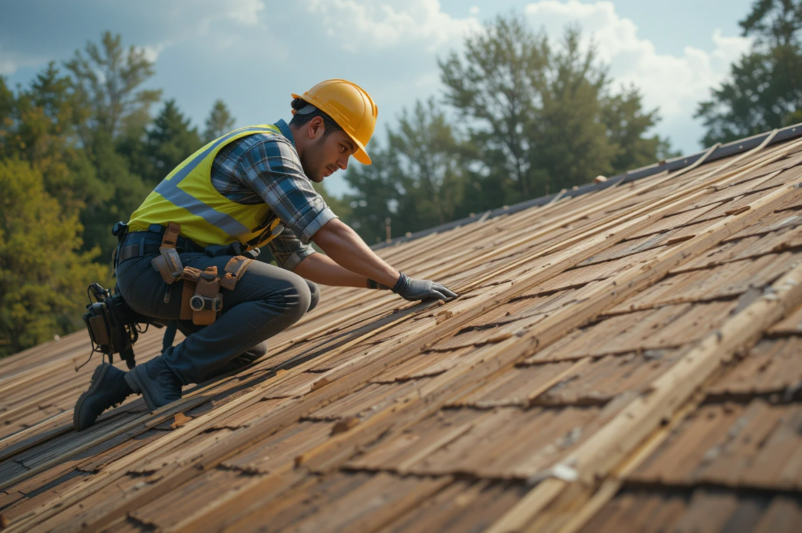
- Tear-Off: The crew removes all old roofing materials down to the decking.
- Installation: New OSB or plywood sheets are laid and fastened using pneumatic nail guns.
- Code Compliance: Crews follow local codes, including proper spacing and nailing patterns.
- Next Steps: Once sheathing is installed, the crew moves on to underlayment, flashing, and roofing materials.
Give Us a Call
The difference between sheathing and sheeting can help you make informed decisions about your roofing project. Some homeowners may consider tackling this on their own, but the risks and complexity make professional help the smarter choice. For expert installation, code-compliant workmanship, and long-lasting results, trust the experienced team at Presidio Roofing.
Call Presidio Roofing at (210) 679-1065 today to schedule a free roof inspection for your home!
Frequently Asked Questions
Why do roofing contractors use the terms sheathing, sheeting, and decking interchangeably on estimates?
What structural function does roof sheathing or decking serve in a complete exterior restoration?
How do roofing contractors evaluate existing sheathing and decking during an initial structural inspection?
What should property owners expect when contractors remove old materials down to the roof decking?
How do professional roofing crews install new wood sheathing or sheeting during a full replacement?
How do contractors ensure building code compliance when replacing a property's roof sheathing or decking?
Why is professional intervention necessary when repairing or replacing damaged roof sheeting and decking?

About the author: Nick Van Slyke
Certifications & Affiliations