Look at a finished shingle roof and you’ll never see its starter shingles. They sit buried under the first visible row: a plain strip of asphalt with no granule pattern worth admiring. That hidden row is also one of the cheapest components on the entire roof, and when a storm rolls through, it does more to keep the first courses attached than almost anything else up there. Skip it or fake it with cut-up scraps and the roof edge fails years before the shingles themselves wear out.
What are starter shingles?
Starter shingles are narrow asphalt strips installed along the roof’s edges before any visible shingles go down. They run along the eaves and up the rakes. Eaves are the horizontal lower edges where gutters hang; rakes are the angled edges on the gable ends. Roofers also call them starter strips or a starter course. Same product, same job.
They’re built from the same asphalt-and-fiberglass construction as the shingles above them, but the shape is different and so is the adhesive placement. A starter shingle is a straight strip with no tabs and no decorative cut, because nobody is meant to see it. What it has instead is a factory-applied adhesive band positioned along its bottom edge, right where the roof needs grip the most.
The question we hear most often: do upgraded shingles still need them? Yes. Architectural shingles are thicker and heavier than 3-tab, but their bottom edge is just as exposed at the perimeter, and manufacturers require a starter course under them for exactly that reason.
What do starter shingles actually do?
Starter shingles do three jobs, all of them at the most vulnerable part of the roof:
- Seal the edge against wind. The adhesive band bonds the first course of shingles to the roof at the perimeter, which is where wind gets its first grip and starts prying.
- Back up the seams. Field shingles meet at joints and cutouts, and the very first row has nothing beneath those gaps but underlayment. A starter course puts a continuous layer of asphalt under every one of those openings so water hits shingle material instead of finding the deck.
- Set the line. A straight starter course gives the first visible row a clean, level reference, which is why a roof with proper starters looks crisp along the gutter line.
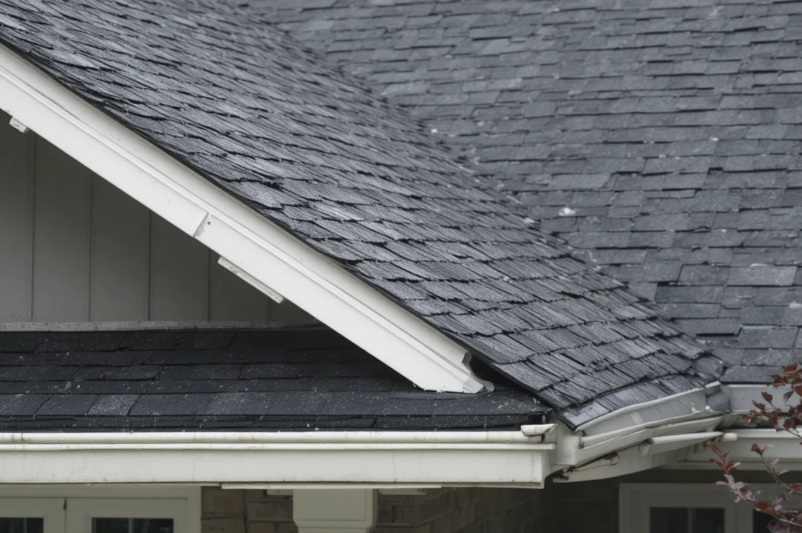
The wind job deserves the most respect in our market. The National Weather Service classifies a thunderstorm as severe once it produces gusts of 58 mph or hail an inch across, and San Antonio’s spring storm season brings exactly that kind of weather to neighborhoods from Stone Oak to Alamo Heights. When shingles start peeling at the edge during a storm, the failure tends to cascade upslope row by row. Wind damage at the edge is also sneakier than hail. Hail damage announces itself with bruises and torn granules, while a broken edge seal just sits quietly and waits for the next storm.
Can you just use cut-up 3-tab shingles instead?
The short answer: it costs you the edge seal. For decades the standard shortcut was flipping or trimming cheap 3-tab shingles into improvised starter strips, and I get why the practice survives. The material’s already on the truck, and the math seems harmless.
The problem is where the sealant ends up. A 3-tab shingle carries its factory sealant line up from the bottom edge, positioned to bond the shingle above it in normal field use. Cut that shingle into a starter strip and the sealant band lands inches away from the eave. That’s too far upslope to bond the first course’s leading edge where uplift actually starts, so the edge of the roof is left held by nails alone. A purpose-made starter like Owens Corning’s Starter Strip Plus puts its adhesive at the edge, full stop. That detail is invisible on day one and decisive in year five. It’s one of the specifics we price into every shingle roof we install in San Antonio, because purpose-made starters cost so little relative to what they protect.
What a high-wind edge installation looks like
The Insurance Institute for Business & Home Safety is the insurance industry’s building-safety research group, and when it studied three-year-old roofs it found the same weak point over and over: shingles that weren’t well adhered at the edges failed first. Their FORTIFIED program’s technical bulletin on roof edges turned that finding into a specific edge recipe:
- Drip edge, properly fastened. The metal drip edge must overlap at least 3 inches at joints, extend at least 2 inches back onto the deck, and be fastened at no more than 4-inch spacing for hurricane-rated work or 12-inch spacing for high-wind work.
- Starter strips bedded in flashing cement. At the eaves, starter strips get set into a bed of flashing cement at least 8 inches wide and no more than 1/8 inch thick. The cement backs up the adhesive band with a second continuous bond.
- A tight overhang. Starter strips and shingles must not extend more than 1/4 inch past the drip edge. Hang them out farther and wind gets a lip to grab.
Most San Antonio roofs aren’t built to FORTIFIED standards, and nothing requires yours to be. The list is still the clearest picture in print of what a wind-resistant edge involves, and it’s a useful bar when you’re comparing how two contractors describe their edge work. Fastening matters as much as adhesive here, which is why we field so many questions about high-wind roofing nails.
Starter shingles and your roof warranty
Manufacturer system warranties treat starter shingles as a required component, not an accessory. Owens Corning’s warranty tiers are a clear example. Qualifying for system-level coverage requires a minimum set of Owens Corning components on the roof, and starter shingles are one of the qualifying categories. The roof also has to be installed by an Owens Corning Platinum or Preferred contractor and registered within 60 days.
Here’s the part worth slowing down for. If your roofer improvises the starter course, you don’t just get a weaker edge. You can quietly lose the enhanced warranty you thought you were paying for, and you’ll typically find out after the storm, not before. We hold both the GAF Master Elite and Owens Corning Platinum Preferred designations, and a proper starter course is part of what those designations hold us to.
What to look for on your roofing estimate
Starter shingles are one of the smallest line items on a replacement. A bundle typically runs $30 to $100, and one bundle of Owens Corning Starter Strip Plus covers about 105 lineal feet of edge. A typical home needs only a few bundles, so any bid that skimps here is saving pennies in the one place wind notices.
Before you sign, check four things:
- A named starter product appears on the estimate, not a vague “starter course included.”
- Starters are specified at both eaves and rakes, not eaves only.
- Drip edge is its own line item, with metal type noted.
- The contractor will say how the edge is sealed, whether that’s the factory adhesive band alone or a cement-bedded edge for higher wind resistance.
If you’d rather have us look instead, request a free roof inspection from our San Antonio team and we’ll document the edge work along with everything else in a photo report you can keep.
Frequently Asked Questions
What are starter shingles, and why do roofing contractors install them?
Do upgraded or architectural shingles still require a starter course?
Is it acceptable for a roofing contractor to cut up standard shingles to use as starter strips?
How do roofing contractors identify wind damage versus hail damage?
What should homeowners expect from a high-wind roof edge installation?
How does a contractor's installation method affect manufacturer warranty coverage?
How should homeowners evaluate the edge work described in a roofing estimate?

About the author: Nick Van Slyke
Certifications & Affiliations